Steel-Plastic Composite Geogrid

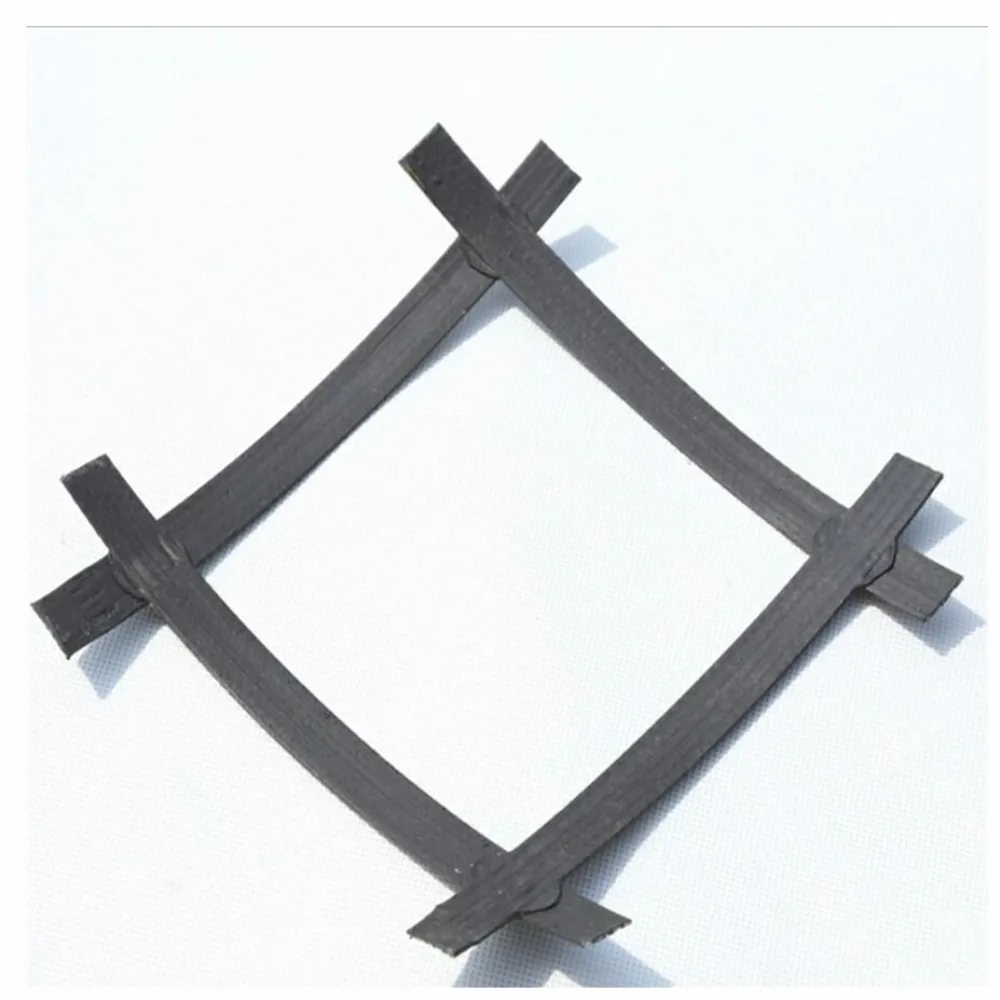
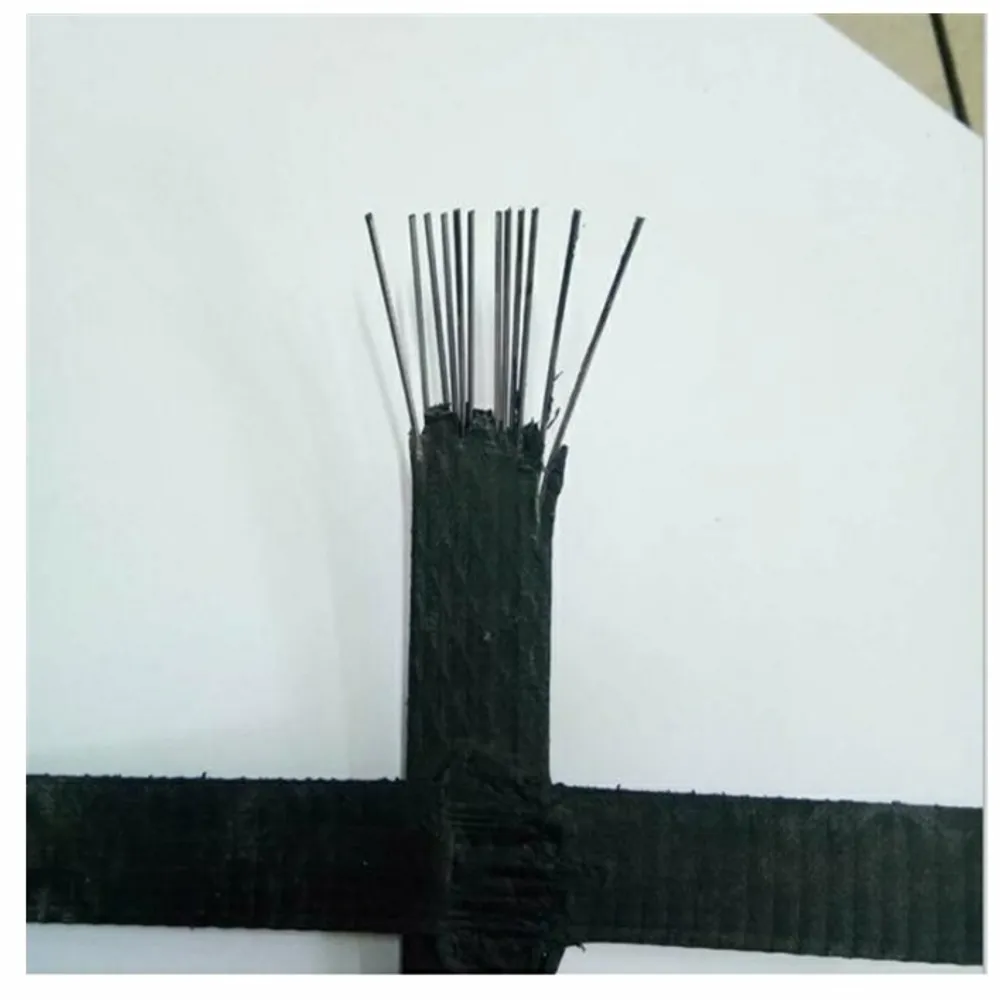
Steel plastic geogrid is built from high-strength steel wire sheathed in polyethylene and formed into flat straps, bonded and welded at every crossing. The steel core gives it a very high modulus at very low strain — elongation at break is ≤ 3% — so the reinforcement mobilises almost immediately instead of after the embankment has already settled. That is why this bonded geogrid is specified for soft-ground treatment under high fills and at bridge approaches, where differential settlement rather than outright failure is the problem. Biaxial GSZ grades run 30-30 to 120-120 kN/m, uniaxial GDZ 50-20 to 100-30 kN/m, on rolls up to 6 m wide.

30-30 → 120-120 kN/mElongation at break ≤ 3%Frost resistance −35 °C
Steel-Plastic Composite Geogrid

What a steel-plastic composite geogrid is

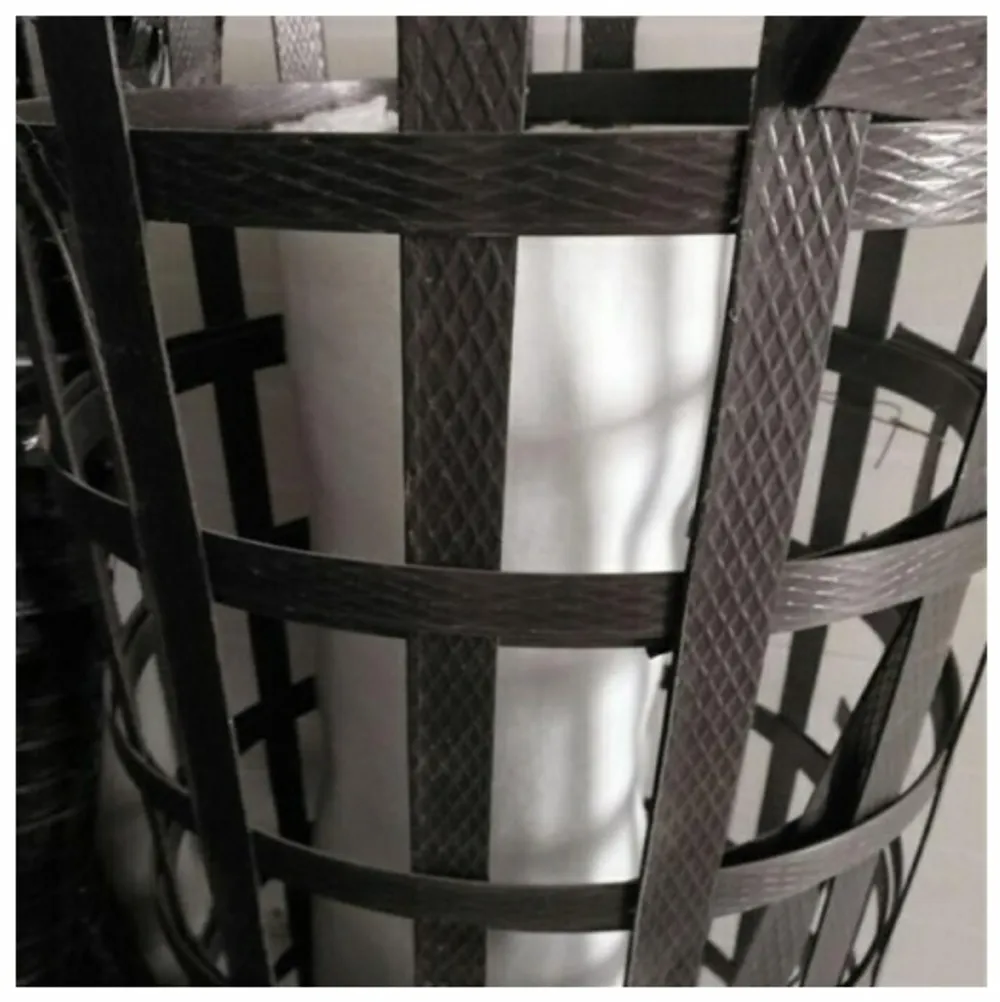
Steel plastic geogrid takes high-strength steel wire, sheathes it in high-density polyethylene and rolls it into flat straps, which are then laid out on a square grid and welded together at every crossing. The steel carries the tension; the polyethylene keeps soil moisture, alkali and abrasion off it and gives the strap a rough surface the fill can grip. Because the two materials do different jobs in one strap, it sits in a different place from the extruded polymer grids in most geogrid types — closer to a reinforcing tendon than to a stiffened mesh.

Why elongation at break ≤ 3% is the point

A polymer geogrid has to strain before it takes load. On a high fill over soft ground that strain arrives as settlement you can measure at the surface, and by then the pavement has already cracked. Steel plastic geogrid breaks at ≤ 3% elongation, which means it reaches useful tensile force within a fraction of that movement — the reinforcement is working while the embankment is still being built, not afterwards. Design engineers use it exactly where the serviceability limit governs: bridge approaches, culvert crossings and the joint between old and new pavement on a widening job, where a few centimetres of differential settlement is the failure.

Freeze-thaw and cold-region performance

This is the durability number worth reading twice. After 100 freeze-thaw cycles the ultimate tensile strength is unchanged from the original value — at every grade in the biaxial range, and across the uniaxial range as well — and elongation at break still holds at ≤ 3%. Frost resistance is rated to −35 °C. For projects in Northern Europe, Central Asia, Canada, Mongolia or any high-altitude corridor, that removes the usual argument about how much reinforcement is left in the road after ten winters.

Geogrid for roads and subgrade stabilization

On road works the grid is laid flat on the prepared formation, tensioned, pinned and covered with the next lift of fill. Used as geogrid for road construction it spreads wheel and fill loads laterally, restrains the subgrade from squeezing sideways, and lets a thinner granular layer reach the same bearing capacity. For geogrid for soil stabilization on ordinary base courses a PP biaxial geogrid is usually the economical answer; the steel-cored composite geogrid earns its cost where fills are high, ground is soft, or settlement tolerances are tight. Below the reinforcement, a separation layer of woven geotextile or nonwoven geotextile keeps fines out of the aggregate.

Selecting a grade

Typical selection practice in the industry ties strength to fill height: around 20 kN/m in both directions for general soft-ground treatment under fills over 4 m; 40 kN/m and grade 50-50 for 3–4 m fills and bridge approaches; 50 kN/m and grade 60-60 for low fills, shallow cuts and poor subgrade; at least 40 kN/m both ways (grade 60-60) at a cut-fill junction; and for widening an existing road, at least 60 kN/m machine direction and 20 kN/m cross direction to control the longitudinal crack at the old/new joint. This is common supplier and industry guidance, not a design code — the project engineer must confirm the grade against the actual design, and we quote to whatever the specification calls for.

How it compares with the other grids

We produce steel-plastic composite geogrid alongside the extruded and knitted grids in our range, so the choice between them is made on what the job needs. For geogrid reinforced soil walls carrying long-term design load, a HDPE uniaxial geogrid or PET polyester geogrid is usually the specified product; for asphalt overlays, a fiberglass geogrid. The steel composite belongs where low strain and freeze-thaw durability decide the job. Send the grade, width, quantity and destination port and we will quote ex-works, FOB or CIF.

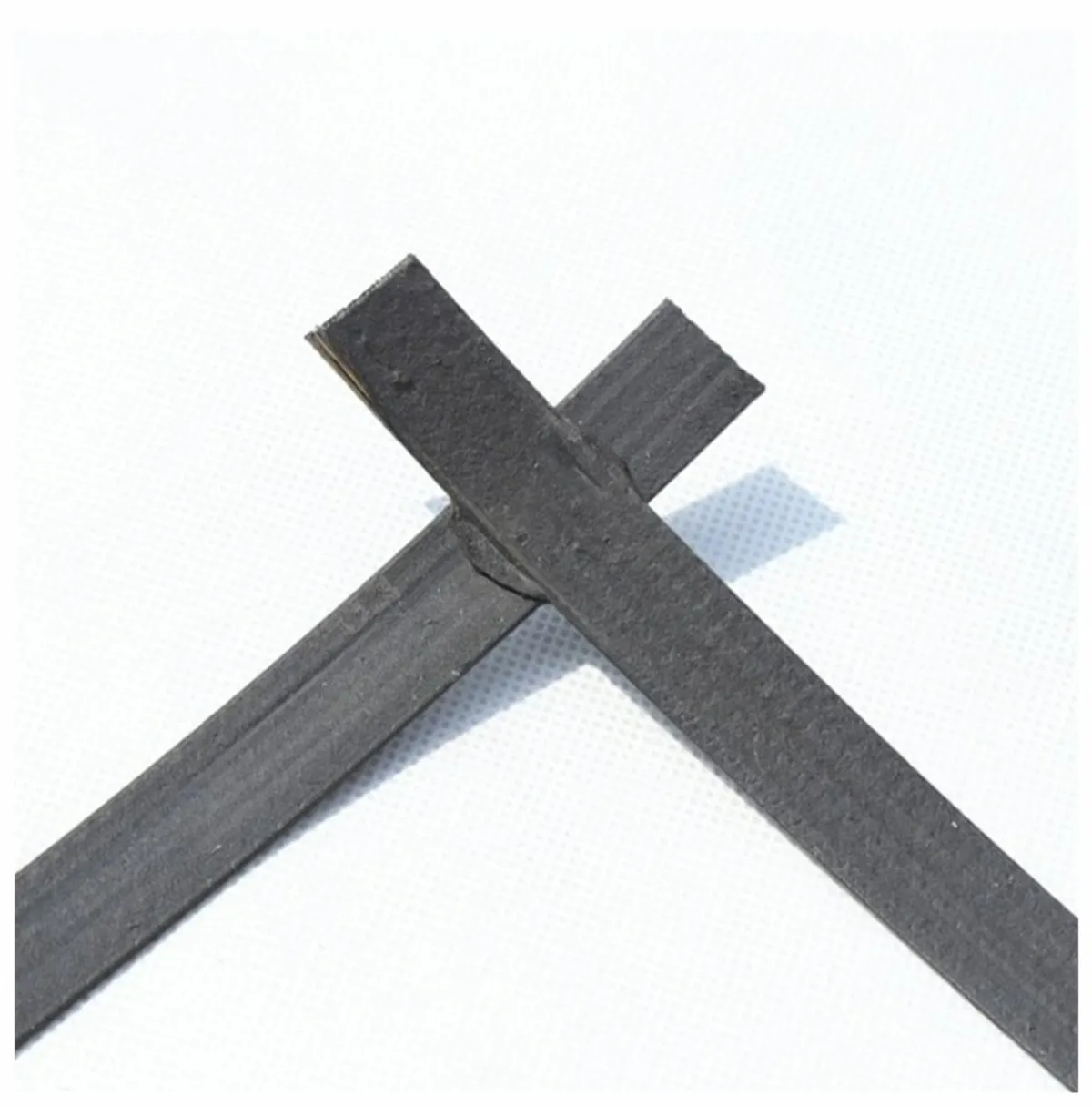
More views

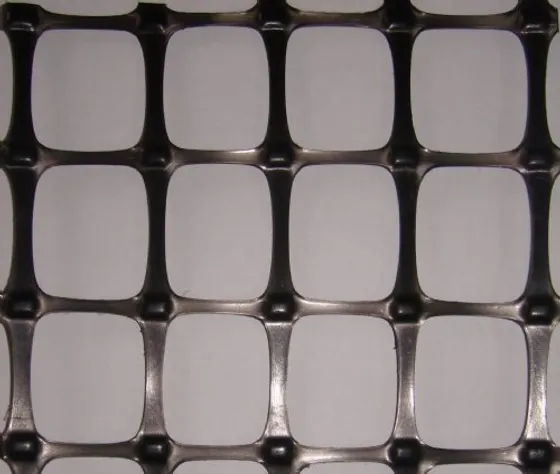
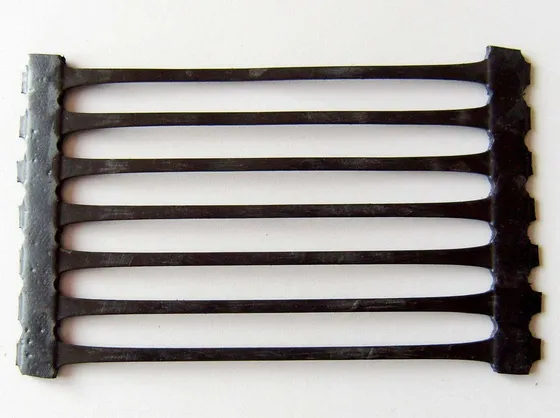
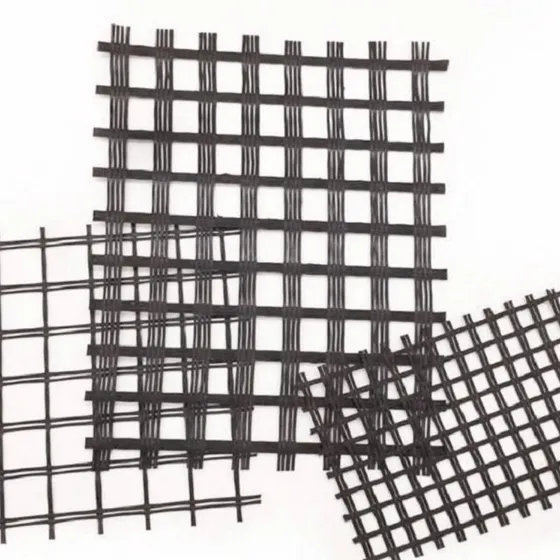
Steel-Plastic Composite Geogrid — More viewsSteel-Plastic Composite Geogrid — More views

Manufacturing

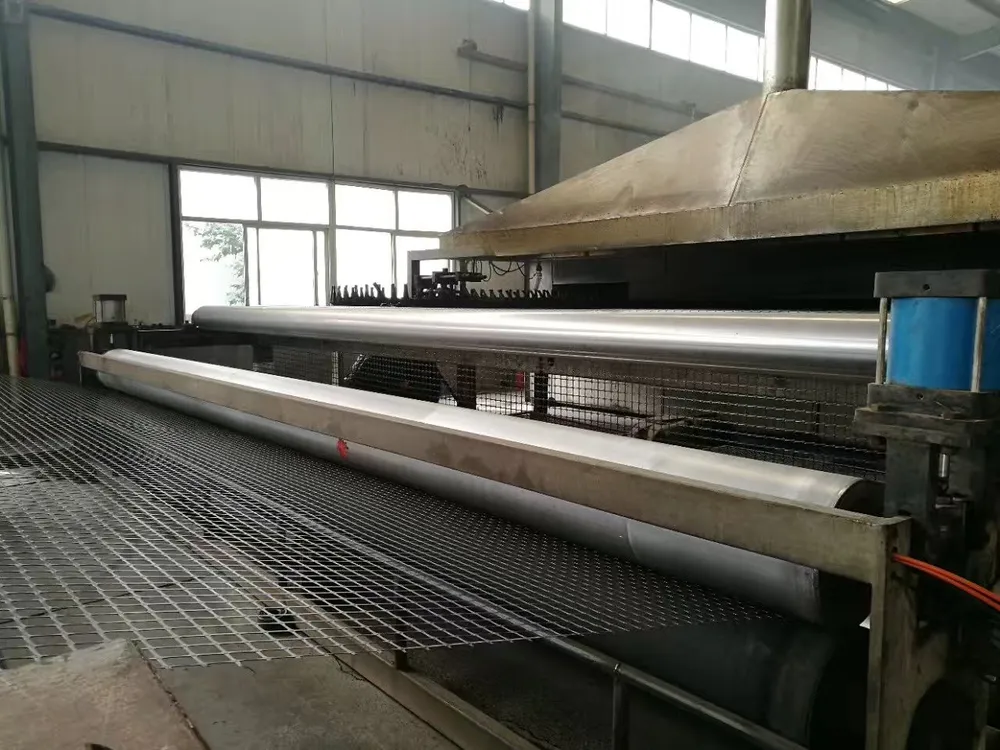
Steel-Plastic Composite Geogrid — Manufacturing

Shipping & packaging

Steel-Plastic Composite Geogrid — Shipping & packagingSteel-Plastic Composite Geogrid — Shipping & packaging

Key features

  • Steel core delivers high tensile modulus at very low strain — ≤ 3% elongation at break
  • Ultimate tensile strength after 100 freeze-thaw cycles equals the original value at every grade
  • Frost resistance to −35 °C for winter earthworks and high-latitude projects
  • Polyethylene sheath protects the steel from soil moisture, alkali and abrasion
  • Welded junctions transfer load between straps so the grid acts as one sheet
  • Biaxial and uniaxial ranges from a single construction — 30 to 120 kN/m

Ideal for

  • Soft-ground treatment under high embankment fills
  • Bridge approach slabs and abutment backfill — differential settlement control
  • Geogrid subgrade stabilization for highways, ramps and haul roads
  • Cut-fill junctions and widening of existing carriageways
  • Cold-region and permafrost-margin earthworks exposed to freeze-thaw
  • Geogrid reinforced soil walls, steep slopes and load-transfer platforms

Specifications

Steel-plastic composite geogrid, biaxial range (GSZ) — values verbatim from published manufacturer data. Uniaxial GDZ range and construction data in the notes below.

PropertyUnit30-3040-4050-5060-6070-7080-80100-100120-120
Ultimate tensile strength, MDkN/m ≥304050607080100120
Ultimate tensile strength, CDkN/m ≥304050607080100120
Elongation at break% ≤33333333
Ultimate tensile strength after 100 freeze-thaw cycles (MD / CD)kN/m ≥30 / 3040 / 4050 / 5060 / 6070 / 7080 / 80100 / 100120 / 120
Elongation at break after 100 freeze-thaw cycles% ≤33333333
Mesh sizemm140140140140140140140140
Frost resistance°C−35−35−35−35−35−35−35−35
  • Uniaxial range (GDZ), ultimate tensile strength MD × CD: 50-20 = 50 / 20 kN/m ≥; 50-30 = 50 / 30; 60-30 = 60 / 30; 80-30 = 80 / 30; 100-30 = 100 / 30. Elongation at break ≤ 3%, mesh size 140 mm and frost resistance −35 °C across the range; strength after 100 freeze-thaw cycles equals the original MD / CD values at every grade.
  • Construction: high-strength steel wire core with high-density polyethylene sheath, bonded and welded at every crossing. Roll width up to 6 m (one source states 4–6 m). Roll length and mass per unit area are not published — confirmed per order. Execution standard JT/T 480-2002.
  • Grades 125-125 and 150-150 extend the same biaxial ladder and are quoted on request.

Frequently asked questions

What is a steel-plastic composite geogrid?

It is a geogrid whose straps contain high-strength steel wire inside a high-density polyethylene sheath, welded together at every crossing. The steel provides the tensile strength and stiffness, the polyethylene protects it from soil moisture, alkali and abrasion. Biaxial grades run 30-30 to 120-120 kN/m and uniaxial grades 50-20 to 100-30 kN/m.

How do I choose between a steel-plastic and a plastic geogrid?

Compare them on strain, not just strength. A PP or HDPE grid needs several percent of elongation to develop its rated load; the steel composite breaks at ≤ 3% and so reaches useful force much earlier. Where the design is governed by settlement — high fills on soft ground, bridge approaches, road widening — that early stiffness is what you are buying. For ordinary base-course work and gravel roads, the extruded plastic grids on our <a href="/biaxial-geogrid/">biaxial</a> and <a href="/uniaxial-geogrid/">uniaxial</a> pages do the job at lower cost.

Does the strength survive freeze-thaw cycling?

Yes. Published data shows the ultimate tensile strength after 100 freeze-thaw cycles equal to the original value at every grade, in both the biaxial and uniaxial ranges, with elongation at break still ≤ 3%. Frost resistance is rated to −35 °C, which is why the product is common on cold-region and high-altitude roads.

What grade should I use for a high embankment on soft ground?

Typical industry practice is around 20 kN/m in both directions for general soft-ground treatment under fills over 4 m, rising to 40 kN/m (grade 50-50) for 3–4 m fills and bridge approaches, and 50 kN/m (grade 60-60) for low fills and poor subgrade. Treat those as a starting point only — the project engineer should set the grade from the actual settlement and stability analysis.

Can it be used for geogrid reinforced soil walls and slopes?

It is used in reinforced-soil structures and load-transfer platforms, and its low strain suits walls with tight deformation limits. For long-term design load in retaining walls, though, most specifications call for HDPE uniaxial or PET polyester geogrid with published creep-reduction factors, so check what your design standard accepts before substituting.

How is it installed on a road subgrade?

Trim and compact the formation, roll the grid out with the stronger direction across the traffic axis, pull out the slack, pin it down and overlap adjacent rolls per the specification. Place the next lift by end-dumping onto already-placed fill and spreading forward — never track directly on the exposed grid. A separation geotextile below the grid stops fines pumping into the aggregate.

What roll sizes and packing do you supply?

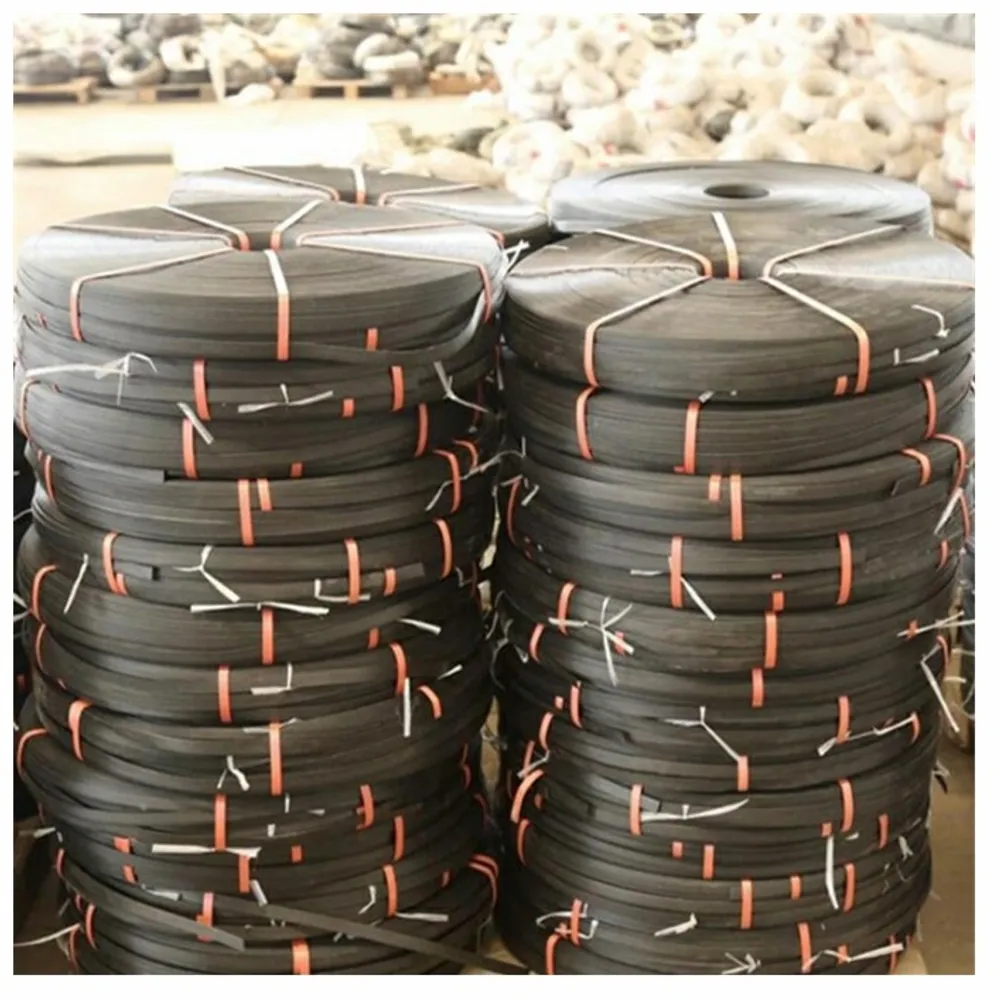
Rolls are supplied up to 6 m wide, with 4–6 m the usual range. Roll length is not fixed by a published standard, so it is confirmed per order along with mass per roll before shipment. Mesh size is 140 mm across all grades.

What does steel plastic geogrid cost?

Price tracks the steel content, so it moves with grade and with the steel market — a 120-120 costs considerably more per square metre than a 30-30, and all grades sit above extruded plastic grids. Send the grade, width, total area and destination port and we will return an ex-works, FOB or CIF quotation. We supply and export this line from vetted production partners rather than making it ourselves, and we will say so on the offer.

Request a quote for the Steel-Plastic Composite Geogrid

Tell us quantity, destination port, and any questions — we reply within one business day.

Prefer to chat? Reach us instantly on WhatsApp:

Related products

PP Biaxial Geogrid Geogrid

PP Biaxial Geogrid

Punched and drawn PP biaxial geogrid for subgrade stabilization and base reinforcement — 15-15 to 50-50 kN/m grades, square apertures, 93% junction efficiency.

  • 15-15 → 50-50 kN/m
  • Polypropylene · Punched & drawn
  • Junction efficiency 93%
Get a quote →
Uniaxial Geogrid Geogrid

Uniaxial Geogrid

PP and HDPE uniaxial geogrid for retaining walls, MSE walls and reinforced slopes — 60–300 kN/m machine-direction strength, long oval apertures, low creep.

  • 60–300 kN/m
  • PP · HDPE uniaxial
  • ASTM D6637
Get a quote →
Fiberglass Geogrid Geogrid

Fiberglass Geogrid

Bitumen-coated fiberglass geogrid for asphalt overlays — warp-knitted alkali-free glass fibre, 25–120 kN/m, elongation ≤ 4%, standard and self-adhesive.

  • 25–120 kN/m
  • Elongation ≤ 4%
  • Standard & self-adhesive
Get a quote →