
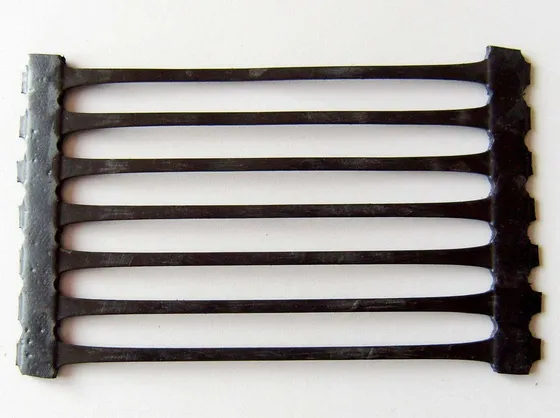
 Geogrid
 Uniaxial Geogrid
PP and HDPE uniaxial geogrid for retaining walls, MSE walls and reinforced slopes — 60–300 kN/m machine-direction strength, long oval apertures, low creep.
- 60–300 kN/m
- PP · HDPE uniaxial
- ASTM D6637
SIGMA PP biaxial geogrid is extruded from polypropylene sheet, punched and then stretched in both the machine and cross-machine directions. The result is a square-aperture geogrid mesh with integral nodes that carry load in both directions, so aggregate locks into the apertures instead of spreading sideways. That confinement is what makes a biaxial geogrid work over soft ground: it raises bearing capacity, cuts rutting and lets a thinner base course do the same job. Standard grades run 15-15 through 50-50 kN/m ultimate tensile, on 3.95 m and 5.95 m rolls.
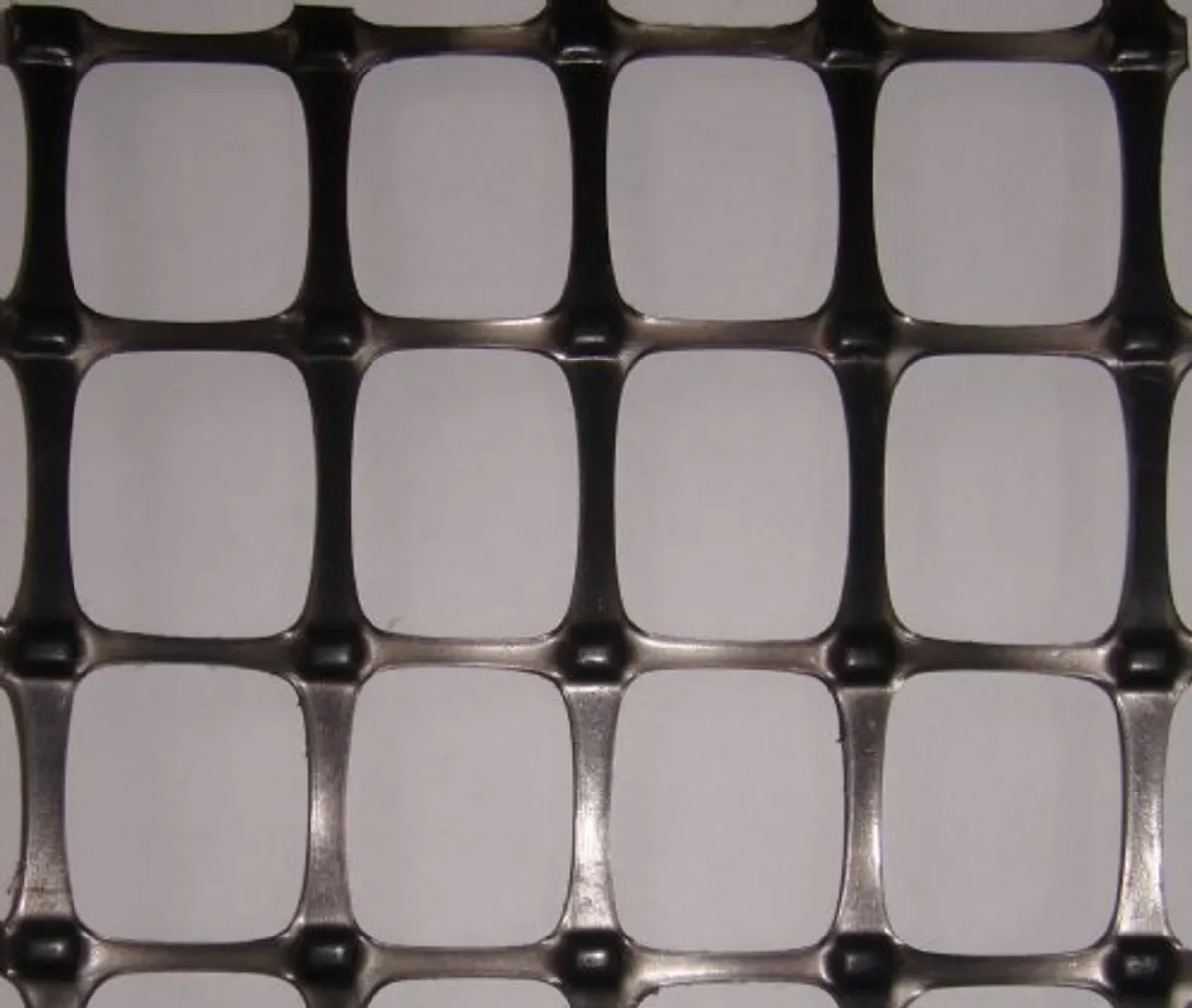
A biaxial geogrid starts life as a solid polypropylene sheet. The sheet is punched with a regular pattern of holes, then drawn in the machine direction and again across it. Drawing aligns the polymer chains along every rib, so the finished polypropylene geogrid is far stiffer and stronger than the sheet it came from, while the junctions where ribs meet are never cut or joined — they are part of the original sheet. That is why this type is also called an integral or bidirectional geogrid, and why its junction efficiency is rated at 93% rather than the lower figures typical of bonded or knitted constructions.
Lay the grid on a prepared subgrade and place aggregate over it, and stone particles push down into the square apertures and lock there. Once confined, the fill can no longer spread sideways under a wheel load, so the layer behaves as a stiffer slab and spreads pressure over a wider area of soft soil below. This is the whole mechanism behind geogrid subgrade stabilization: less rutting, a higher effective bearing capacity, and in most designs a measurably thinner base for the same service life. Because the reinforcement acts in both directions, it suits wide areas — yards, platforms, formation layers — as much as linear works.
Seven standard grades cover 15-15 to 50-50 kN/m ultimate tensile. Designers rarely work from the ultimate figure, though: the load a stabilization layer actually sees keeps strain small, so the tensile strength at 2% and 5% strain is the number that matters, and we publish both for every grade. As a rough guide, 15-15 and 20-20 suit light-traffic access roads, car parks and landscaping platforms; 30-30 is the common highway and yard grade; 40-40 through 50-50 go under heavy axle loads, container handling and railway formation. A 35-35 grade and a large-aperture 57 × 57 mm range are available on request where coarse fill needs a bigger opening to interlock.
Most of what we ship is geogrid for road construction — a single layer at the subgrade interface, sometimes a second within the base. It also goes into unpaved haul and gravel roads, embankment bases, and load-transfer platforms over piles. For geogrid for soil stabilization on weak or waterlogged ground, pair it with a separation fabric: our woven geotextile keeps the aggregate out of the soft soil while the grid supplies the tensile restraint, and a nonwoven geotextile is used where filtration and drainage matter more than strength.
Buyers in North America often say "geo grid" when they mean the honeycomb cellular panels used to hold gravel or grass in a driveway. Those are a different product with a different job — the cells hold surface material in place from above, rather than reinforcing a structural layer from within. If that is what you are after, go to our gravel grid panels or the deeper HDPE geocell used for confinement under load. A biaxial geogrid is the flat mesh that goes under the base course.
Rolls come 3.95 m or 5.95 m wide by 50 m long, with 75 m rolls on the 15-15 grade; a 40HC container takes roughly 180 rolls of 15-15 or 90 rolls of 40-40, so shipping cost per square metre stays low on export orders. Where reinforcement is only needed in one direction — retaining walls and steep slopes — use our uniaxial geogrid. For asphalt overlays there is fiberglass geogrid, for high-strength flexible reinforcement polyester geogrid, and for soft-soil embankments steel-plastic geogrid. The full product range lists the geotextiles and drainage materials that go with them.
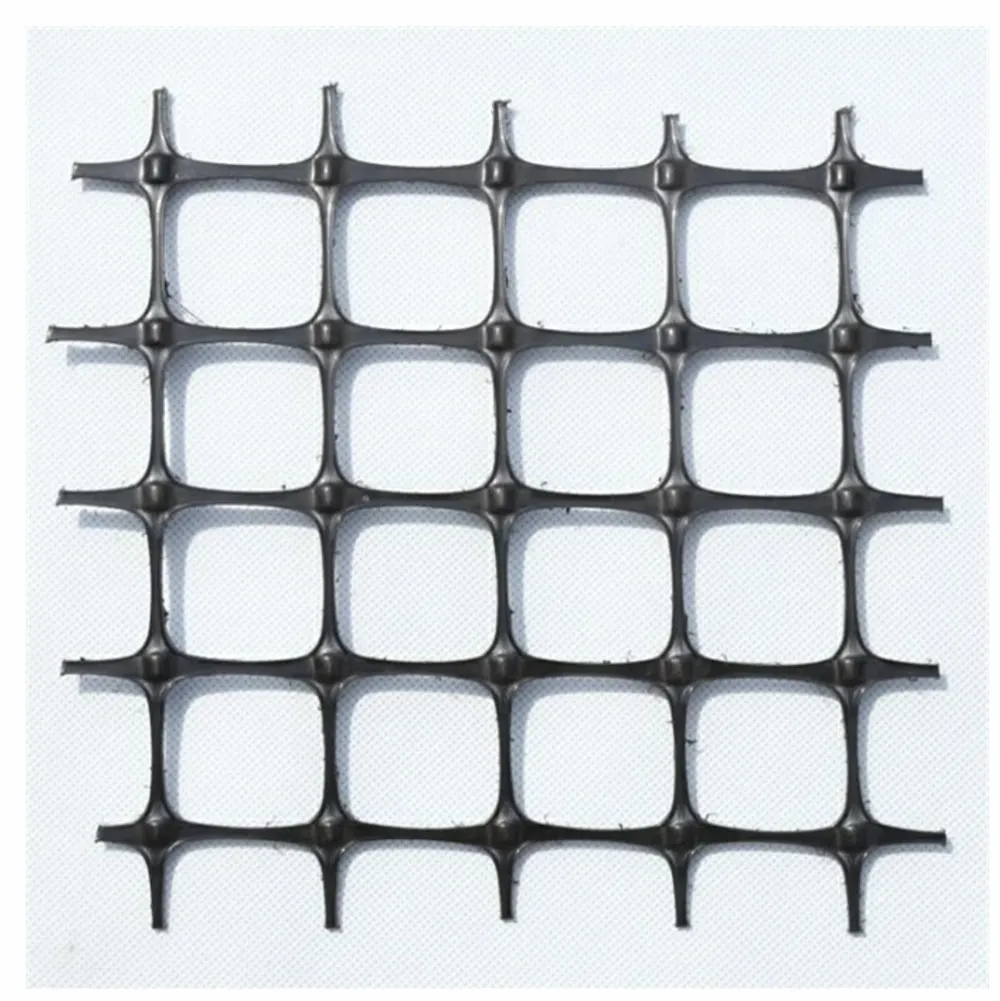
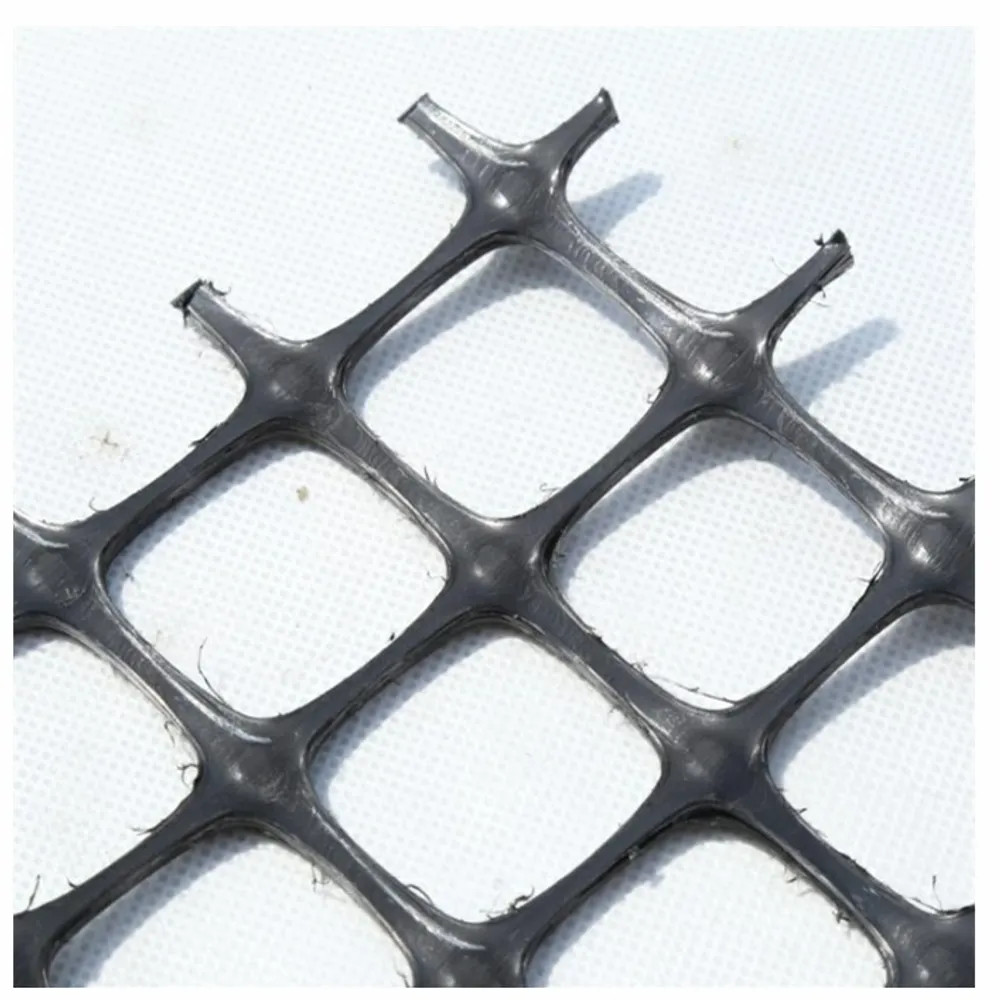
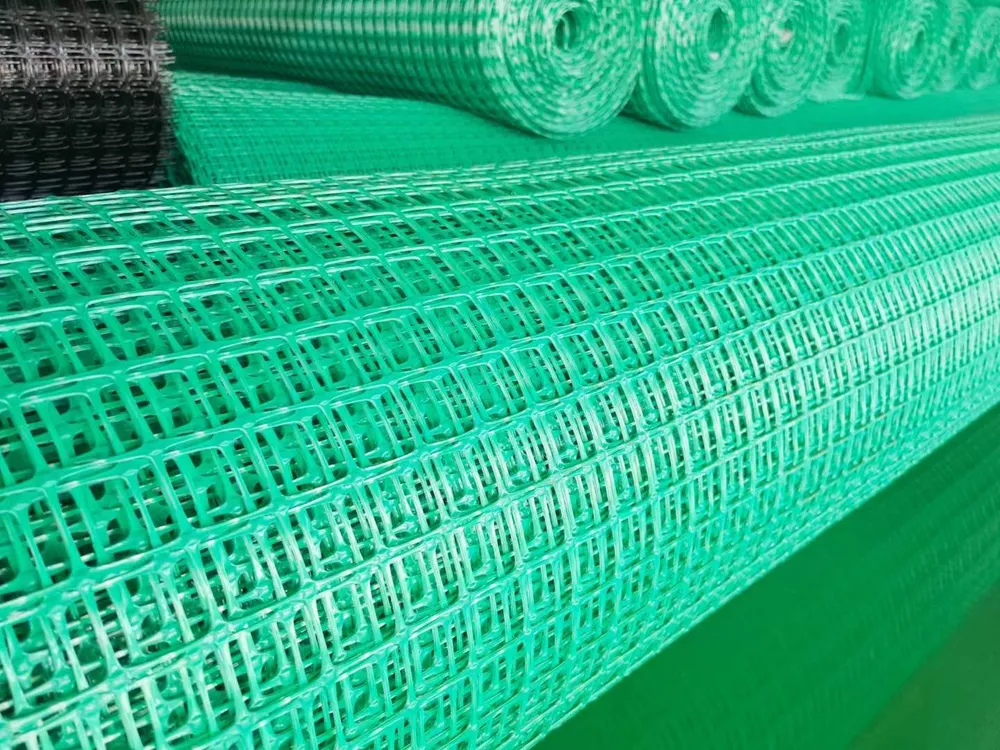
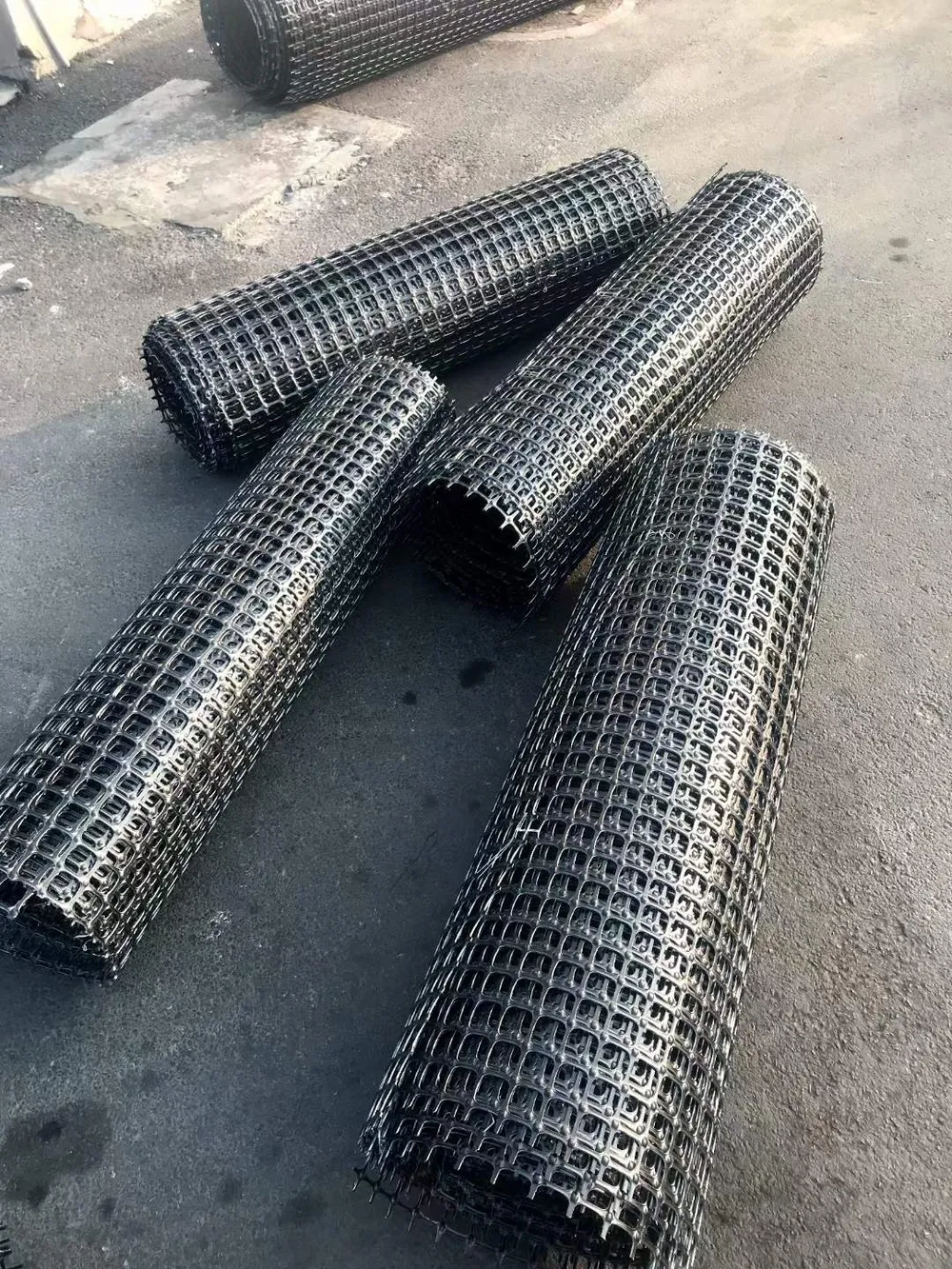
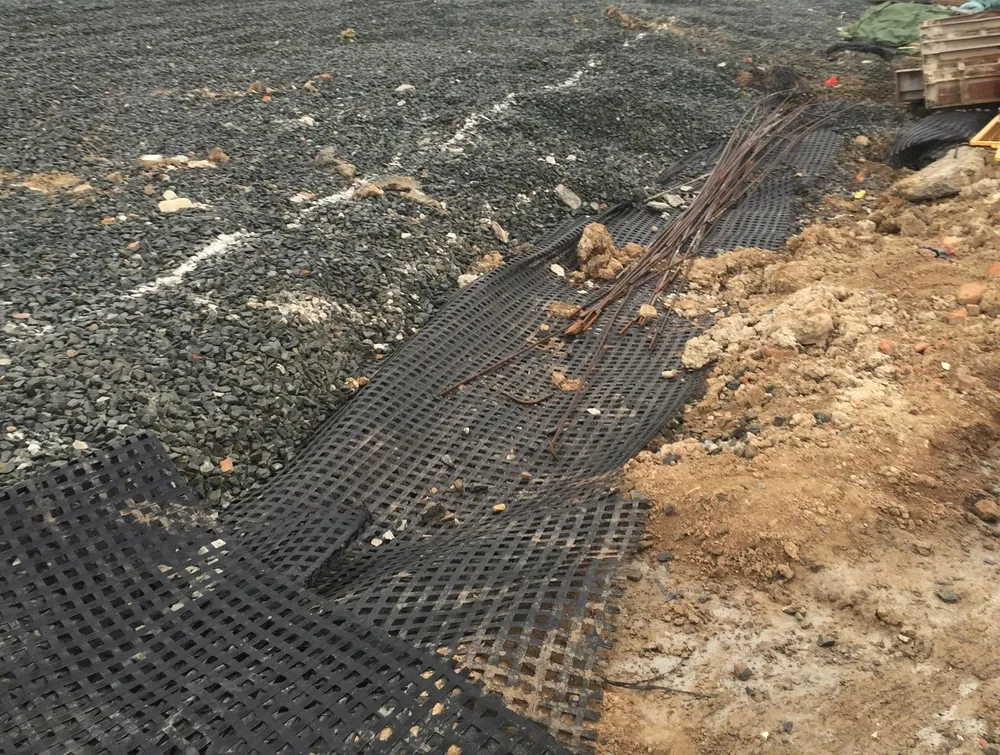
PP biaxial geogrid — mechanical properties by strength grade. Values verbatim from the source datasheet cross-check.
| Property | Unit | Test Method | 15-15 | 20-20 | 25-25 | 30-30 | 40-40 | 45-45 | 50-50 |
|---|---|---|---|---|---|---|---|---|---|
| Ultimate tensile strength (MD / CD) | kN/m | ASTM D6637 | 15 / 15 | 20 / 20 | 25 / 25 | 30 / 30 | 40 / 40 | 45 / 45 | 50 / 50 |
| Tensile strength @ 2% strain (MD / CD) | kN/m | ASTM D6637 | 5 / 5 | 7 / 7 | 9 / 9 | 10.5 / 10.5 | 14 / 14 | 16 / 16 | 17.5 / 17.5 |
| Tensile strength @ 5% strain (MD / CD) | kN/m | ASTM D6637 | 7 / 7 | 14 / 14 | 17 / 17 | 21 / 21 | 28 / 28 | 32 / 32 | 35 / 35 |
| Yield elongation | % ≤ | ASTM D6637 | 13 | 13 | 13 | 13 | 13 | 13 | 13 |
| Junction efficiency | % | GRI GG2 | 93 | 93 | 93 | 93 | 93 | 93 | 93 |
| Minimum carbon black | % | ASTM D4218 | 2 | 2 | 2 | 2 | 2 | 2 | 2 |
A biaxial geogrid is drawn in both directions and has square apertures, so it carries roughly equal load along and across the roll — the right choice for stabilizing an area, such as a subgrade or working platform. A uniaxial geogrid is drawn in one direction only, with elongated apertures and much higher strength in that single axis, and is used where the tensile force has one clear direction: retaining walls, steep reinforced slopes and embankment tie-backs. See our <a href="/uniaxial-geogrid/">uniaxial geogrid</a> for those applications.
Geogrid price depends mainly on grade and quantity — a 15-15 costs a fraction of a 50-50 per square metre, because it carries far less polymer. As geogrid manufacturers we quote ex-works per square metre or per roll. Send the grade (or the design tensile strength you need), the total area and the destination port and we will come back with a price and a container loading plan.
A geogrid is an open mesh — it reinforces by letting aggregate pass into the apertures and lock there, which stops the fill spreading sideways. A geotextile is a continuous fabric that separates two soil layers, filters, and in the woven types adds tensile strength. They do different jobs and are frequently used together: geotextile below for separation and filtration, geogrid above it for reinforcement.
It depends on the subgrade strength and the axle loads. In general, 15-15 and 20-20 handle light access roads and car parks, 30-30 is the common choice for highway subgrade stabilization and heavy yards, and 40-40 to 50-50 go under container handling, ports and railway formation. Because stabilization works at low strain, compare designs on the 2% and 5% strain values in the table rather than the ultimate strength.
Level and clear the subgrade, roll the grid out flat with the roll direction along the line of the works, and overlap adjacent rolls by roughly 0.3–0.5 m depending on how soft the ground is. Anchor or pin the edges so the grid stays taut, then end-dump and spread the aggregate over it — never track directly on the bare grid. Compact in layers as normal. No special tools, seaming or curing time are needed.
Standard rolls are 3.95 m or 5.95 m wide by 50 m long, with 75 m rolls on the 15-15 grade; grades 40-40 and above are supplied 3.95 m wide. Rolls are strapped and taped to requirement. A 40HC container takes about 180 rolls of 15-15 (53,325 m²) or 90 rolls of 40-40 (17,775 m²).
Yes. We send cut samples of any standard grade for interlock and aperture checks, along with the mill test data for the batch. If your specification calls for third-party verification of the tensile or junction values, tell us which standard the consultant works to and we will arrange testing before shipment.
Polypropylene is chemically inert and unaffected by the pH range, salts and micro-organisms found in normal soils, so a buried grid is not attacked the way a metallic reinforcement would be. A minimum 2% carbon black protects the ribs from UV during the exposed period before backfilling. Keep rolls covered on site and cover the grid with fill promptly after laying.
Tell us quantity, destination port, and any questions — we reply within one business day.
Geogrid PP and HDPE uniaxial geogrid for retaining walls, MSE walls and reinforced slopes — 60–300 kN/m machine-direction strength, long oval apertures, low creep.
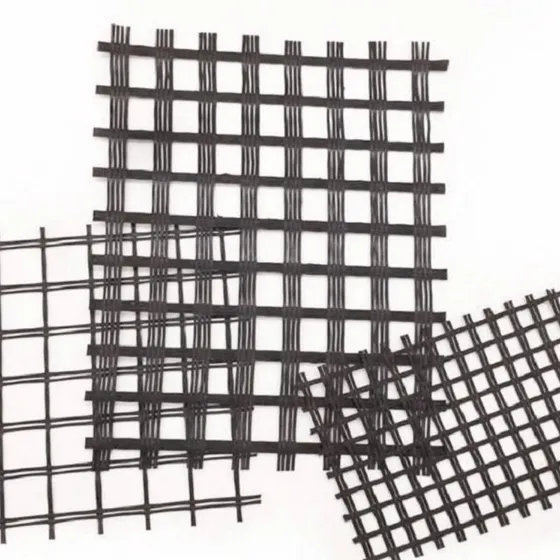 Geogrid
 Bitumen-coated fiberglass geogrid for asphalt overlays — warp-knitted alkali-free glass fibre, 25–120 kN/m, elongation ≤ 4%, standard and self-adhesive.
 Geogrid
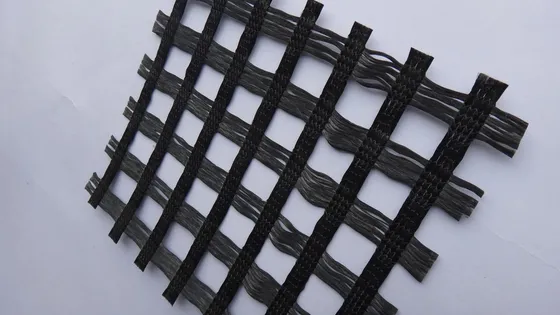
 Warp-knitted PET geogrid with published long-term design strength — 34 to 452 kN/m LTDS at a 120-year design life, PVC, SBR or bitumen coated.