What a fiberglass geogrid does in a pavement
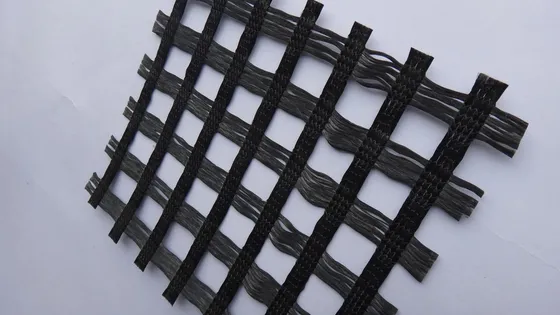
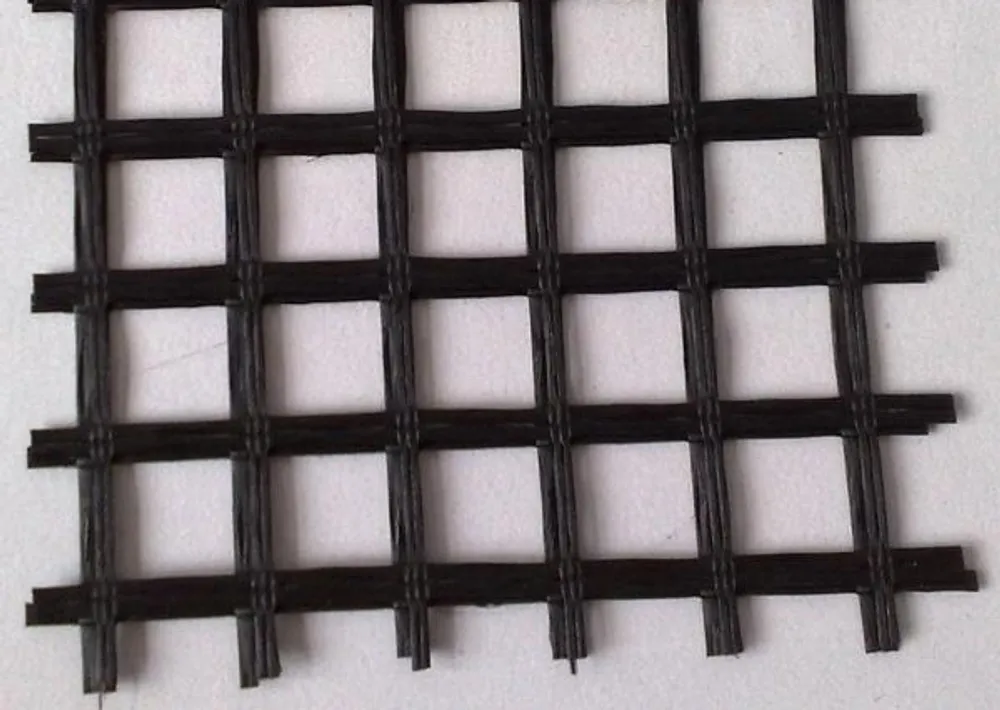
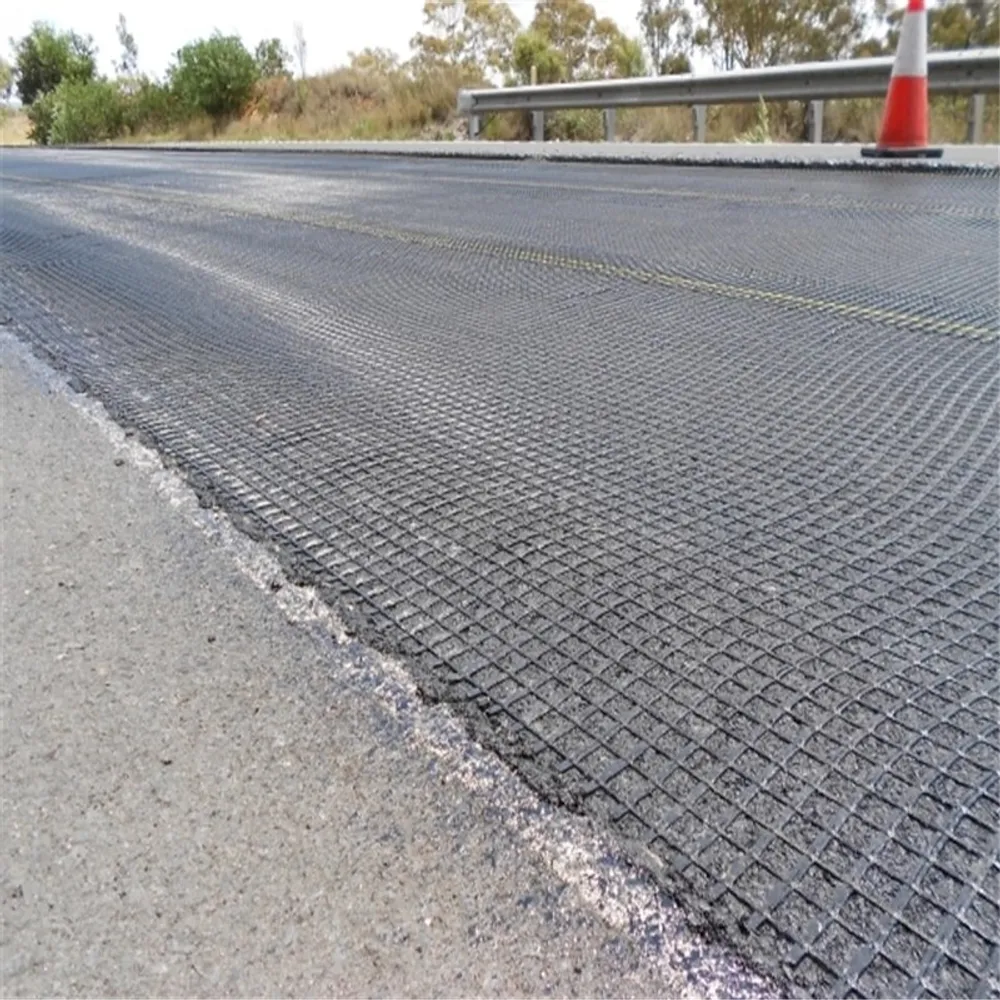
A fiberglass geogrid is not a soil reinforcement product. It is placed inside the pavement structure — between the milled or existing surface and a new asphalt layer — to deal with cracking rather than with bearing capacity. When an old crack or joint opens and closes under traffic and temperature, the movement concentrates stress at one line in the new overlay and drives a reflective crack straight to the surface, often within two or three seasons. The grid sits in that stress path, picks the load up in tension and spreads it sideways over a much wider band of asphalt, so no single section reaches its cracking strain. That is the whole purpose of an asphalt geogrid, and it is why the product is specified by modulus rather than by aperture size.
Why glass fibre and not plastic
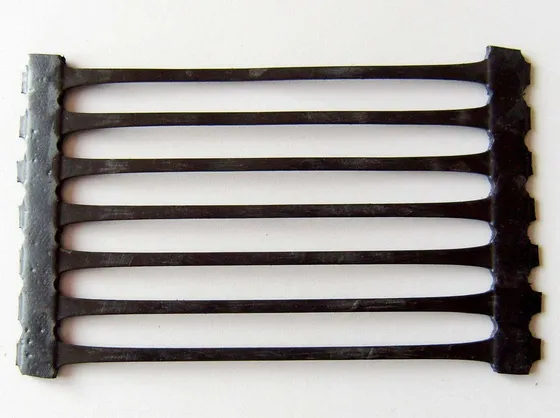
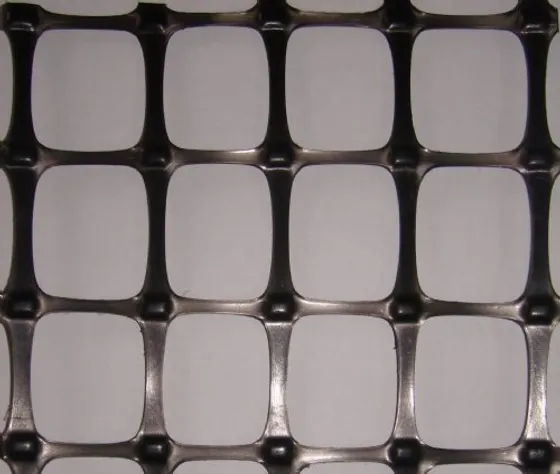
Plastic geogrids are the right answer under a road, not inside one. Two properties decide it. First, strain: asphalt cracks at well under 1% strain, so a reinforcement layer only helps if it carries load at a strain the asphalt can still tolerate. Glass fibre reaches its rated breaking strength at ≤ 4% elongation, while polymer grids need far more stretch before they take meaningful load — by then the overlay has already cracked. Second, heat: hot-mix asphalt is placed at roughly 150 °C and compacted immediately. Glass fibre softens above 1000 °C and is unaffected; polyolefin grids soften in that range. Together these two facts make glass fiber geogrid the standard material for geogrid asphalt reinforcement, and keep our biaxial geogrid and uniaxial geogrid in their own roles below the pavement.
Standard EGA and self-adhesive EGAA
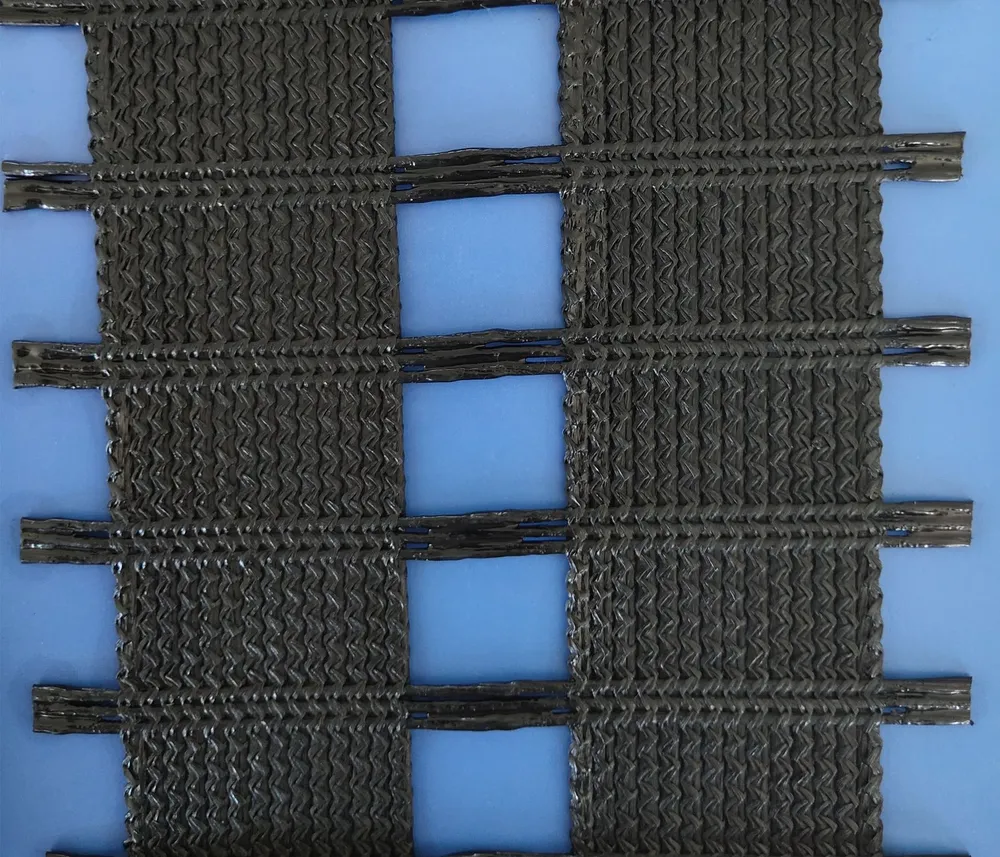
The standard EGA range runs 25-25, 30-30, 40-40, 50-50, 60-60, 80-80, 100-100 and 120-120 kN/m, equal in warp and weft, all at ≤ 4% elongation at break. It is fixed with nails or staples over a tack coat before paving. The self-adhesive EGAA range carries the same strength ladder with a pressure-sensitive adhesive backing and release film, so the grid can be rolled out and pressed down without nails on smaller resurfacing jobs. Note that the self-adhesive range is published without a 60-60 grade — that is how the material is made, not a gap in our listing, so specify 50-50 or 80-80 in EGAA unless we confirm otherwise for your order. One mill quotes glass fibre grids up to 400 kN/m; grades above 120 kN/m are quote-on-request against a mill certificate rather than stock items.
Laying the grid in the field
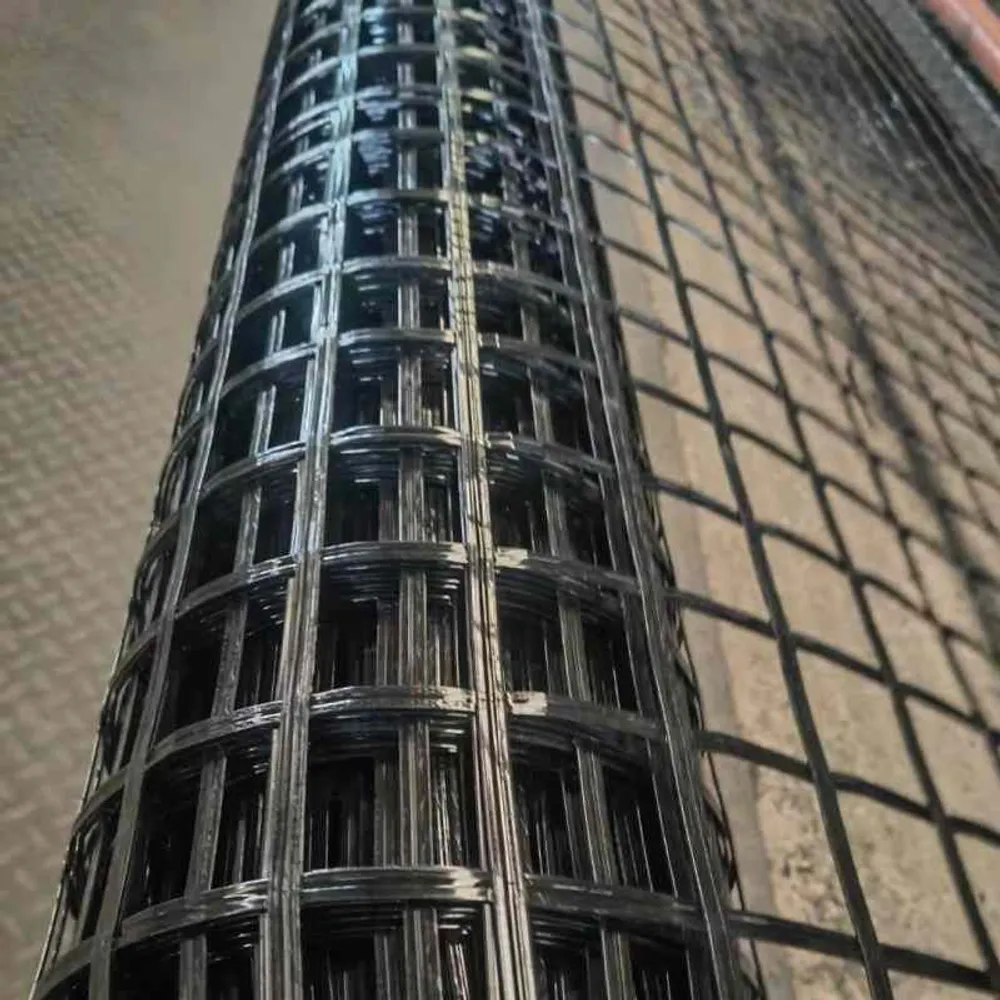
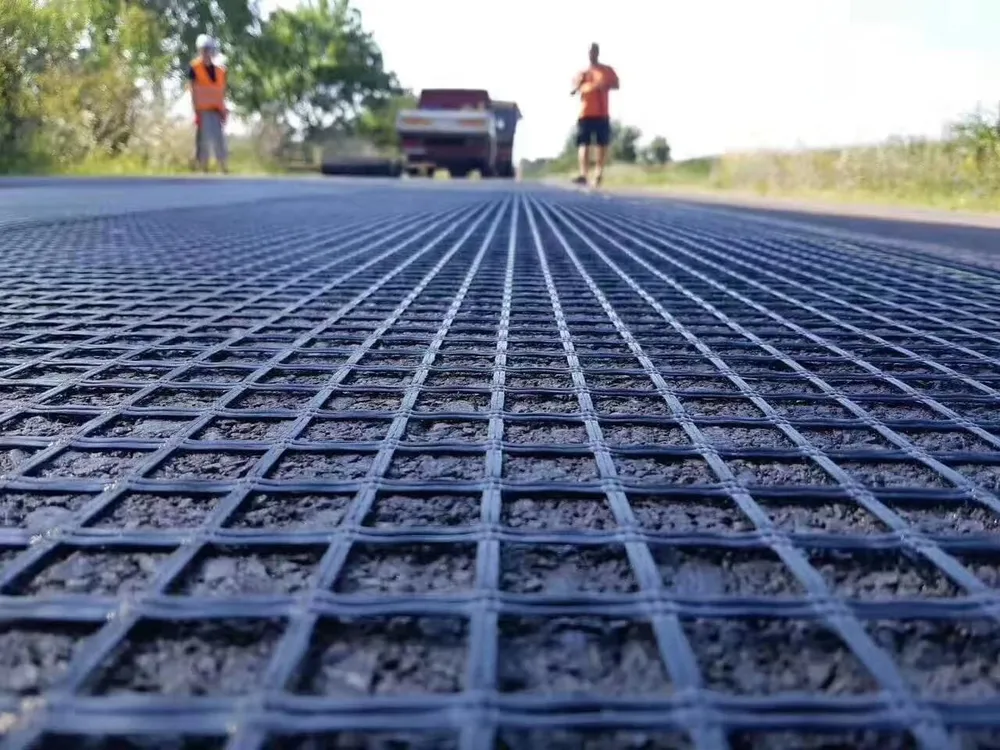
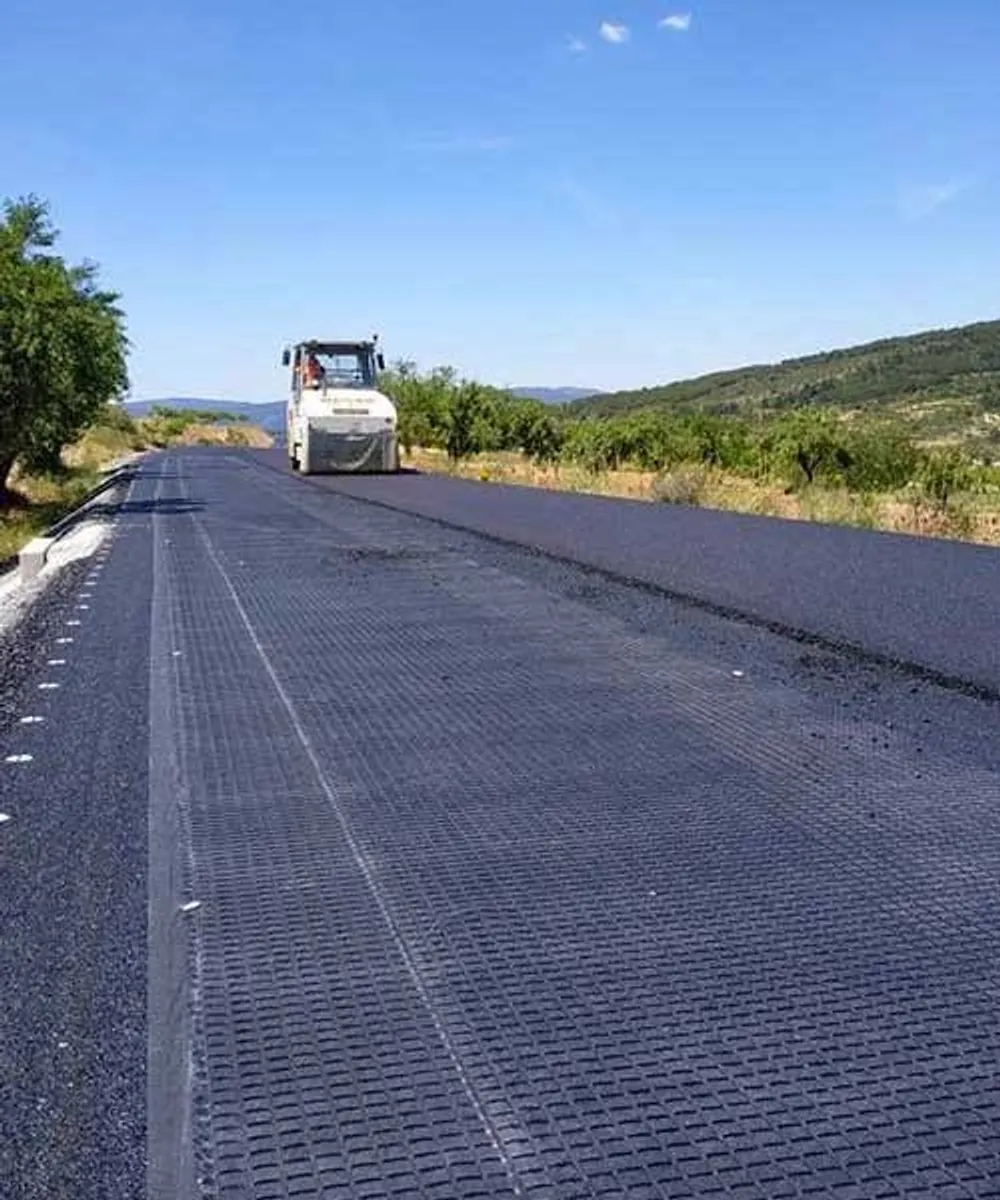
The surface is milled or cleaned, potholes and wide cracks are patched, and a bitumen tack coat is sprayed at the rate the job specifies. The roll is laid flat with the machine direction along the paving direction, tensioned by hand so there are no waves, and overlapped roughly 100–200 mm at the seams; transverse joints are lapped in the direction of paving so the screed cannot lift an edge. Paving follows the same day. Because the modified bitumen coating melts into the tack coat and the new mix, the grid ends up embedded in mastic rather than lying loose — that bond is what lets geogrid pavement reinforcement transfer stress at all. A minimum 40 mm overlay is normal practice over the grid; thinner surfacings do not confine it properly.
Where it is specified
The usual case is an asphalt overlay on a pavement that is structurally sound but cracked — fatigue-cracked highway, an old concrete slab road being surfaced, or a widening where the new and old sections will move differently. Airport aprons, port yards and bus lanes use the higher grades because loads are heavy and slow. Municipal resurfacing uses the lighter grades where overlay thickness is capped by kerb heights. Where the problem is the subgrade rather than the surface, the answer is a base-course grid or a separation layer instead: see steel-plastic geogrid and polyester geogrid for reinforcement, or nonwoven geotextile and woven geotextile for separation under the base.
Sizes, options and quotations
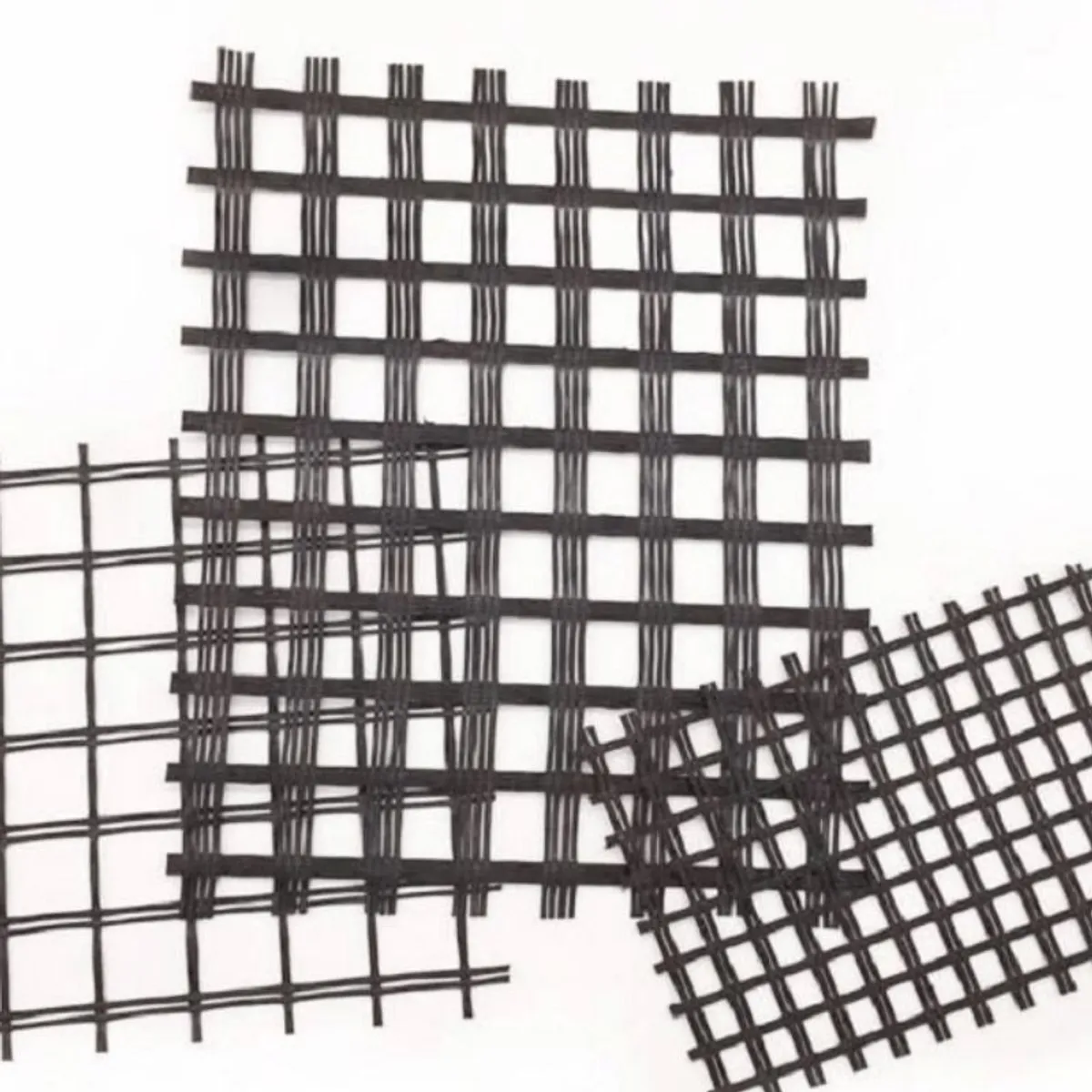
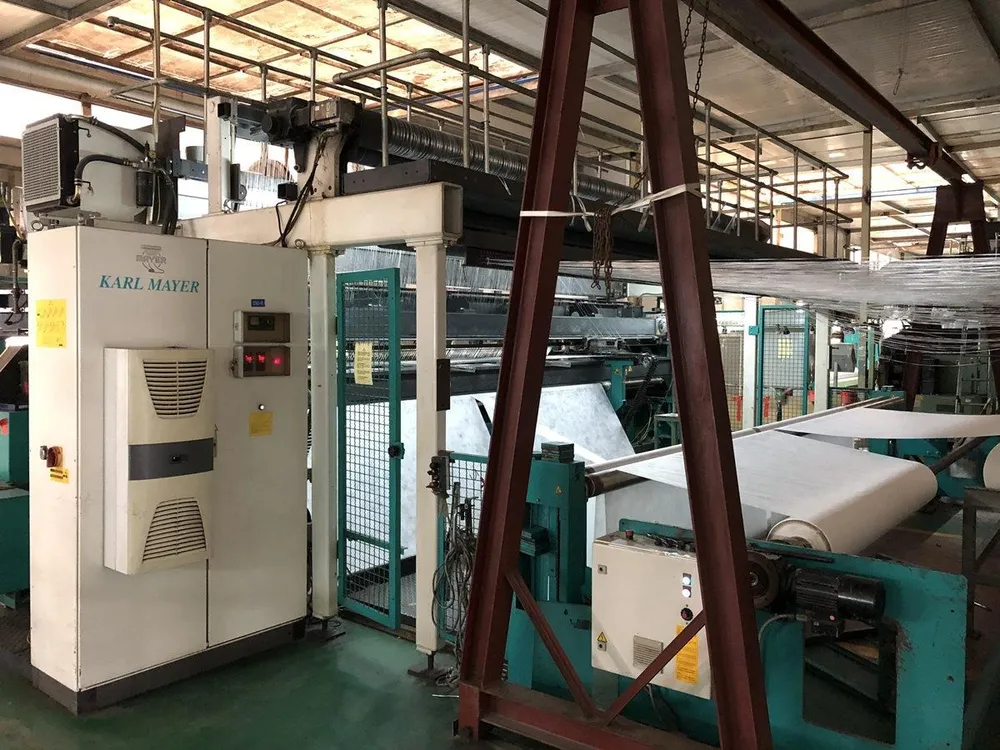
We produce fiberglass geogrid across the full grade range, warp-knitting alkali-free glass fibre roving and coating it with modified bitumen on our own coating lines. That means we quote across grades and mesh sizes rather than pushing a single standard build. Mesh is available at 12.7, 25.4 or 50 mm, roll widths at 2, 4 and 6 m within a 1–6 m range, and strength, width and mesh can be customised to order. Roll length and mass per unit area are not published for this line and are confirmed per order with the mill. Send the required strength, mesh, width and quantity — plus whether you want standard or self-adhesive — and we will come back with an ex-works price and the current test certificate. The full range sits in our geosynthetics catalogue.

 Geogrid