
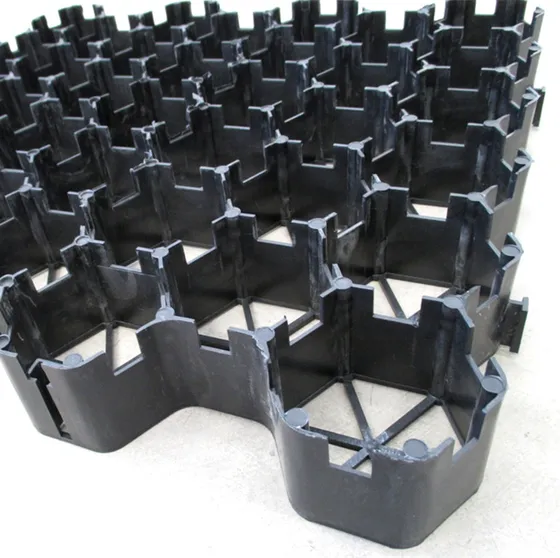
 Gravel & Grass Grids
 Gravel Grid
HDPE gravel grid / grass paver — a snap-together cellular grid that confines gravel or grass for permeable, load-bearing driveways, paths and slopes.
- HDPE cellular paver
- Interlocking
- Gravel / grass · permeable
Why hexagonal cells outperform square grids for gravel driveways and patios, and how honeycomb geometry spreads load and drains water.
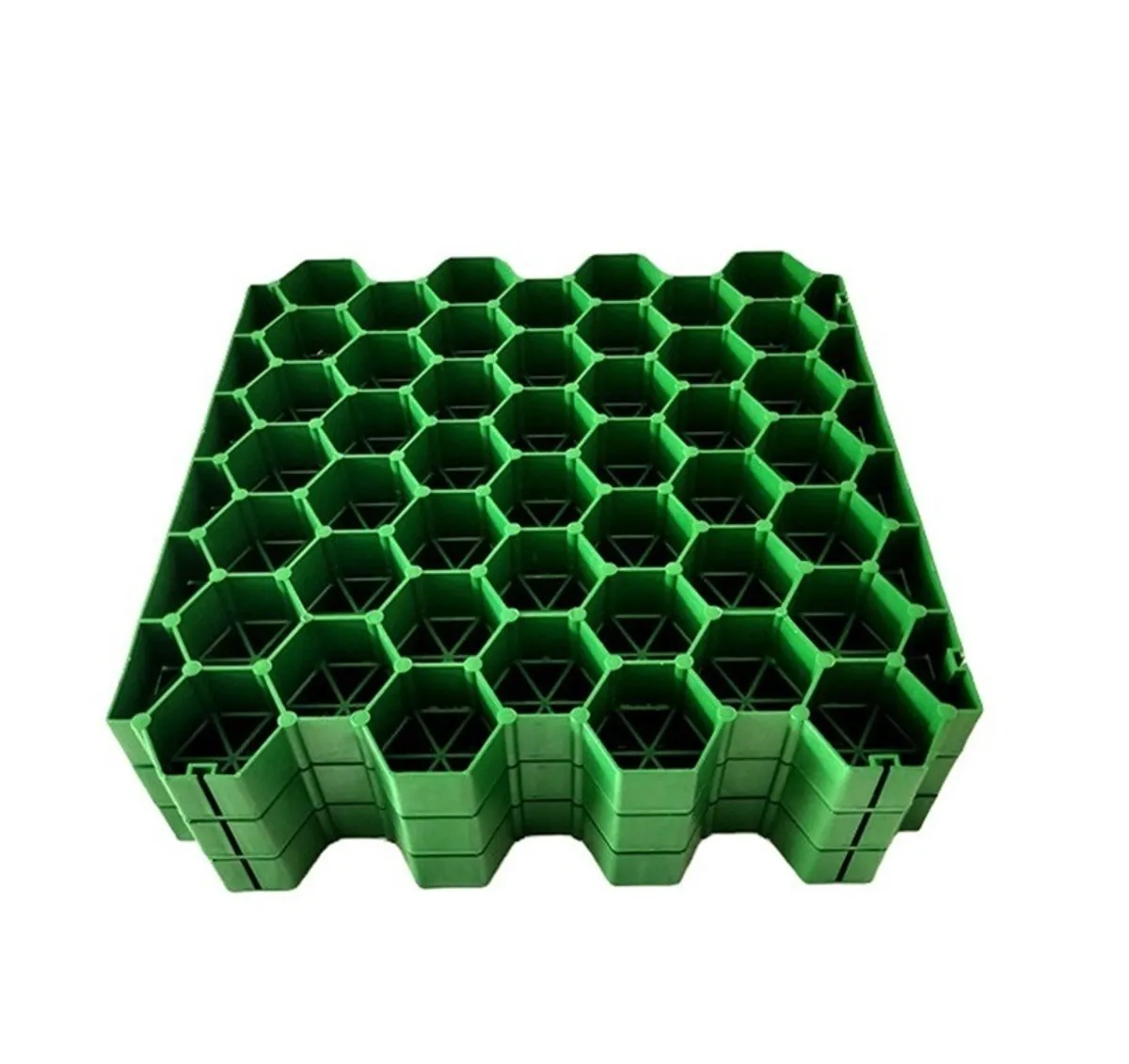
Loose gravel on a driveway migrates within a season. Tires push it sideways, rain washes fines into ruts, and every few months someone is out there raking it back into place. A gravel grid — essentially a cellular grid for gravel — holds each stone in its own pocket so the surface stops moving. The base underneath still has to be compacted properly — the grid confines the gravel, it doesn't replace a subbase.
Most gravel grids on the market use a honeycomb (hexagonal) cell rather than a square one — a honeycomb gravel stabilizer — and it's not just a manufacturing preference. A hexagon has six walls sharing the load with six neighboring cells, so a wheel load lands on a wall that's braced from three directions instead of two. Square grids flex more at the corners because each cell only shares two edges fully; over time that flex is what causes rutting at the wheel tracks. The honeycomb pattern also self-locks when panels are welded edge to edge — there's no seam that opens up under repeated turning loads the way a butt-jointed square grid can.
The open lattice of a honeycomb gravel grid lets water pass straight through to the base rather than sheeting across the surface, which is why these are also called permeable driveway grid systems. Combine that with a nonwoven geotextile laid underneath as a separation layer, and fines from the subgrade stay out of the gravel while water still drains freely. Skip the geotextile and gravel slowly works its way into the base soil, and the driveway starts to rut in the same spots every year.
A patio gravel grid or gravel path grid only needs to hold gravel in place under foot traffic, so a shallow 30mm cell is usually enough. A gravel cell driveway carrying regular car traffic needs more depth to keep gravel confined under braking and turning loads — 40-50mm is the common range, and for larger vehicles or a gravel grid for shed base access where a truck occasionally rolls through, a textured HDPE geocell with deeper cells (75-100mm) gives more sidewall support. Deeper isn't always better — oversized cells for foot traffic use just add cost.
Excavate and compact the subgrade, lay the geotextile, add a compacted aggregate base if the ground is soft, roll out the grid panels and pin them down, then fill with gravel and screed it level with or just above the cell tops. Full step-by-step details, panel overlap, and compaction specs are in our gravel grid installation guide.
Free Geosynthetics Spec & Selection Guide
Material grades, thickness/GSM sizing and price ranges for your project — sent to your inbox.
Yes, and the hexagonal interlock actually helps here — the cell walls resist gravel creeping downhill better than an open square pattern. On steeper grades, pin the panels more frequently and consider a geocell with deeper cells for extra sidewall grip.
10-20mm angular gravel locks together well inside the cells. Rounded pea gravel can still shift within its own pocket under load, so if you're set on pea gravel, choose a honeycomb grid for pea gravel with a smaller cell opening — angular stone otherwise remains the safer choice for driveways.
Only if the existing gravel is raked level and compacted first. Screed off enough loose stone that the grid sits flat, lay geotextile if one isn't already down, then place the grid and top up with fresh gravel.
Yes — HDPE gravel grids rated for driveway use are designed for regular passenger vehicle loads once installed over a properly compacted base. The grid confines the gravel to spread the load; it's the base compaction that ultimately carries the weight.
Gravel & Grass Grids HDPE gravel grid / grass paver — a snap-together cellular grid that confines gravel or grass for permeable, load-bearing driveways, paths and slopes.
 Geocell
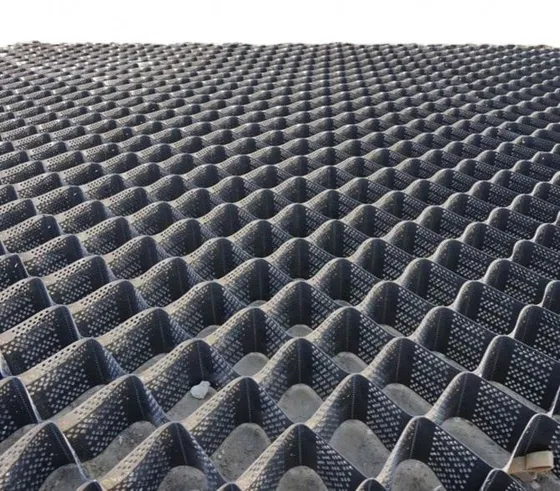
 Textured perforated HDPE geocell — a 3D honeycomb ground grid with textured, perforated cell walls for extra friction and drainage. Welded, custom-sized.
Tell us your application and quantity — our English-speaking team replies within one business day.