Зачем гравию вообще нужна решётка
Рассыпной гравий на проезде расползается за один сезон. Шины сдвигают его вбок, дождь вымывает мелочь в колеи, и каждые пару месяцев кто-то снова разравнивает его граблями. Гравийная решётка удерживает каждый камень в собственной ячейке, и поверхность перестаёт двигаться. Основание под ней всё равно нужно уплотнить как положено — решётка удерживает гравий, а не заменяет подстилающий слой.
Шестиугольная ячейка против квадратной
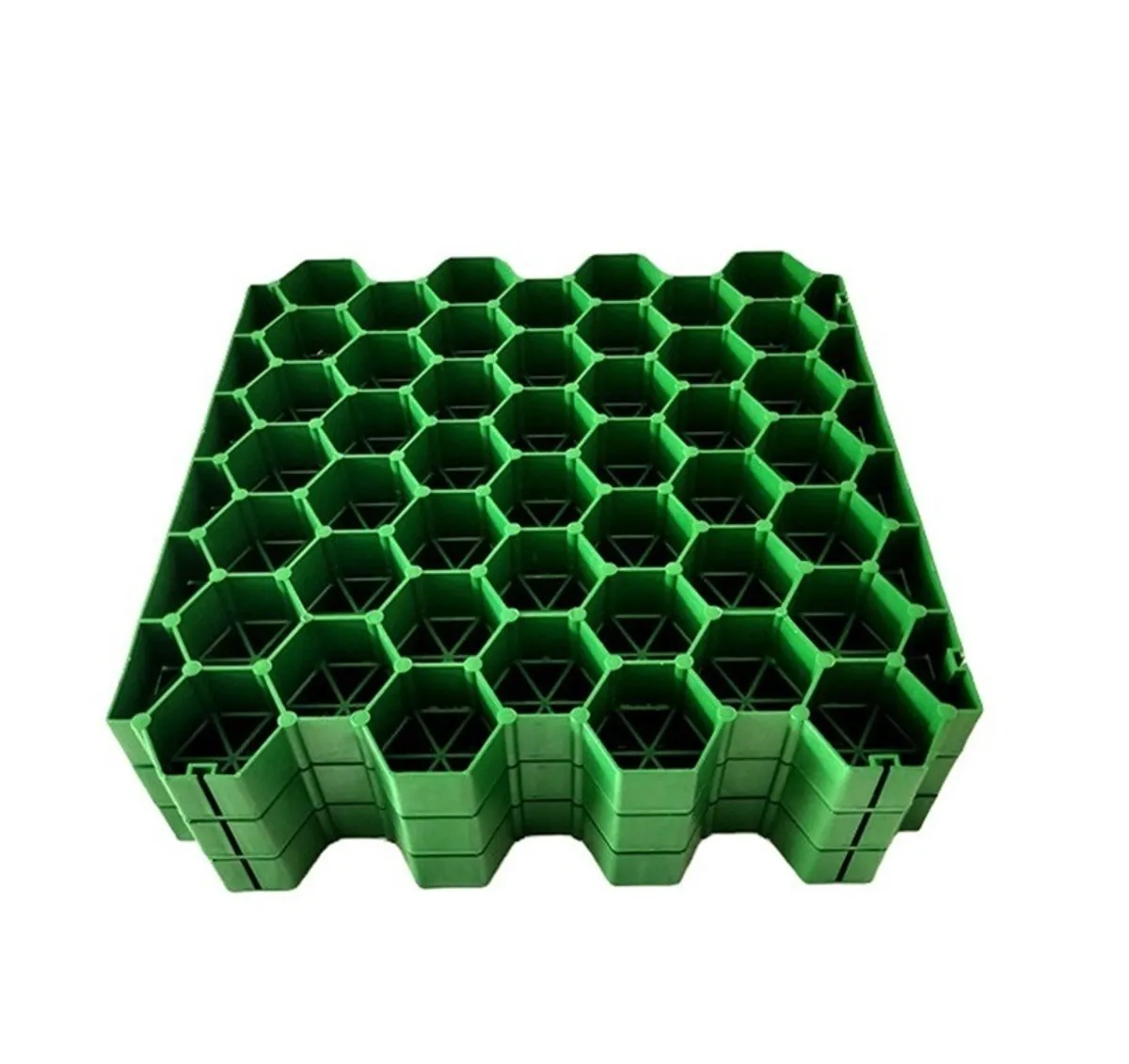
Большинство гравийных решёток на рынке используют сотовую (шестиугольную) ячейку, а не квадратную, и это не просто вопрос технологии производства. У шестиугольника шесть стенок делят нагрузку с шестью соседними ячейками, поэтому колёсная нагрузка ложится на стенку, подпёртую сразу с трёх направлений, а не с двух. Квадратные решётки сильнее гнутся по углам, потому что каждая ячейка полностью делит нагрузку только с двумя соседями; со временем именно этот изгиб и даёт колейность по следу колёс. Сотовый рисунок ещё и самозаклинивается при сварке панелей встык — там нет шва, который раскрывается под повторной нагрузкой на поворотах, в отличие от стыкового соединения квадратной решётки.
Дренаж и заклинивание работают вместе
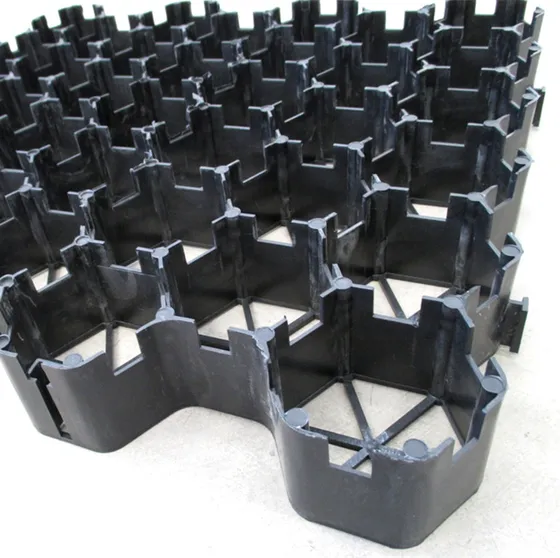
Открытая решётка сотовой гравийной решётки пропускает воду прямо в основание, а не гонит её по поверхности листом — поэтому такие решётки ещё называют водопроницаемыми решётками для проезда. Добавьте под неё нетканый геотекстиль в качестве разделительного слоя — и мелкая фракция из подстилающего грунта останется вне гравия, а вода будет уходить свободно. Без геотекстиля гравий постепенно уходит в грунт основания, и проезд начинает колееобразоваться каждый год на одних и тех же местах.
Выбор глубины ячейки: проезд, площадка или площадка под навес
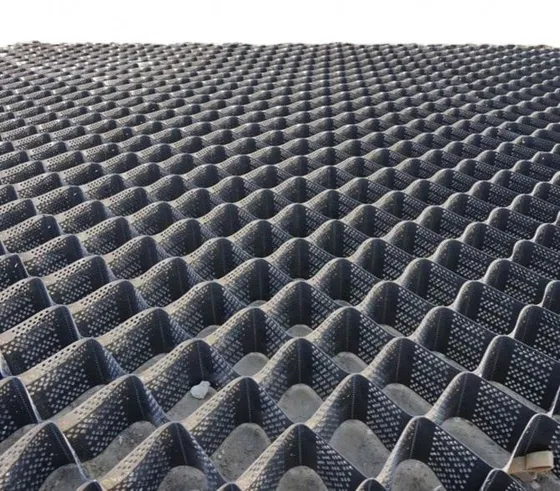
Гравийной решётке под дорожку или площадку достаточно удерживать камень под пешеходной нагрузкой, поэтому обычно хватает неглубокой ячейки 30 мм. Проезду с регулярным автотрафиком нужна большая глубина, чтобы удержать гравий под торможением и на поворотах — 40-50 мм это обычный диапазон, а для более крупной техники или площадки под навес, куда изредка заезжает грузовик, текстурированная объёмная георешётка ПНД с более глубокими ячейками (75-100 мм) даёт больше опоры по боковой стенке. Глубже не всегда лучше — избыточная глубина ячейки под пешеходную нагрузку просто добавляет цену.
Порядок монтажа вкратце
Выберите грунт и уплотните основание, уложите геотекстиль, при мягком грунте добавьте уплотнённый слой щебня, раскатайте панели решётки и пришпильте их, затем засыпьте гравием и разровняйте вровень или чуть выше верха ячеек. Полный пошаговый порядок, нахлёст панелей и параметры уплотнения — в нашем руководстве по монтажу гравийной решётки.
Бесплатный гид по выбору геосинтетики и спецификациям
Марки материала, подбор толщины/плотности и диапазоны цен для вашего проекта — на вашу почту.

 Георешётки для парковки