
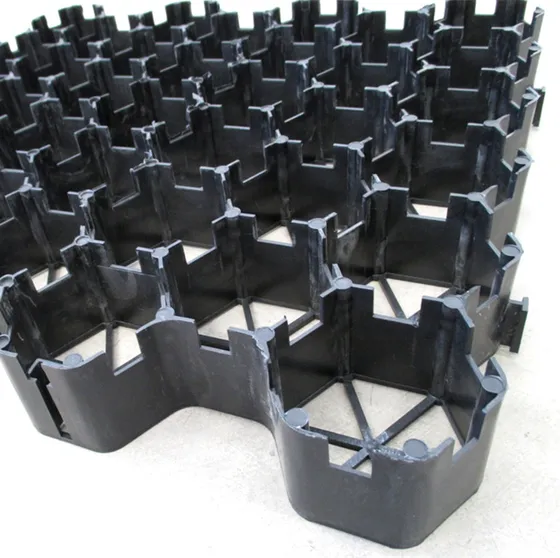
 Gravel & Grass Grids
 Gravel Grid
HDPE gravel grid / grass paver — a snap-together cellular grid that confines gravel or grass for permeable, load-bearing driveways, paths and slopes.
- HDPE cellular paver
- Interlocking
- Gravel / grass · permeable
How to plan a gravel grid installation for driveways, patios and paths: base prep, membrane, laying pattern, fill and compaction, with a comparison table.
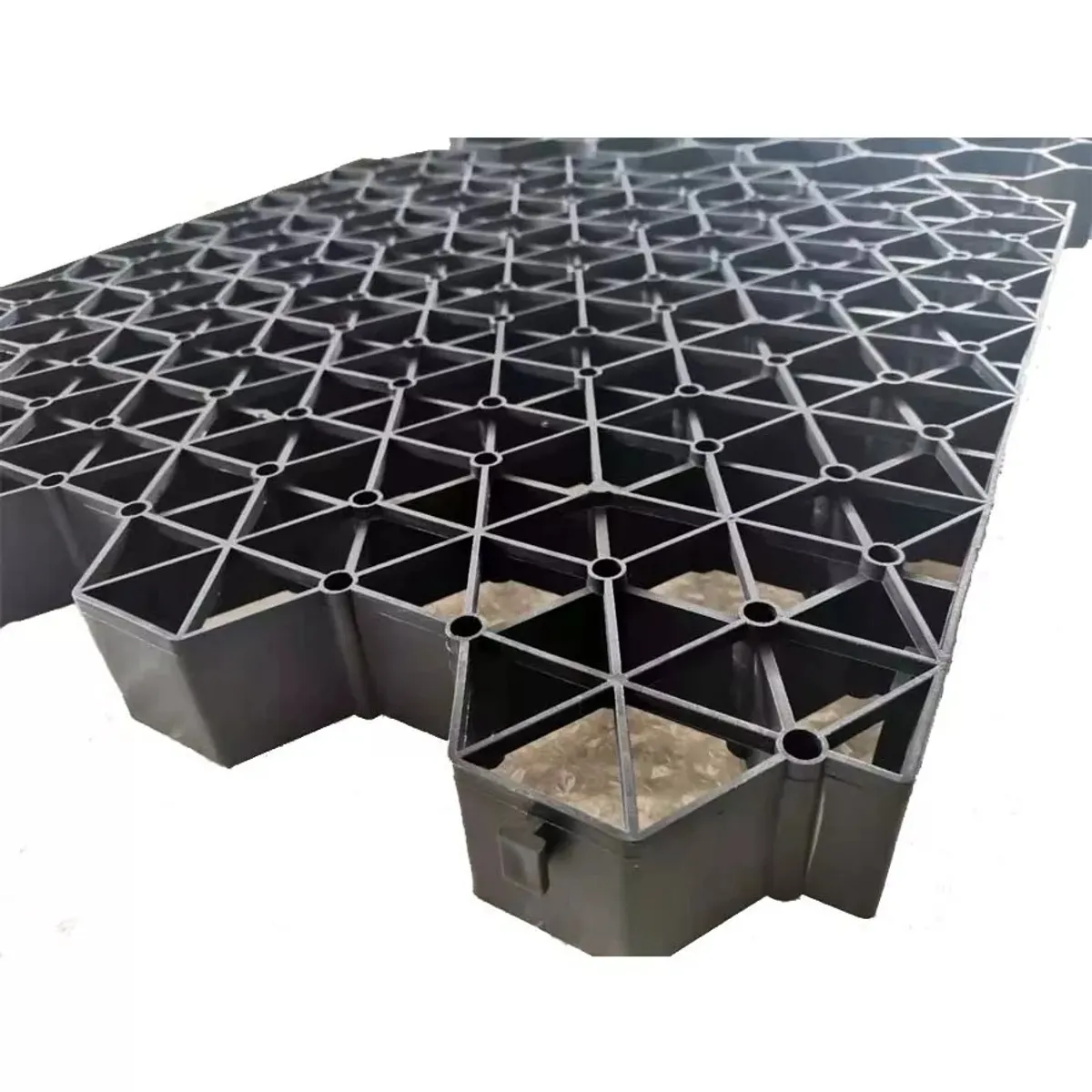
Loose gravel migrates. Cars push it into ruts, foot traffic kicks it onto the lawn, rain washes fines into low spots. A gravel grid is a honeycomb gravel grid made from HDPE cells that lock the stone in place. Each cell acts as a small retaining wall for the gravel inside it, so the surface keeps its shape under load instead of rutting or spreading.
Excavate to remove topsoil and organic matter, then compact the subgrade. On clay or silty soils, roll out a nonwoven geotextile before the grid — this is what suppliers mean by a gravel grid with membrane. The fabric keeps subgrade fines from pumping up into the gravel while still letting water pass through, which is why the finished surface behaves as a permeable driveway grid rather than a sealed pavement.
Unroll the panels edge to edge. Most gravel stabilisation grid products use interlocking gravel grids with tab-and-slot joints, so no separate connectors are needed on flat runs. Pin the cells to the base every metre or so, especially on slopes, and trim panels with a utility knife at curves or drain covers. A well-laid driveway grid system should sit flat with no gaps between panels before you add stone.
Fill the cells with angular gravel, slightly overfilled, then compact with a plate compactor until the stone sits level with the cell walls. Don't use rounded pea gravel on its own — it won't interlock and will pull out from under tyres. For heavier vehicle traffic, ask about a textured HDPE geocell, which gives more wall height and a rougher cell surface for extra grip on the infill.
A driveway needs a gravel grid pavers approach: full base course, membrane, and a grid rated for vehicle loads. A patio or path carries only foot traffic, so a lighter gravel retention grid over a thinner base is enough, and cell depth can drop from 40mm to 20-25mm. For slopes and drainage-heavy ground, see our note on geocell ground stabilization. Send us your project specs — surface type, load, and area — and we'll size the grid and quote a roll count.
Free Geosynthetics Spec & Selection Guide
Material grades, thickness/GSM sizing and price ranges for your project — sent to your inbox.
Use 40mm cell depth for driveways carrying regular car traffic; 20-25mm is enough for patios, paths and pedestrian areas.
Yes on clay, silt or any soil that holds water — the geotextile stops subgrade fines mixing into the gravel and keeps the base draining.
Yes, pin the panels into the base every metre and run the cell rows across the slope, not up and down it, to stop the fill sliding.
Angular gravel between 10-20mm locks into the cells best; rounded pea gravel tends to roll and won't stay interlocked.
Gravel & Grass Grids HDPE gravel grid / grass paver — a snap-together cellular grid that confines gravel or grass for permeable, load-bearing driveways, paths and slopes.
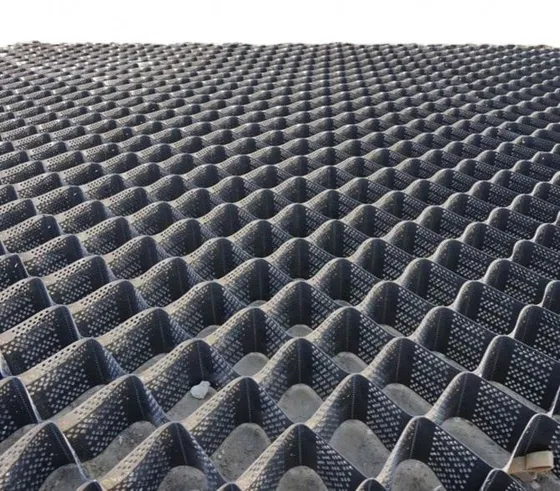 Geocell
 Textured perforated HDPE geocell — a 3D honeycomb ground grid with textured, perforated cell walls for extra friction and drainage. Welded, custom-sized.
 Geotextile
 Needle-punched nonwoven geotextile fabric (PET / PP staple fiber) to AASHTO M288 — for filtration, separation, drainage and protection in French drains.
Tell us your application and quantity — our English-speaking team replies within one business day.