
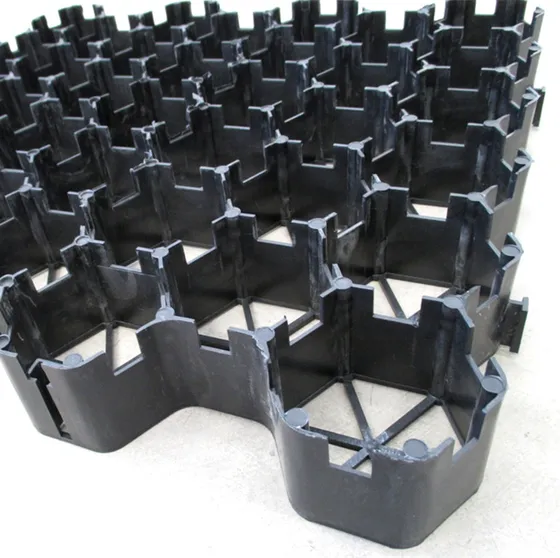
 Gravel & Grass Grids
 Gravel Grid
HDPE gravel grid / grass paver — a snap-together cellular grid that confines gravel or grass for permeable, load-bearing driveways, paths and slopes.
- HDPE cellular paver
- Interlocking
- Gravel / grass · permeable
Gravel grid vs geocell, plain and honest: gravel grid for flat driveways and parking, geocell for slopes, soft subgrade and heavy traffic.
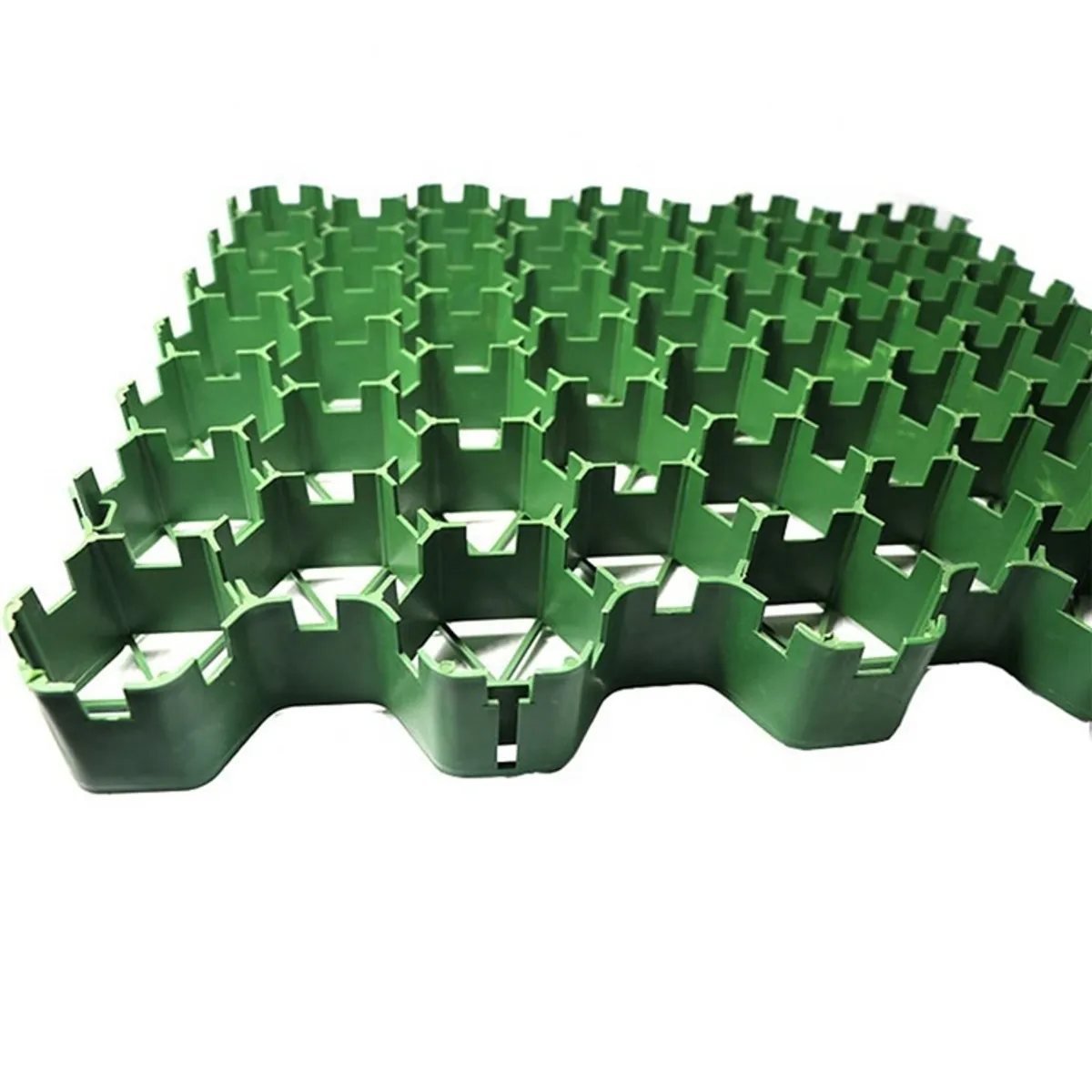
Both hold loose fill in place so it stops spreading under load — that's where the confusion starts. A gravel grid is a rigid, shallow HDPE lattice panel, cells usually 30–40 mm deep, snapped together into a flat interlocking sheet that you fill with gravel or let grass grow through. A geocell is a flexible web of welded HDPE strips that expands on site into a deep honeycomb mattress, 75–200 mm of cell depth, built to confine aggregate or soil under real load or on a slope. Same principle, different depth and different flex — that's the whole gravel grid vs geocell question. If you landed here searching geocell vs geogrid: a geogrid is a flat planar mesh laid inside a soil layer for tensile reinforcement, not a 3D cell at all — different product, different job, don't mix them up.
A gravel grid system earns its keep on ground that's already flat or close to it — driveways, overflow parking, footpaths, glamping pads. The low-profile cells stop gravel migrating and rutting under wheels and foot traffic while keeping the surface permeable, so you're not fighting drainage on top of everything else. It comes in dark recycled HDPE or a gravel grid white / light-grey option that blends with pale limestone or marble chip instead of showing black through the stones. Cheap gravel grids with thin walls flex and crack under repeated car weight — for a driveway with daily traffic, spec a heavy duty gravel grid with reinforced ribs; the extra load rating is worth more than the few cents you save per square metre.
Once the ground isn't flat, or the load is more than foot and car traffic, a gravel grid's shallow cells get pushed sideways faster than they can confine anything — that's when you move to geocell. The deeper cells confine a much thicker fill layer against both gravity and wheel load, which is why geocell shows up as a geocell ground grid under haul roads on soft clay, behind retaining structures, and on embankments. For geocell slope stabilization, use a textured perforated geocell — the texture adds friction against the fill and the perforations let roots and water cross between cells, both of which matter on a slope protection geocell job steeper than about 1:2. On flatter ground with lighter loads, a smooth HDPE geocell does the same confinement job for less.
Gravel grid panels click together in minutes and use less material, so they're the cheaper, faster build for a straightforward driveway or car park. Geocell takes longer — you stretch the panel taut, peg the perimeter, anchor the crest on a slope — but it confines a far deeper section and spreads load over a wider footprint, which is what soft or sloped ground actually needs. Skip that install step on either product and you lose the confinement you paid for: an unstretched geocell panel lets one cell take the whole load instead of the mat, and a gravel grid laid on ungraded ground rocks and cracks under the first heavy vehicle. For the full geocell install sequence, see our geocell ground stabilization guide.
Flat ground, light-to-medium load, budget matters: gravel grid. Sloped ground, soft subgrade, or heavy or constant traffic: geocell, textured if it's a slope or needs vegetation, smooth if it's flat and load is light. Tell us the ground shape and the traffic you're designing for and we'll confirm the cell depth and product — gravel grid, smooth geocell or textured geocell — before you order.
Free Geosynthetics Spec & Selection Guide
Material grades, thickness/GSM sizing and price ranges for your project — sent to your inbox.
Depth and flex. A gravel grid is a rigid panel with shallow cells (30–40 mm) built for flat ground like driveways and parking. A geocell is a flexible, deeper cell mattress (75–200 mm) that confines fill under heavier load or on a slope. Both stop loose fill spreading; geocell just does it for thicker layers and steeper ground.
They're not interchangeable. Geogrid is a flat mesh you bury inside a soil layer for tensile reinforcement. Geocell is a 3D honeycomb that confines fill at the surface. For visible slope protection — holding topsoil or gravel on the face of a bank — geocell is the right product; geogrid solves a different problem, reinforcing the soil mass itself.
Yes, that's the core use case — just spec a heavy duty gravel grid with reinforced ribs rather than a cheap thin-walled one. Thin panels flex and crack under repeated wheel load. If the driveway also has a slope or soft, wet subgrade, move up to geocell instead.
Gravel grid, per square metre — it uses less material and installs faster. But cost per job depends on the ground: if a gravel grid can't hold on a slope or soft subgrade and needs redoing, the cheaper product ends up costing more. Match the product to the ground first, then compare price.
Gravel & Grass Grids HDPE gravel grid / grass paver — a snap-together cellular grid that confines gravel or grass for permeable, load-bearing driveways, paths and slopes.
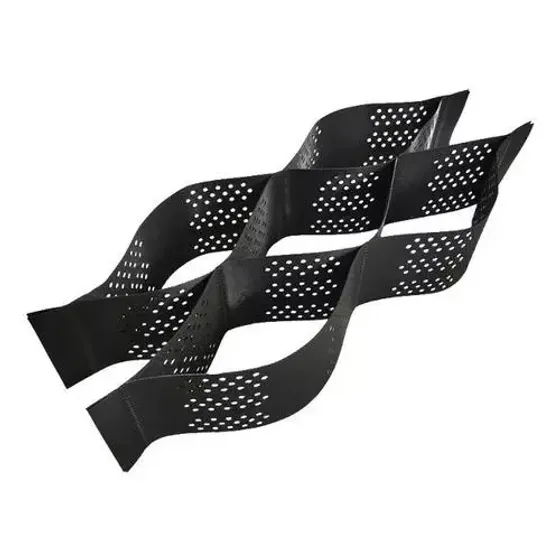 Geocell
 Smooth HDPE geocell — a 3D honeycomb ground grid for slope protection, gravel driveways and load support. Ultrasonically welded, panels custom-sized.
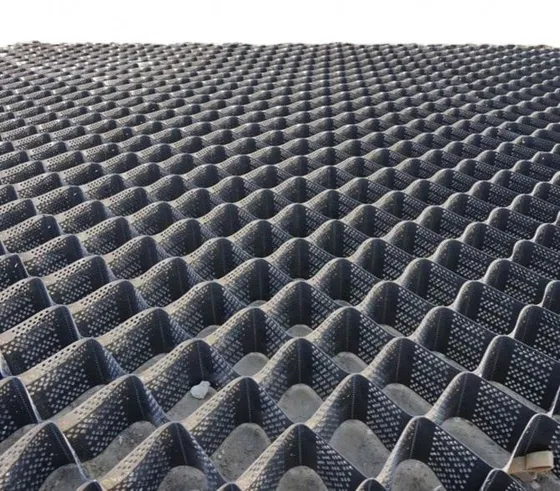 Geocell
 Textured perforated HDPE geocell — a 3D honeycomb ground grid with textured, perforated cell walls for extra friction and drainage. Welded, custom-sized.
Tell us your application and quantity — our English-speaking team replies within one business day.