
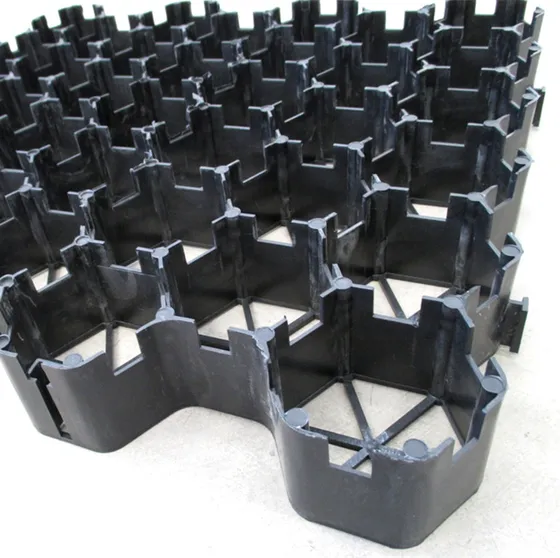
 Gravel & Grass Grids
 Gravel Grid
HDPE gravel grid / grass paver — a snap-together cellular grid that confines gravel or grass for permeable, load-bearing driveways, paths and slopes.
- HDPE cellular paver
- Interlocking
- Gravel / grass · permeable
SIGMA manufactures the HDPE gravel grid behind driveway grid systems worldwide, sizing and supplying the same interlocking panel by the pallet or the full container for distributors, landscapers and paving contractors. Below: how the grid works, how to pick a cell depth and fill for your driveway, how it installs, and how we quote bulk and OEM orders. Full datasheet figures are on the gravel grid product page.
A gravel driveway grid is an interlocking HDPE panel — sold as driveway grid pavers, driveway mesh for gravel, or plastic grids for gravel driveways — that confines loose stone so it stops migrating and rutting under tyres. Snapped together with locking tabs, the panels form a continuous ground grid driveway surface: the cell walls hold each stone in place while the open cell top stays level with the gravel, so the driveway keeps a firm, walkable, drivable face instead of loose scatter and wheel ruts. Without the grid, gravel on a driveway spreads sideways every time a car turns or brakes, leaving bare tyre tracks that need raking and topping up every season; the honeycomb of cells simply removes the room the stone has to move. The same panel, laid on a compacted base, works equally as a garden path or car-park grid, and because the cells sit flush with the finished gravel the surface reads as a normal gravel driveway rather than a visible plastic mat.
Specifying a gravel stabilizer grid driveway — a driveway plastic grid system — starts with cell depth and fill, not a single "one size fits all" panel. Shallower cells suit a car driveway carrying light, occasional traffic; deeper cells carry delivery vans and heavier repeat loads, and a deeper cell also holds a thicker layer of gravel before it needs topping up. Fill both with clean, angular gravel — angular stone locks against the cell walls and against its neighbours, where rounded pea gravel can still creep and roll before it settles in. Colour is normally black for UV stability, though the same tooling can run a green batch where a lighter surface is preferred. Where the subgrade itself is soft or saturated, a driveway grid alone will flex with the ground beneath it; on those sites we pair the surface grid with a geocell for driveway foundations first, then finish with the gravel mats for driveways on top, so the load-bearing work is split between a deep cellular base and a shallower wearing course. The selection table below sets out cell depth and duty by driveway type; send us the vehicle type and traffic frequency and we will confirm the panel grade before you order.
Excavate and compact the subgrade, then roll out a nonwoven geotextile as a separation membrane so fines cannot pump up into the fill over time. On soft ground add a compacted aggregate base reinforced with geogrid for gravel driveway subgrades before the panels go down — the geogrid carries the base course, the grid confines the wearing surface above it. Snap the grid panels together, pin or stake the edges, then fill the cells with gravel and screed level with or just above the cell tops so tyres and feet ride on stone, not plastic. None of this calls for special plant: a hand tamper or wacker plate for the base and a rake for the fill is normally enough for a driveway-scale area, which is part of why the grid is popular with landscapers and paving contractors working residential jobs. The full step-by-step sequence, panel overlap and compaction detail is in our gravel grid installation guide.
A permeable driveway grid lets rain drain straight through the gravel instead of running off a sealed surface, so there is less standing water on the drive and less load pushed onto site drainage and soakaways. It also skips the excavation, formwork and curing time of a poured driveway, and there is no slab to crack or seal coat to redo — an eco grid driveway stays serviceable with an occasional top-up of stone rather than a resurfacing job every few years. Shipping is lighter too: a pallet of folded or nested grid panels moves a lot of finished driveway area for its weight, next to the aggregate and cement that a concrete or asphalt job needs delivered to site. Where a client wants the look of loose gravel without the ongoing raking and refilling, the grid is what keeps the stone from spreading in the first place, and it can be lifted and relaid if the driveway is ever widened or rerouted.
We supply the driveway grid system by the pallet for smaller stock orders and by the full container for distributors, with cell depth, colour and panel size confirmed against your project or catalogue. OEM packaging and private labelling are available on standard production runs, so a distributor can put its own brand on the box without changing the panel underneath. Because the panels nest or fold flat, a container carries a large finished-area equivalent per shipment, which keeps freight cost per square metre down for resellers stocking ahead of a season. Send us the traffic type, area and destination port and we will come back with a panel specification, price and container loading plan — the same quoting process used for the wider gravel grid range.
Cell depth, fill and duty by driveway type — the same panel specification published on the gravel grid product page.
| Residential driveway | Heavy-duty / commercial driveway | Deep-fill / soft subgrade | |
|---|---|---|---|
| Cell depth | 25–30 mm cells | 40–50 mm cells | Geocell base layer beneath the grid |
| Typical fill | Clean angular gravel ≤ 12 mm | Clean angular gravel ≤ 12 mm, well compacted | Aggregate-filled geocell, gravel grid surface |
| Compressive strength | Grid alone up to ~37 MPa | Gravel-filled up to ~43 MPa | Confirmed per project |
| Typical traffic | Cars, light vans | Delivery trucks, fire access, overflow parking | Weak or saturated ground under any traffic |
Gravel & Grass Grids HDPE gravel grid / grass paver — a snap-together cellular grid that confines gravel or grass for permeable, load-bearing driveways, paths and slopes.
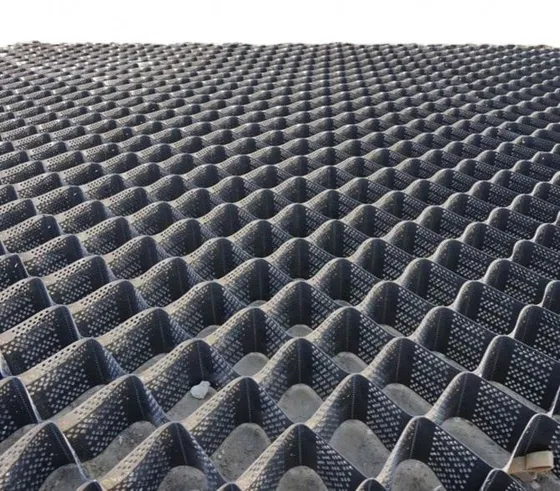 Geocell
 Textured perforated HDPE geocell — a 3D honeycomb ground grid with textured, perforated cell walls for extra friction and drainage. Welded, custom-sized.
 Geotextile
 Needle-punched nonwoven geotextile fabric (PET / PP staple fiber) to AASHTO M288 — for filtration, separation, drainage and protection in French drains.
The cells are designed for clean angular gravel up to about 12 mm — the angular faces lock against the cell walls and against each other, which is what stops the stone migrating. Rounded pea gravel can be used, but it packs less tightly inside the cell and may need topping up more often than an angular fill.
Yes, up to a moderate grade. Anchors are typically not needed up to about a 15° slope; beyond that, staking the panels down is advised so the grid does not creep downhill under repeated traffic and rain.
The grid itself carries a bearing stress of up to roughly 37 MPa empty, rising to about 43 MPa once the cells are filled and compacted with aggregate — the compacted fill inside the cells is what actually spreads the wheel load, not the plastic alone. Deeper cells and a compacted base are specified for delivery trucks and repeat heavy traffic; see the selection table above.
On any subgrade with fines, yes. A nonwoven geotextile keeps soil and gravel separated so the fill does not work its way down into the ground over seasons of traffic and rain, which is what causes a driveway grid to soften and rut over time.
By the pallet for smaller or trial orders, and by the full container for distributor stock, with cell depth, colour and panel size confirmed against your specification. Send us the traffic type, area and destination port and we will return a panel specification, price and container loading plan, with OEM packaging available on standard runs.