
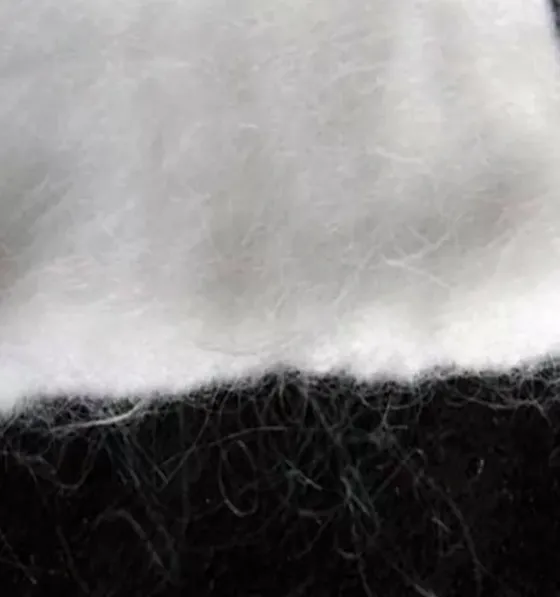
 Geotextile
 Nonwoven Geotextile
Needle-punched nonwoven geotextile fabric (PET / PP staple fiber) to AASHTO M288 — for filtration, separation, drainage and protection in French drains.
- AASHTO M288
- Needle-punched · ≥50% elong.
- Filtration · Drainage
How to pick geotextile weight in GSM or oz/yd² for separation, filtration and drainage jobs.
Geotextile is sold by weight because it's the easiest number to print on a roll label, but grams per square metre (GSM) or ounces per square yard (oz/yd²) only tells you how much material is in the sheet. Roughly, 1 oz/yd² converts to about 34 gsm, so a 4 oz non woven geotextile fabric sits around 130-140 gsm and an 8 oz sheet lands near 270 gsm — useful for comparing two nonwoven rolls against each other, useless for comparing a nonwoven against a woven geotextile fabric of the same weight. For engineers cross-referencing North American needle-punched grades, our Nonwoven Geotextile Weight & Equivalent Reference maps as follows: 4 oz/yd² (135–150 g/m²) corresponds to Mirafi 140N class drainage and separation fabric; 6 oz/yd² (200 g/m²) corresponds to Mirafi 160N class medium-duty filtration and road separation fabric; and 8 oz/yd² (270 g/m²) corresponds to Mirafi 180N class heavy-duty separation and liner cushion fabric. A woven and a nonwoven at the same GSM behave nothing alike: one is a flat grid of tapes with high tensile strength and low permittivity, the other is a felted mat of fibres with lower tensile strength and much higher flow-through. Weight is the starting filter for a spec, not the spec itself — it has to be read alongside the actual test property the job depends on, whether that's puncture resistance, AOS or flow rate.
For keeping aggregate out of soft or fine-grained subgrade, weight is really a proxy for puncture and tensile strength against whatever is riding on top. A lightweight 100-150 gsm nonwoven (roughly 3-4.5 oz) separates fill from a reasonable subgrade under foot traffic — garden paths, patios, light landscaping. Once vehicles are involved, or the subgrade CBR drops below about 3, step up to 200-270 gsm nonwoven or move to a woven geotextile fabric for driveway use, because wovens carry more tensile load per gram than nonwovens and resist the punching stress of loaded wheels better. Going heavier than the load requires just adds cost without adding separation performance — the fabric isn't the weak point once it's already stopping intermixing, the aggregate depth and compaction are.
The property that actually governs filtration is Apparent Opening Size (AOS) — the largest particle the fabric will pass — not GSM. Two nonwovens at the same weight can carry different AOS depending on fibre denier and how tightly they're needle-punched, so a non woven geotextile filter fabric spec sheet should always list AOS alongside weight. That said, weight still matters at the edges: a very light fabric under 100 gsm can have thin spots that let fines migrate long-term, while a 150gsm geotextile fabric or an 8 oz non woven geotextile fabric gives a thicker, more consistent filter layer for silty or gap-graded soils where a lighter sheet would eventually clog or bypass. For French drains and drain pipe wraps, a mid-weight nonwoven filter fabric in the 150-200 gsm range is the common workhorse; a woven geotextile filter fabric (monofilament, not slit-film) is the better call where you need filtration plus real tensile strength, such as behind a retaining wall drain.
This is the one place where heavier isn't automatically better. A non woven geotextile drainage fabric works because its needle-punched fibres create a 3D structure with in-plane permittivity — water moves through the thickness of the mat, not just across its face — but push the weight too high and the fabric compresses under load, closing off the void space that let water through in the first place. For wrapping perforated pipe or lining a gravel drain trench, 150-200 gsm nonwoven is the usual range; going to 8 oz or heavier only makes sense where the fabric is also doing separation duty against a very fine or unstable subgrade. Woven membrane comes into drainage work differently: monofilament wovens hold their opening size under confining pressure better than nonwovens, so they show up more in structural drainage — behind gabion walls, under railway ballast — where flow has to survive real compaction load, not just gravity feed.
Not every job is structural. A geotextile weed membrane or non woven geotextile landscape fabric for garden beds and mulch only needs to block light and root penetration, so 70-100 gsm is plenty — paying for 300 gsm here is money spent on nothing the plant bed needs. On the other end, geotextile underlayment under pavers, artificial turf or gravel driveways usually sits in the 150-200 gsm band, and a white geotextile in that weight range is worth requesting on visible landscaping jobs where a black nonwoven would show through pale stone. Rolls come in standard run lengths — a geotextile membrane 4.5m x 100m roll is a common size for larger separation and filtration jobs, cutting down on seam count and overlap waste. If you're weighing weight against total project cost, our geotextile price guide breaks down how weight, width and roll length move the per-square-metre number, and our woven vs nonwoven comparison covers the construction difference in more depth than weight alone can.
Free Geosynthetics Spec & Selection Guide
Material grades, thickness/GSM sizing and price ranges for your project — sent to your inbox.
About 130-140 gsm — a light-duty weight suited to filtration around drain pipe, separation under foot-traffic paths, and general landscape use. It's not the weight to spec under vehicle traffic or soft, poorly draining subgrade; step up to 200 gsm or more there.
On its own, 150 gsm nonwoven is on the light side for a driveway carrying regular vehicle traffic — it's more suited to patios and light foot-traffic paths. For a driveway, either move to a heavier 200-270 gsm nonwoven or switch to a woven geotextile, which carries more tensile and puncture strength per gram.
Nonwoven is the default for drainage because its felted structure keeps flowing through its thickness even under light compaction. Woven monofilament fabric is worth choosing instead where the drainage layer also carries real confining load — behind a retaining wall, under a structural fill — because it holds its opening size better under pressure.
70-100 gsm nonwoven is enough to block light and most root growth for garden beds, mulch areas and gravel paths. It's a light-duty landscape application, not a structural one, so there's no benefit to paying for a heavier filtration- or separation-grade fabric here.
Not necessarily — the deciding spec for filtration is Apparent Opening Size (AOS), not weight. A lighter fabric with the right AOS can filter fine soil correctly, while a heavier fabric with the wrong AOS still won't. Weight mainly matters for filtration at the margins, giving a thicker, more consistent layer against silty or gap-graded soils that would eventually clog or bypass a very light sheet.
Geotextile Needle-punched nonwoven geotextile fabric (PET / PP staple fiber) to AASHTO M288 — for filtration, separation, drainage and protection in French drains.
 Geotextile
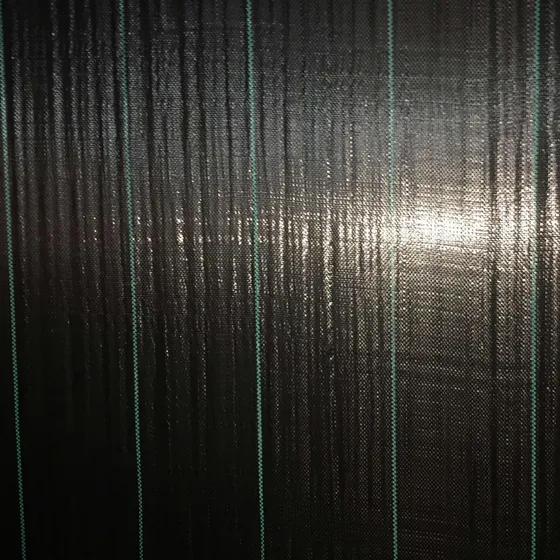
 High-strength woven geotextile fabric (PP / PET high-tenacity yarn) to AASHTO M288 — for separation, stabilization and reinforcement on roads.
Tell us your application and quantity — our English-speaking team replies within one business day.