Two products, two different jobs
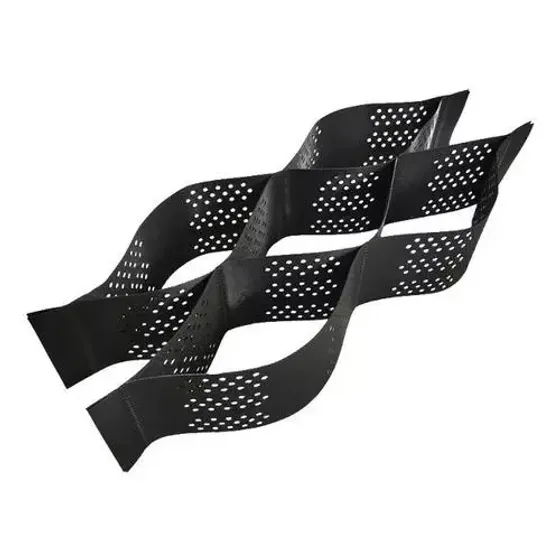
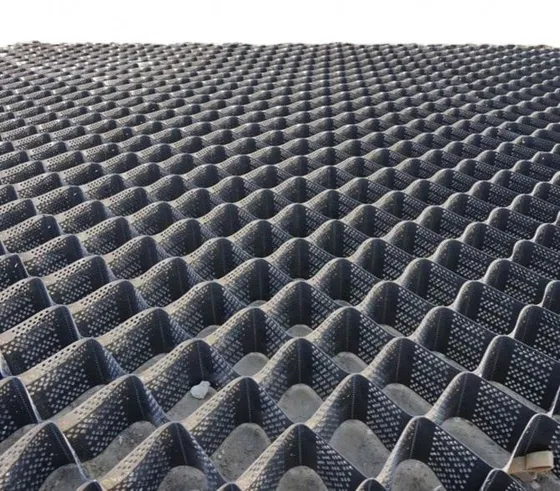
Search "geocell vs geogrid" and you'll find both pitched as ground reinforcement, which is technically true and practically misleading — they don't do the same work. A geocell is a honeycomb of welded HDPE strips that expands on site into a three-dimensional panel of cells, filled with soil, sand or aggregate; the cell walls confine that fill laterally so it can't spread under load or wash off a slope. A geogrid is a flat, open-mesh sheet — polyester, polypropylene or HDPE — buried inside a compacted soil or aggregate layer, where its ribs interlock with the surrounding material and carry tension the soil alone can't resist. Geocell works at or near the surface, in three dimensions. Geogrid works buried, in a single plane, in tension. That's the whole geocell vs geogrid question in one sentence: confinement vs tensile reinforcement, and the ground condition tells you which one you need, not personal preference.
Geocell: slope stabilization and erosion control
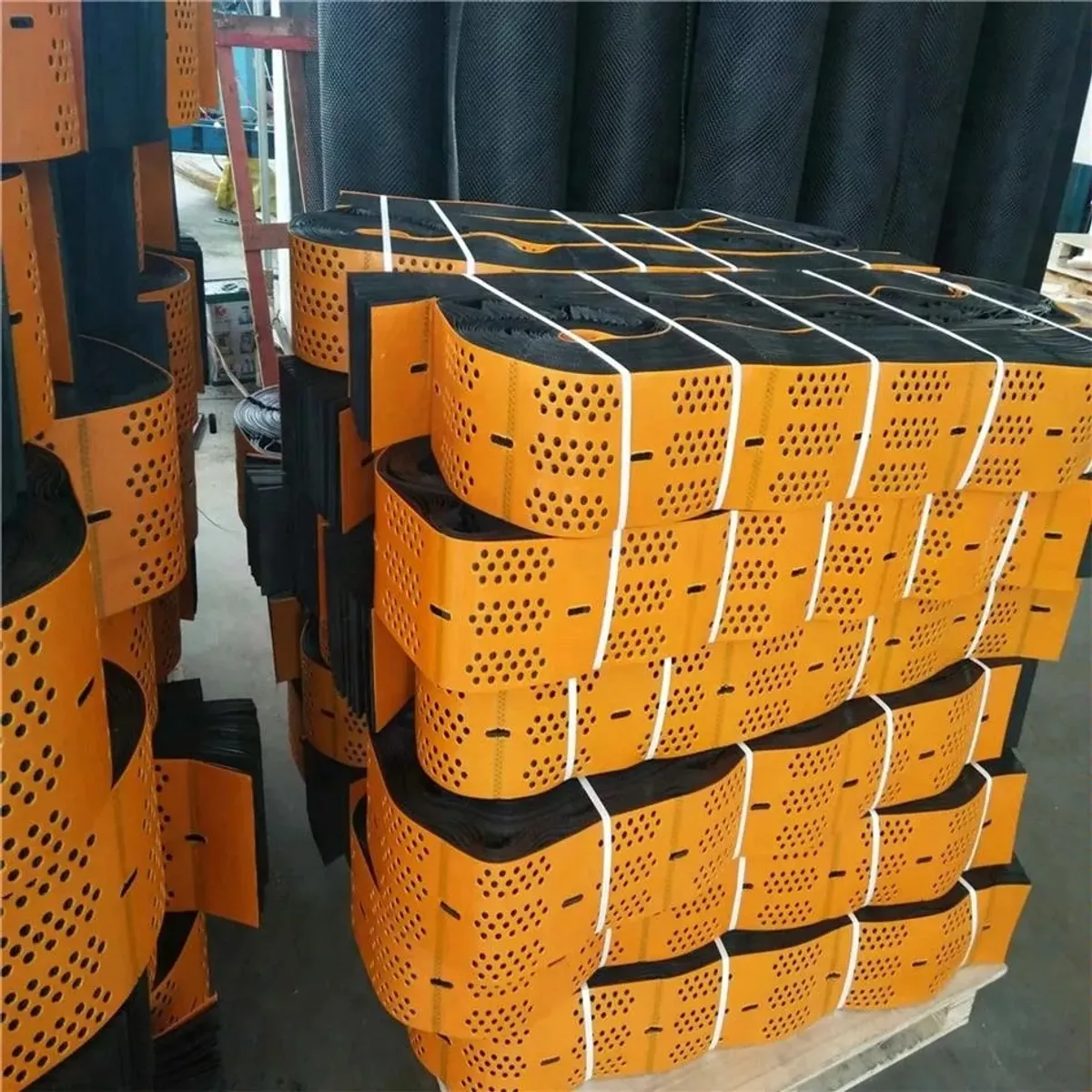
Geocell slope stabilization is the job geocell was built for. On a slope, gravity and running water attack an unconfined soil or gravel face from two directions at once; a geocell grid for slope protection locks the fill into individual cells so it can't slide as a sheet or wash out as rills. For slope protection geocell work, use a textured perforated geocell — the textured cell walls raise the friction angle against the fill, and the perforations let roots and water cross between cells, both of which matter once you're past roughly a 1:2 grade. Geocell slope erosion control is also the fix for soft, saturated ground where a geogrid would have nothing solid to grip: pond banks, ditch faces, embankment slopes and the shoulders of a soft-clay platform all confine fill the same way. On gentler grades and lighter loads, a smooth HDPE geocell does the same confinement job for less. See the full method in our geocell ground stabilization guide.
Geogrid: tensile reinforcement buried in the soil
Geogrid does its work where you can't see it. Compact an aggregate road base or a retaining-wall backfill over a geogrid layer and the ribs lock into the stone as it's placed, so the two act as one composite instead of a loose layer that can shove sideways under load. That tension resistance is what lets a road base carry heavy axle loads on a weaker subgrade without the section getting thicker, and it's what holds a mechanically stabilized earth (MSE) retaining wall vertical — each geogrid layer ties the reinforced soil block back into itself, course by course, as the wall goes up. None of that is a surface job: geogrid has to be buried and compacted over to develop the interlock, and it has no cell walls, so it does nothing for a slope that's actively eroding or sliding. Reach for geogrid when the ground is stable but weak in tension — road base, working platforms, retaining walls, embankment foundations over soft ground — not when the surface itself needs holding in place.
How to install geocell on a slope
Slope erosion control geocell installs the same way every time, and skipping a step is where jobs fail. 1) Grade the slope and dig a crest anchor trench at the top. 2) Stretch the geocell panel fully open — an unstretched, slack panel lets one cell take the whole load instead of spreading it across the mat. 3) Anchor the top edge in the crest trench and stake or tendon the panel down the face at the specified spacing; an unanchored panel slides as one sheet in the first heavy rain. 4) Fill the cells — topsoil for a vegetated finish, angular crushed stone for a steeper or higher-flow face — and overfill slightly so the material locks against the cell walls once compacted. 5) Seed or place cover as needed and check the surface level as you go, not after; a wavy mat means the grading was skipped, and that's expensive to lift and redo.
Picking one, or both
If the ground itself is moving — a slope, a soft bank, an eroding channel face — that's a confinement problem and geocell is the answer; start with the textured perforated geocell on anything steeper than about 1:2 or where you want vegetation to establish, and the smooth HDPE geocell on gentler grades. If the ground is stable but needs to carry more load in tension — a road base, a platform, a retaining wall — that's geogrid's job, buried and compacted, not laid on the surface. Plenty of projects use both: geogrid under the road, geocell on the embankment slope that carries it. See how geocell stacks up against a shallower panel product in our gravel grid vs geocell comparison. Send us the slope angle or the loading and subgrade, and we'll confirm which product — or which pairing — the job actually needs.
Free Geosynthetics Spec & Selection Guide
Material grades, thickness/GSM sizing and price ranges for your project — sent to your inbox.

 Geocell