
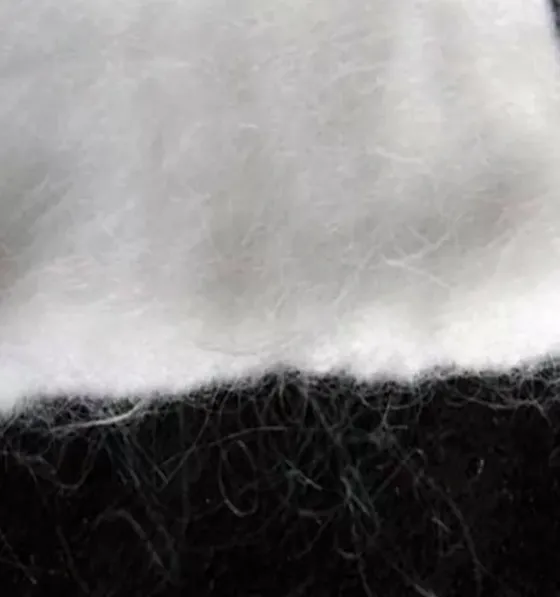
 Geotextile
 Nonwoven Geotextile
Needle-punched nonwoven geotextile fabric (PET / PP staple fiber) to AASHTO M288 — for filtration, separation, drainage and protection in French drains.
- AASHTO M288
- Needle-punched · ≥50% elong.
- Filtration · Drainage
Not every non woven geo fabric is made the same way — compare needle-punched vs heat-bonded and staple fiber vs continuous filament geotextiles.
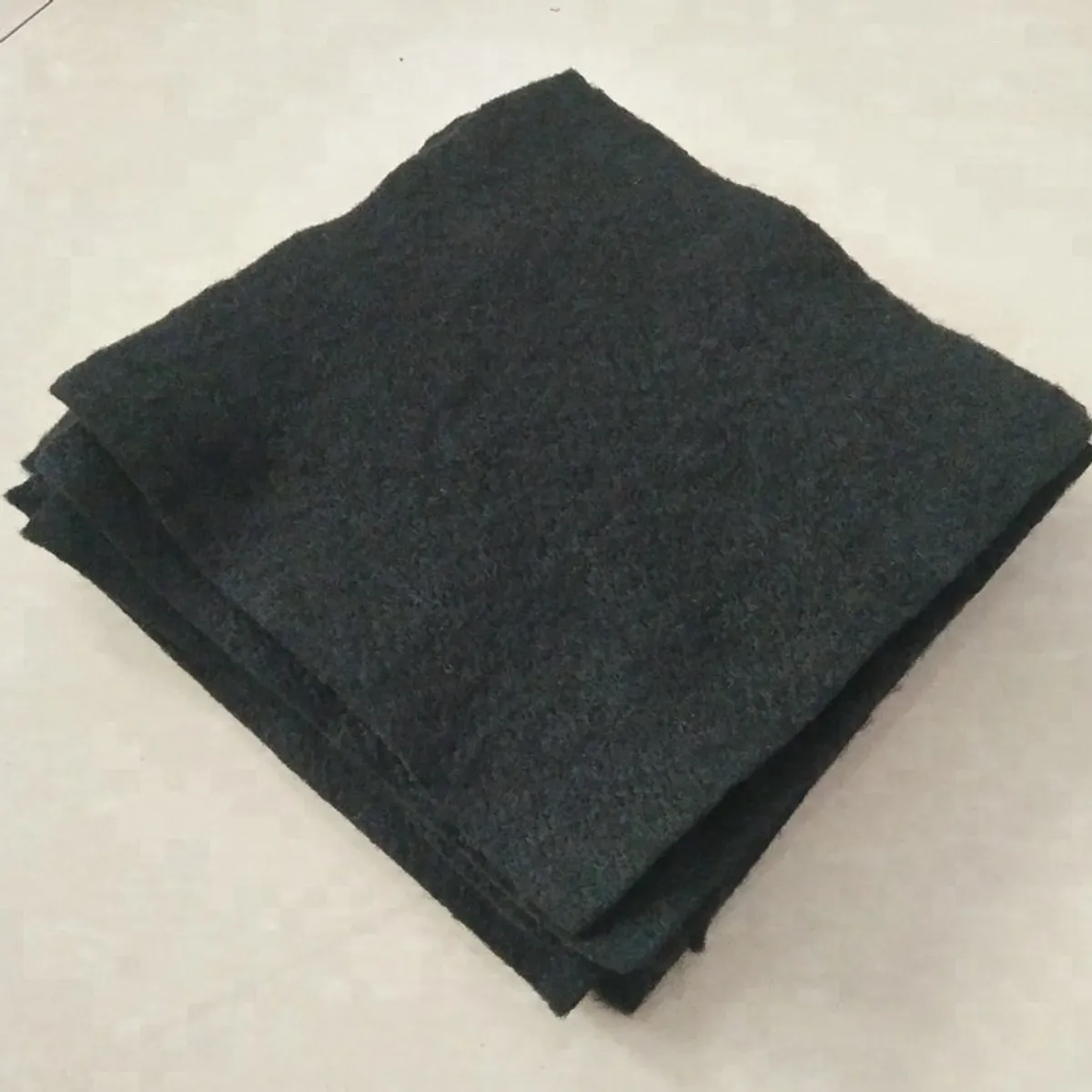
A non woven geotextile starts as loose PP or PET fibers, and the bonding method is what turns them into a usable fabric. Needle punched nonwoven geotextile mechanically interlocks fibers with thousands of barbed needles, leaving a thick, felt-like sheet with an open, three-dimensional pore structure. Spunbond geotextile extrudes continuous filaments straight from the polymer melt and lays them into a web, giving a thinner, more uniform sheet with consistent filament spacing. Thermally bonded non woven geotextile takes a lighter fiber web and fuses it with heat and pressure at contact points, producing a flatter, more paper-like fabric. Same raw fiber, three different structures, three different jobs.
Needle punched geotextile fabric is the thickest of the three at a given weight, and that loft is what gives it high puncture resistance and high water flow rate — it's the standard choice for drainage, filtration and cushioning under a geomembrane. A non woven polyester geotextile made by needle punching (PET fiber, needle punched) holds its strength and flow characteristics under sustained load better than a PP equivalent because polyester creeps less over time. Spunbond fabric is thinner and has lower puncture resistance for the same weight, but it's more dimensionally stable and tears less along a straight line, which suits it to lighter separation duty. Thermally bonded fabric has the lowest flow rate of the three because the melted contact points partly close the pore structure — fine for a light separator or a wrap layer, not for a primary filter.
Independent of bonding method, fiber choice matters. Polypropylene non woven geotextile (PP geotextile non woven) is the lower-cost default for filtration and separation. Non woven polyester geotextile (PET geotextile) costs more but resists creep and UV degradation better, which is why it shows up in permanent reinforcement or long-design-life filtration work. Don't confuse any of this with woven fabric — a woven geotextile, sometimes mislabeled polyethylene woven geotextile fabric, is tapes woven into a tight grid for tensile reinforcement, not a felted non woven membrane. If you need the full construction comparison, see our woven vs non-woven geotextile guide.
Use needle punched geotextile fabric under a pond liner or landfill cap, around perforated drain pipe, and as a non woven filter cloth behind riprap and retaining walls — anywhere you need real flow-through and puncture protection. Use spunbond geotextile for road and railway separation layers where the ground is stable and the job is mainly keeping soil and aggregate apart, not filtering heavy flow. Use thermally bonded non woven geotextile as a lightweight non woven paving fabric interlayer or a non woven membrane wrap where thickness isn't needed and cost per square meter matters more. Picking by bonding method first, then by fiber, gets the spec right the first time.
'Nonwoven' on a spec sheet tells you almost nothing on its own — send us the application (drainage, separation, filtration, cushioning), the required flow rate or AOS, and the load, and we'll match it to a needle punched, spunbond or thermally bonded grade in PP or PET. We stock nonwoven geotextile, PET needle punched geotextile and polyester filament nonwoven geotextile in standard GSM ranges, cut and shipped as rolls.
Free Geosynthetics Spec & Selection Guide
Material grades, thickness/GSM sizing and price ranges for your project — sent to your inbox.
Needle punched fabric is mechanically interlocked with barbed needles into a thick, open, felt-like sheet with high flow rate and puncture resistance. Spunbond fabric is continuous filaments laid into a thinner, more uniform web with lower flow rate but more dimensional stability. Needle punched suits drainage and filtration; spunbond suits lighter separation.
PET (polyester) resists creep and UV degradation better and holds strength longer under sustained load, so it's preferred for permanent reinforcement or long-design-life filtration. PP nonwoven costs less and is the standard choice for routine drainage, separation and filtration where design life is shorter.
Not as a primary filter. The heat-fused contact points partly close the pore structure, giving it the lowest flow rate of the three bonding methods. It works as a light separator or wrap layer, but for drainage or filtration duty a needle punched geotextile fabric is the correct choice.
Woven geotextile is tapes woven into a tight grid for tensile reinforcement and separation, with low flow-through. Non woven geotextile — whether needle punched, spunbond or thermally bonded — is felted or bonded fiber with an open pore structure built for filtration, drainage and cushioning. See our full comparison guide for details.
Geotextile Needle-punched nonwoven geotextile fabric (PET / PP staple fiber) to AASHTO M288 — for filtration, separation, drainage and protection in French drains.
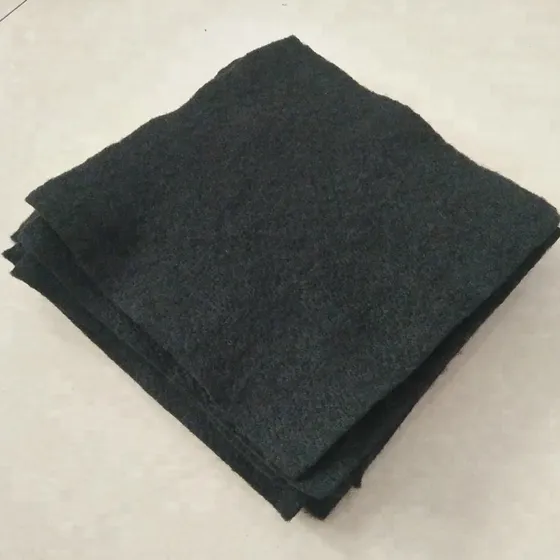 Geotextile
 PET needle-punched nonwoven geotextile to AASHTO M288 — staple-fiber polyester fabric for filtration, separation, drainage and protection on subgrades.
Geotextile Polyester continuous filament nonwoven geotextile to AASHTO M288 — spunbond PET filament fabric with high strength and good drainage for roads.
Tell us your application and quantity — our English-speaking team replies within one business day.