
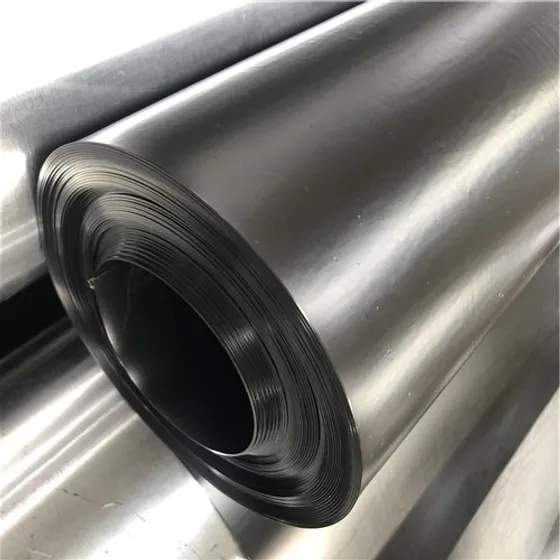
 Geomembrane
 HDPE Geomembrane
Smooth HDPE geomembrane liner to GRI-GM13 — an impermeable high density polyethylene pond liner for landfill, water and containment, 0.75–3.0 mm.
- GRI-GM13
- 0.75–3.0 mm (30–120 mil)
- Smooth · Black
HDPE geomembrane service life runs from about 20 years exposed to well over 50 years buried under soil or water. What actually shortens it.
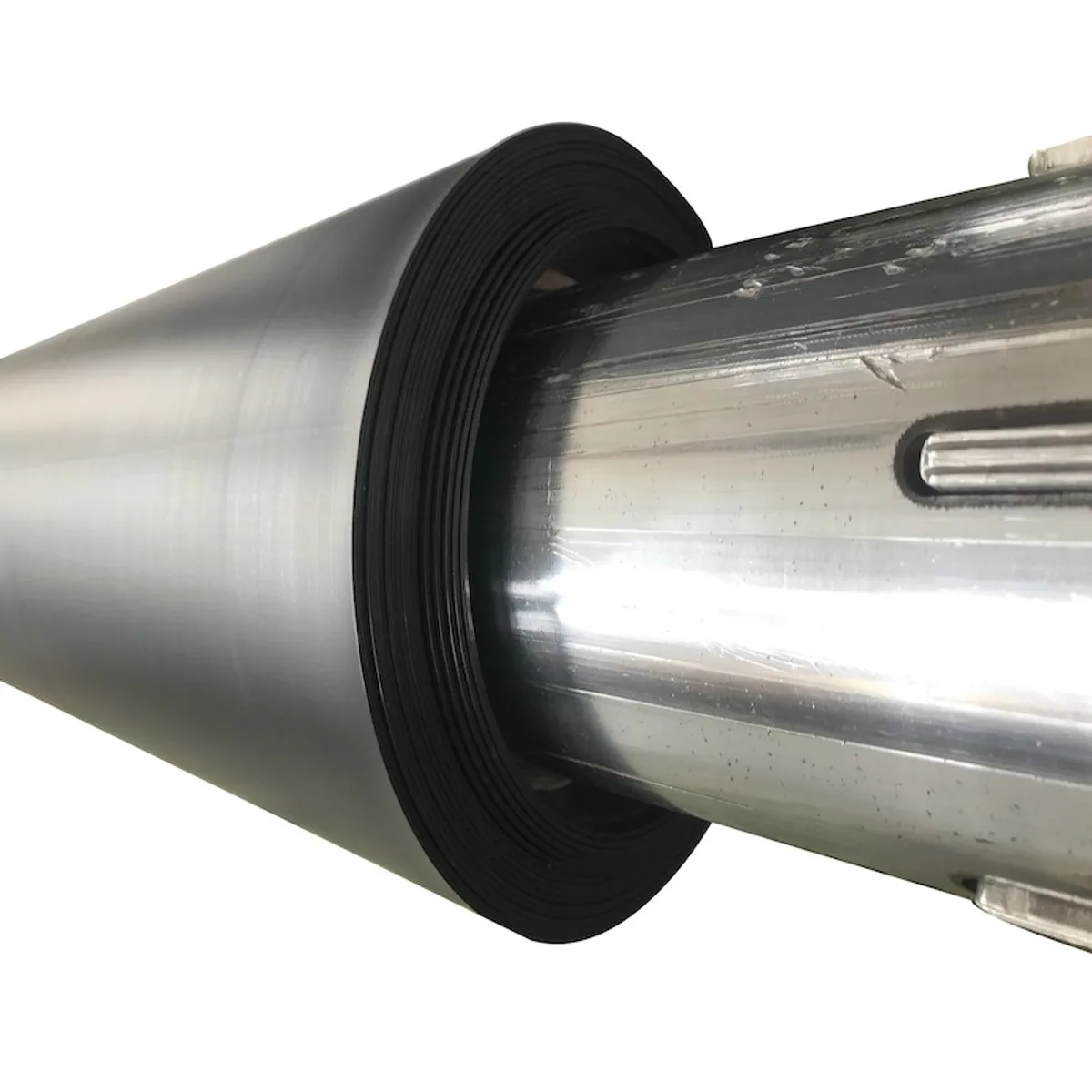
Every geomembrane price list quotes a design life, and every design life assumes a burial condition that most projects don't actually have. A HDPE geomembrane covered by soil, water or a geotextile cushion sees none of the ultraviolet light, oxygen and thermal cycling that age the polymer, so a well-formulated buried liner routinely reaches 50+ years in landfill caps and canal linings — the figure regulators lean on for long-term containment design. Left exposed on the surface — a floating cover, an uncovered pond bank, a liner waiting weeks before backfill — the same sheet is fighting UV and heat every day, and realistic geomembrane service life drops to roughly 20–25 years, sometimes less on a poor-quality sheet. Anyone asking why do pond liners fail early almost always finds the answer here: the liner was specified for a buried design life and then left exposed, or covered so late that a decade of UV exposure was already spent before day one of service.
Four mechanisms account for nearly every liner failure that isn't a hole punched by a rock. UV and oxidation attack the polymer chain itself — sunlight breaks bonds, oxygen embrittles the surface, and a sheet that was flexible on installation day goes stiff and starts to craze within a few exposed seasons if it isn't stabilised. Chemical exposure matters mainly in industrial and mining containment — strong acids, solvents and some hydrocarbons swell or soften HDPE over time, which is why chemical compatibility testing is standard practice before lining a chemical pond, not an optional extra. Mechanical stress covers stress cracking under sustained tension (a liner pulled tight over an uneven subgrade, or anchored without enough slack for thermal movement) and simple puncture from sharp stone, roots or foot traffic during construction. Thermal cycling — freeze-thaw in cold climates, daily heat-cool swings on exposed black sheet — adds fatigue on top of all three. A liner that fails inside a few years almost always shows one of these, and it's rarely the polymer's fault so much as the installation or the resin behind it.
Two sheets can carry the same 1.0 mm or 1.5 mm thickness on the spec sheet and still have wildly different lifespans, because thickness isn't what resists UV and oxidation — the resin formulation is. Virgin polyethylene resin compounded to GRI-GM13 with carbon black for UV screening and antioxidant/UV-stabiliser packages is engineered to hold its mechanical properties for the decades the design life promises. Recycled or reprocessed resin — often blended in to cut the HDPE membrane price — has already been through one or more heat cycles that degrade the polymer chain and dilute or exhaust the stabiliser package, so a recycled-blend sheet can look identical on delivery and still crack, chalk or go brittle in a fraction of the time. This is the single biggest reason a HDPE geomembrane manufacturer's quote can undercut a competitor by 20–30% on a like-for-like thickness: cheaper resin, not better manufacturing. Ask any supplier directly whether the resin is 100% virgin and get it on the mill certificate — it's the one line item that decides whether you're buying 50 years or five.
Thickness buys you two things, and neither is a magic multiplier on lifespan. First, mechanical margin — a 60 mil (1.5 mm) or 1mm HDPE liner shrugs off punctures and stress concentrations that would puncture a 30 mil (0.75 mm) or 500 micron HDPE sheet on the same rocky subgrade, so on abrasive ground the thin sheet's effective life can be cut short by damage long before the polymer itself would have degraded. Second, more material to consume — UV and oxidation erode the sheet from the exposed face inward, so on identical resin and identical exposure a 1.5 mm sheet has roughly twice the sacrificial cross-section of a 0.75 mm sheet before that degradation reaches load-bearing thickness. But thickness cannot fix a bad resin: a thick recycled-blend sheet still degrades faster than a thin virgin-resin sheet in the same sun. Match thickness to the ground condition and loading first — our thickness selection guide walks through that — and treat resin quality as the separate, non-negotiable lifespan decision.
A geomembrane cost per sqm comparison that only lines up thickness and price misses the variable that actually predicts how long the liner survives. Before comparing any hdpe membrane price, get four things on the table: resin (virgin, to GRI-GM13, with the stabiliser package specified), thickness matched to your subgrade and design life (see our price-by-thickness breakdown), surface — textured geomembrane for slope stability where friction matters, smooth for flat pond and canal work — and whether the sheet will be buried, covered, or left exposed, because that single fact changes the realistic design life by a factor of two. Send us your application, climate and expected exposure and we'll quote virgin-resin HDPE geomembrane at the thickness that actually matches the design life you need.
Free Geosynthetics Spec & Selection Guide
Material grades, thickness/GSM sizing and price ranges for your project — sent to your inbox.
Buried under soil, water or a geotextile cushion, a well-formulated virgin-resin HDPE geomembrane commonly reaches 50+ years. Left exposed to UV and weather it typically runs 20–25 years, and a recycled-blend sheet can fail well inside that window.
The three most common causes are: a liner rated for buried service left exposed on the surface, mechanical damage during installation (punctures, stress cracking over uneven subgrade), and recycled or under-stabilised resin that degrades under UV faster than a virgin-resin sheet.
Only partly. Extra thickness gives more sacrificial material for UV/oxidation to erode and better puncture resistance on rough ground, but it cannot compensate for poor resin — a thick recycled-blend sheet still degrades faster than a thinner virgin-resin sheet under the same exposure.
Usually. A significantly lower hdpe membrane price on the same stated thickness almost always means recycled or reprocessed resin, a thinner actual gauge than quoted, or a missing UV-stabiliser package — all of which shorten lifespan regardless of what the datasheet says.
Geomembrane Smooth HDPE geomembrane liner to GRI-GM13 — an impermeable high density polyethylene pond liner for landfill, water and containment, 0.75–3.0 mm.
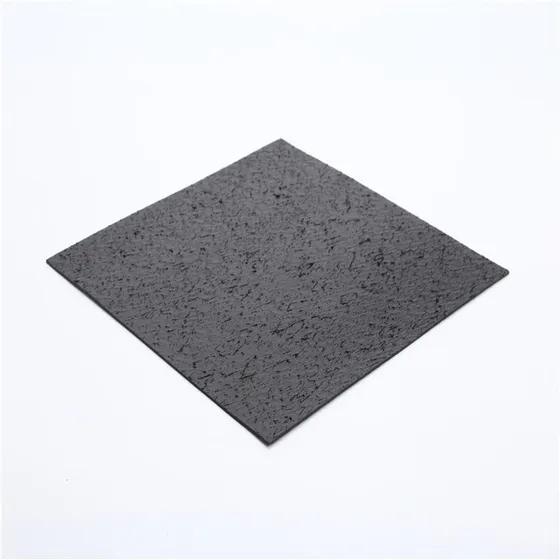 Geomembrane
 Textured HDPE geomembrane to GRI-GM13 — a rough-surface polyethylene liner, single or double textured, 0.75–3.0 mm, for steep slopes, landfill and mining.
Tell us your application and quantity — our English-speaking team replies within one business day.