
How to choose HDPE geomembrane thickness (0.5–2.0 mm)
Pick HDPE geomembrane thickness by the job: 0.5 mm for small ponds, 1.0 mm for reservoirs, 1.5 mm for landfill and containment.
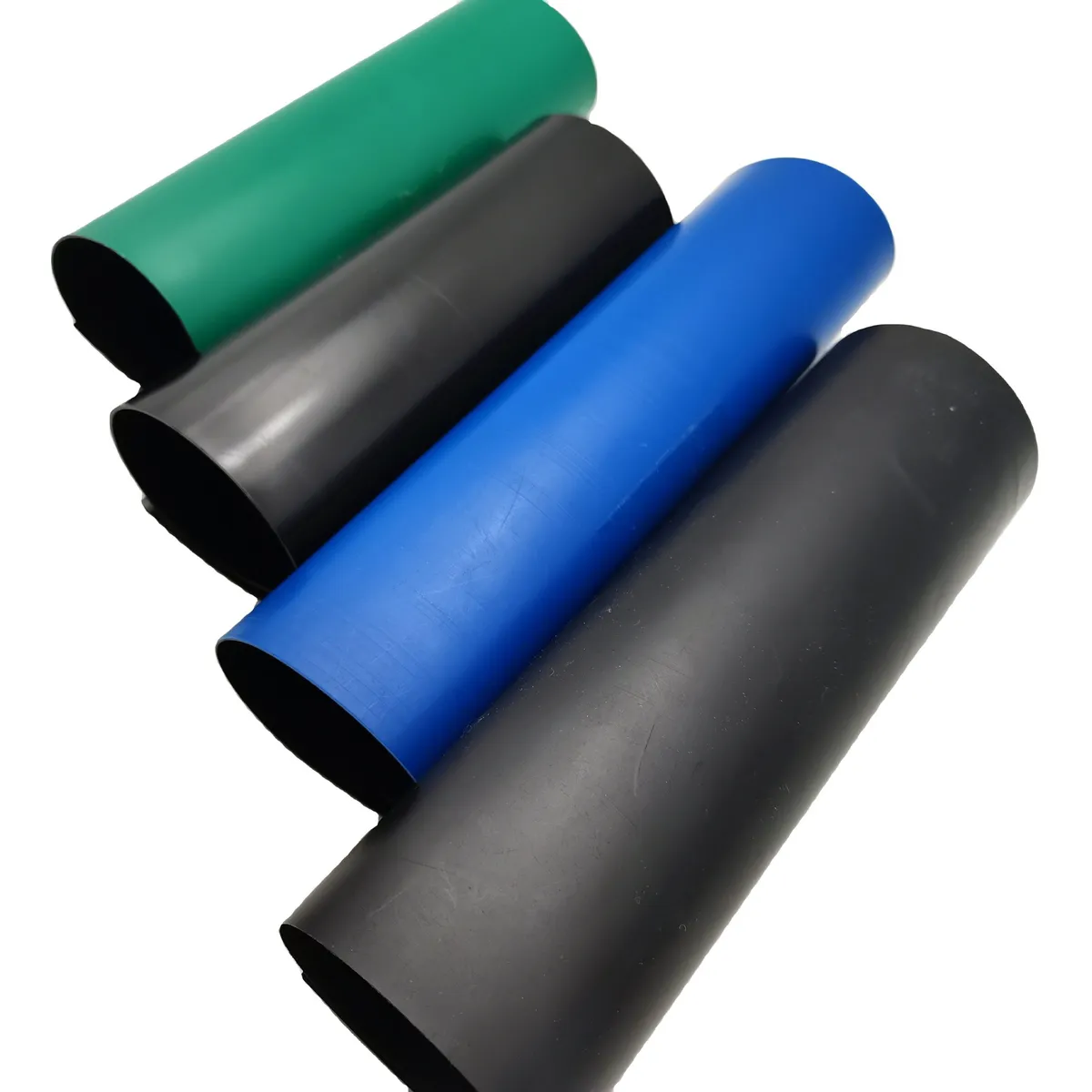
Start with the subgrade, not a number
The first thing that decides HDPE geomembrane thickness is what the liner sits on. Lay a 0.5 mm sheet over a bed with gravel in it and you will get pinholes the first season — angular stones telegraph straight through thin polyethylene under hydraulic head. Spec a 2.0 mm sheet for a small clean pond and you have just paid double for resin nobody needed. HDPE geomembrane specifications quote thickness in mm or microns (1.0 mm = 1000 micron), and that number only means something once you know the base and the head of water.
Thickness by application
0.5 mm (500 micron) works for small agricultural and aquaculture ponds on a graded, stone-free bed. 0.75–1.0 mm is the everyday range for irrigation reservoirs and shrimp/fish ponds. 1.5 mm is the workhorse for landfill caps, leachate ponds and industrial containment, where you are also buying chemical resistance and a 20-year-plus design life, not just thickness. 2.0 mm goes into mining heap-leach pads and hazardous-waste cells where a puncture is a regulatory event.
What the subgrade does to the number
A smooth, well-compacted base lets you drop a thickness grade safely. A stony or uneven base does the opposite — either go heavier, or keep the thinner sheet and put a nonwoven geotextile cushion underneath to take the puncture load. On slopes steeper than about 1:3 the choice is no longer just thickness but smooth vs textured geomembrane: a smooth liner can slide on a wet subgrade, so a textured geomembrane — its rough face raising the friction angle against soil and cover — earns its place there regardless of gauge.
Send the spec, get the thickness
Tell us the application, the pond or cell dimensions, the head of water and the design life, and we will call the thickness and ship matched rolls, weld rod and accessories in one consignment. Request an HDPE geomembrane quote with your subgrade described and we will spec it honestly.
Free Geosynthetics Spec & Selection Guide
Material grades, thickness/GSM sizing and price ranges for your project — sent to your inbox.
Frequently asked questions
Is a thicker geomembrane always better?
No. Past what the subgrade, chemistry and design life require, extra thickness only adds cost and weight. A 1.0 mm liner on a clean bed outlasts a 2.0 mm liner laid carelessly over gravel.
What thickness is best for a fish or shrimp pond?
0.5–0.75 mm anti-UV HDPE on a prepared bed; step up to 1.0 mm for larger reservoirs, rougher subgrades or heavy aeration.
Is there a geomembrane thickness standard?
Thickness itself is set by the application, but the standards (GRI-GM13 for HDPE, GRI-GM17 for LLDPE) fix the minimum nominal and lowest-individual-reading thickness for each grade, so a '1.0 mm' sheet has a defined tolerance rather than a nominal anyone can shave.
Related product
View HDPE GeomembraneNeed a quote or a spec check?
Tell us your application and quantity — our English-speaking team replies within one business day.