
Geobag Size Guide: Choosing Dimensions, Fabric and Fill Level
How geobag size is set per project, choosing woven vs nonwoven fabric, and how fill level differs between shoreline and dewatering use.
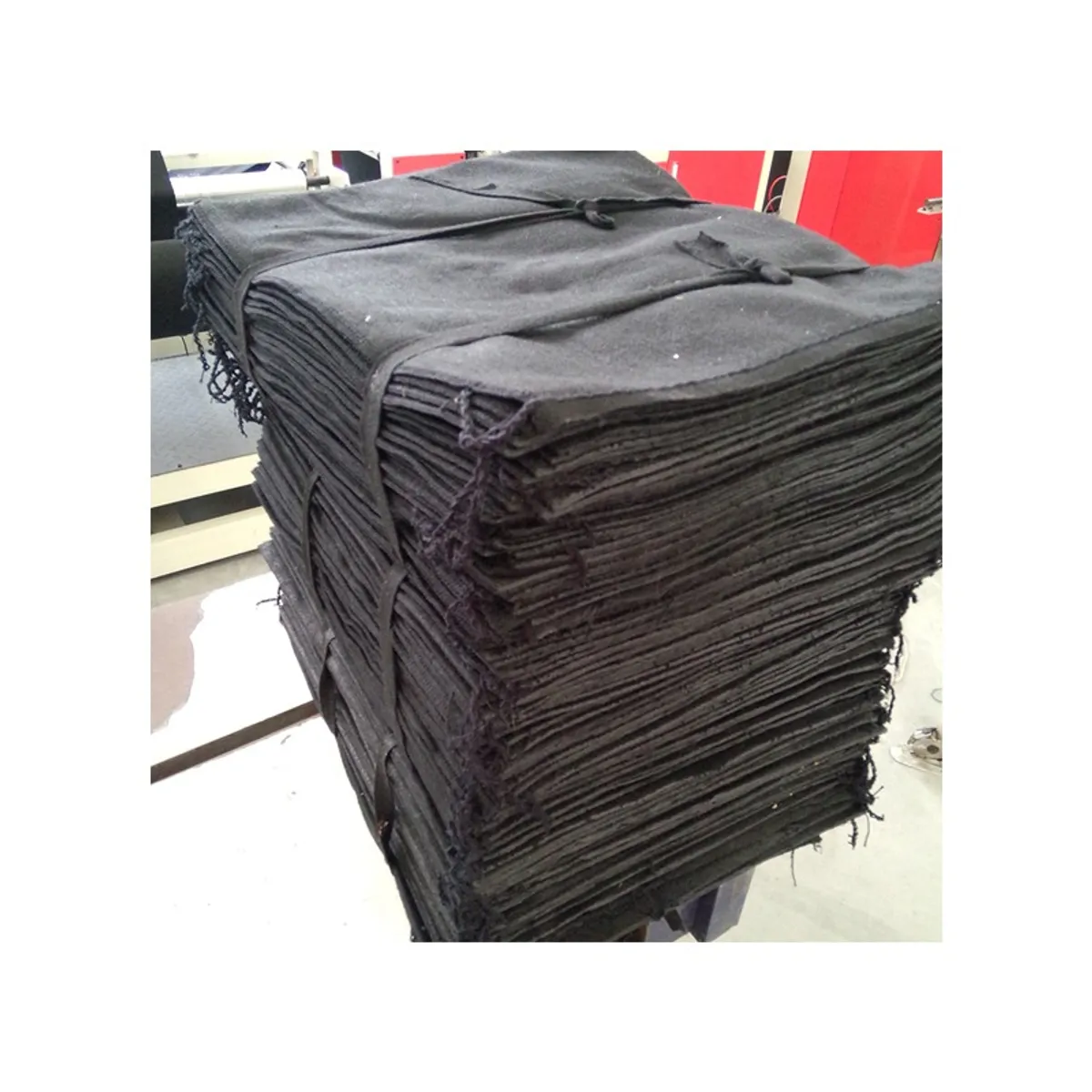
Why there is no standard geobag size
A geobag is sewn to order rather than picked off a size chart, because the right dimensions depend on what the bag is doing. A shoreline armour unit is sized to sit stable under wave action once filled — bigger and heavier than a hand-placed bag needs to be, so that wave uplift cannot roll it out of position. A dewatering bag is sized around the pump and the pad it drains onto, since a bag too large for the site's drainage area just ponds filtrate instead of letting it run off. A small sandbag-style unit for a temporary flood barrier, by contrast, is sized to be liftable and placeable by hand, which caps its practical volume well below a shoreline or dewatering unit. Geobag size is confirmed per order against the application, fill material and available filling equipment rather than fixed to a single public standard, and the same fabric grade can be sewn into more than one bag size if a project needs both a large containment unit and smaller units for detail work.
Woven vs nonwoven fabric
A woven geobag uses a high-tenacity woven geotextile — around 78.8/109.4 kN/m wide-width tensile strength and a 0.43 mm (US No. 40) opening size in our standard grade — which gives the strength for structural shoreline and containment units that carry wave or fill pressure. A nonwoven geobag uses a needle-punched fabric instead, favoured where filtration and drainage matter more than raw tensile strength, such as fine-sediment dewatering. Both are UV-stabilized to retain roughly 80% of strength after 500 hours of exposure, so the choice comes down to whether the bag needs to hold structural load or mainly needs to filter and drain. A useful rule of thumb: if the bag will be exposed to wave impact, current or has to be stacked and hold its shape unsupported, specify woven; if the job is mainly about letting water pass through cleanly while retaining fine solids, the nonwoven grade earns its lower cost per unit area.
Fill level and bag stability
A geobag is not filled completely tight. Standard practice is to fill to roughly 70–80% of the bag's design volume, leaving the fabric slightly slack so the finished bag settles into a stable, pillow-shaped unit rather than a rigid, over-tensioned one that stresses the seams and shifts under load. Under-filling leaves the bag too soft to hold its shape and position; over-filling strains the seams and the fabric at the corners, and a corner seam under constant tension is where a bag is most likely to fail first. For stacked shoreline work, staggering the joints between rows the way blockwork is laid keeps the finished structure from opening a straight seam line under wave action, and lets each bag's slack settle around the ones below it rather than bridging across a gap.
Silt bags for dewatering
At the smaller end of the range, silt bags for dewatering handle site-level jobs — pond desilting, pool or excavation water, or a single pump's worth of slurry — where a full-size geotube would be more capacity than the job needs. Dewatering silt bags work on the same principle as the larger tube: slurry is pumped in through a fill port, the fabric retains the solids, and filtered water drains out through the walls, reducing the volume that has to be hauled off site. Bag size here is set by the pump flow rate and the drainage pad available, not by a fixed catalog dimension — undersizing the bag for the pump rate just means more bags in rotation, while oversizing wastes fabric on a slurry volume that will never fill it. Set the bag on a permeable pad, not bare ground, so the filtrate itself has somewhere to drain rather than pooling back up around the bag.
Ordering a geobag
To size and quote a geobag we need the application (shoreline, containment or dewatering), the fill material, and either the target dimensions or the volume of material to be handled. From there we confirm fabric type, opening size and finished bag dimensions and sew to order — as the manufacturer we control the fabric weaving and the bag sewing in the same factory, so a nonstandard size does not mean a longer supply chain, just a confirmed cut list before production starts. For higher-volume dredging or dewatering work where a bag is not enough capacity, the same woven fabric scales up into our geotube product line, which uses the identical fabric grades in a much larger prefabricated tube.
Free Geosynthetics Spec & Selection Guide
Material grades, thickness/GSM sizing and price ranges for your project — sent to your inbox.
Related product
View GeobagNeed a quote or a spec check?
Tell us your application and quantity — our English-speaking team replies within one business day.