
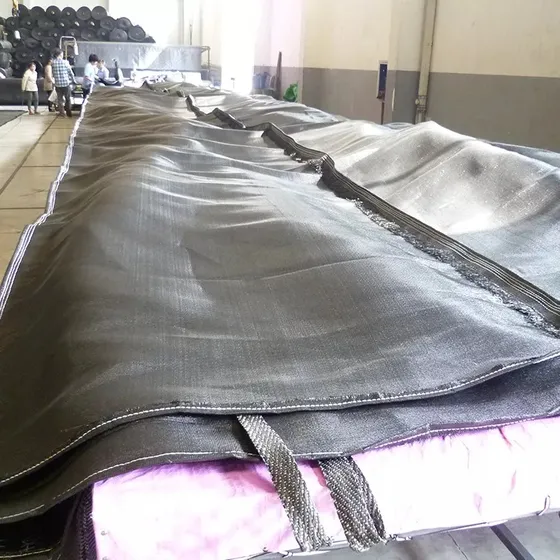
 Geobag / Geotube
 Geotube
Geotube (geotextile tube) — a large prefabricated woven dewatering tube for sludge dewatering, dredge containment and shoreline structures.
- Woven geotextile
- Dewatering
- Custom-sized
SIGMA geobag is a geotextile bag made from polyester or polypropylene fibre, processed into a needle-punched nonwoven or woven geotextile and sewn into a bag of specified dimensions. Filled on site with sand, soil or fertilizer, the geo bag forms a stable, permeable unit for shoreline and slope protection, scour control, dredge-material containment and sludge dewatering. The fabric retains solids while water drains through, giving effective high-volume containment and dewatering without special equipment. Sold as a sand geobag, woven geo bag or non woven geo bag to suit the application.
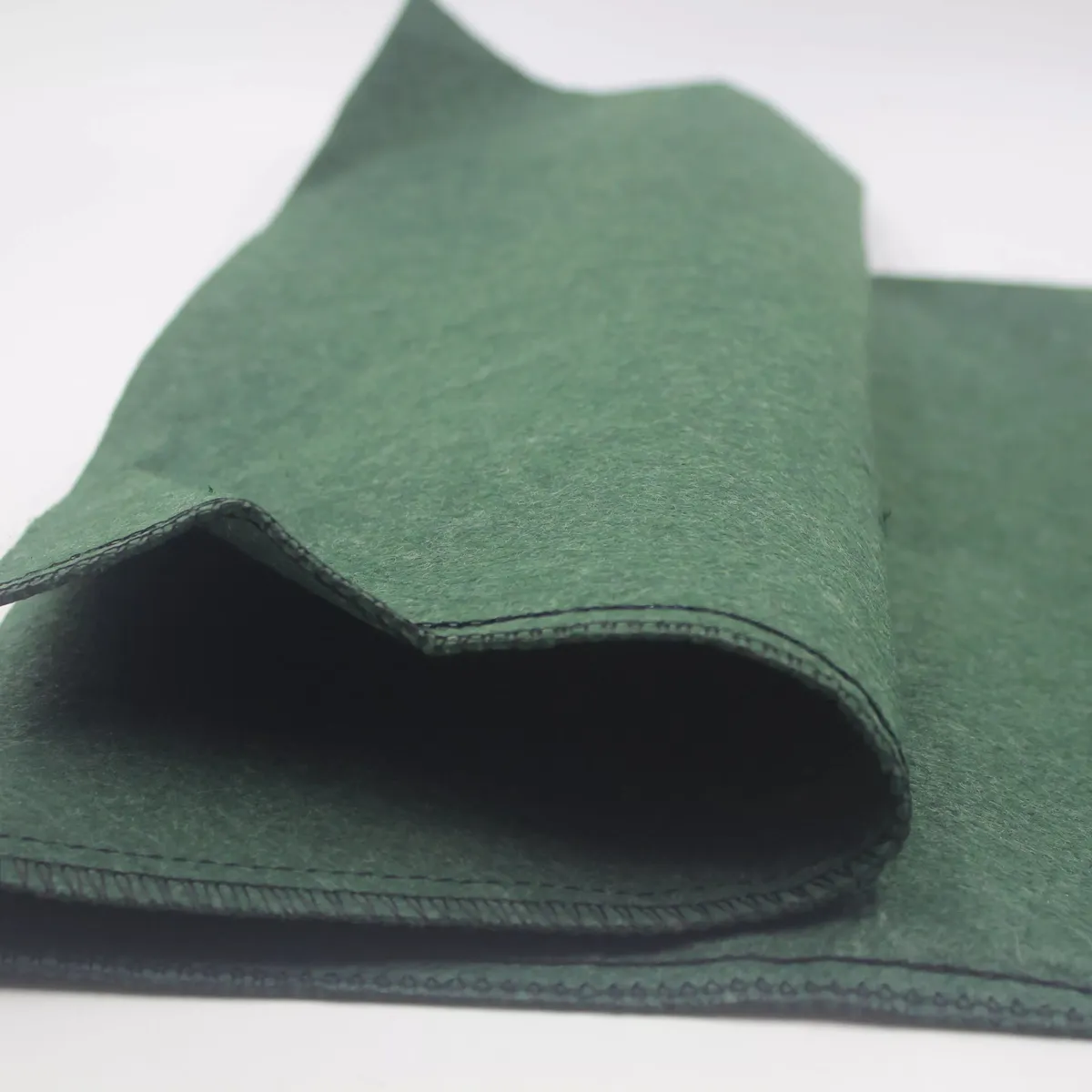
A geobag is a large geotextile bag made from polyester or polypropylene fibre. The fibre is processed — by spun-bonding into a double-sided ironed and pressed needle-punched nonwoven, or as a woven fabric — and then sewn into a bag of specified dimensions. On site the geo bag is filled with sand, soil or fertilizer to suit the local conditions, forming a heavy, stable unit. Because the geotextile is permeable, water drains out through the fabric while the fill stays inside, so the geobag both contains material and dewaters it. SIGMA supplies the geobag as a sand geobag, a woven geo bag or a non woven geo bag.
Geo bags are widely used for shoreline, riverbank and slope protection, where rows of filled bags armour the bank against erosion and scour, and for marine structures such as groynes, breakwaters and revetments. The same permeable, high-strength fabric makes the geobag ideal for dredge-material containment and for sludge and slurry dewatering — the geotextile bags for dredging retain fine solids while filtered water passes through, reducing volume efficiently. Filled bags also serve as fast, cost-effective flood and embankment protection.
For erosion control the geobag is laid in rows or stacked to armour a riverbank, embankment or shoreline against wave action and scour. Because the filled bag is heavy and permeable, it stays put while letting water drain through rather than building up pressure behind it. The geo bag can also be turned into a living, vegetated wall: filled with soil, native seed and plants, the bag is colonised within a few weeks as roots grow through the fabric and into the native soil, forming an ecologically sound erosion-control system with permanent structural strength. The UV-resistant fabric resists the chemical composition of the soil and is not eaten by pests, so the structure holds for the long term.
A major use of the geobag is dredge-material containment and sludge dewatering. Slurry or dredged sediment is pumped into the geotextile bags for dredging, where the fine woven or nonwoven fabric retains the solids while filtered water passes out through the bag walls. This dewaters the material and cuts its volume sharply, with no special equipment required — an efficient, cost-effective way to handle high volumes of sediment, sludge or slurry. Smaller nonwoven units serve the same role as silt bags for dewatering low-volume, sediment-laden runoff on site. The same principle scales up to the larger tubular geotube for big dewatering and marine containment jobs.
The defining property of a geobag is the geotextile fabric — its tensile strength, apparent opening size and water flow — which follows the same ASTM methods and woven system as our geotube dewatering fabric. Both a woven geobag and a non woven geo bag are available: the woven fabric gives higher tensile strength and a controlled opening size for structural shoreline and containment work, while the needle-punched nonwoven offers strong filtration for dewatering. The opening (sieve) size is selected to retain the fill while keeping the bag permeable, so it can be tuned for sand, silt or sludge. Common geobag sizes range from small, hand-fillable sandbags to large project units several metres long — all made to order to the dimensions and fill weight you specify, since there is no single public standard for the geo bag size. Tell us the application, fill and quantity and we will return a geobag price; for larger tubular containment see the geotube linked above.
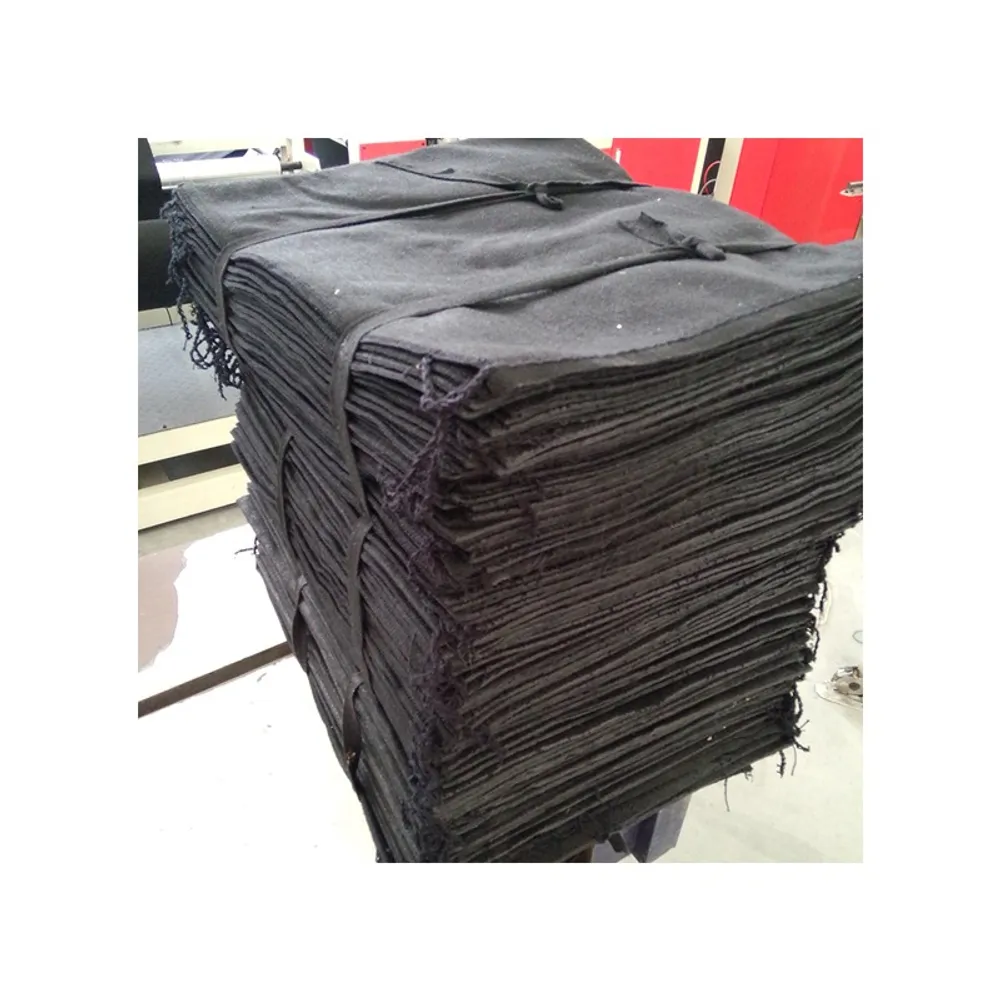
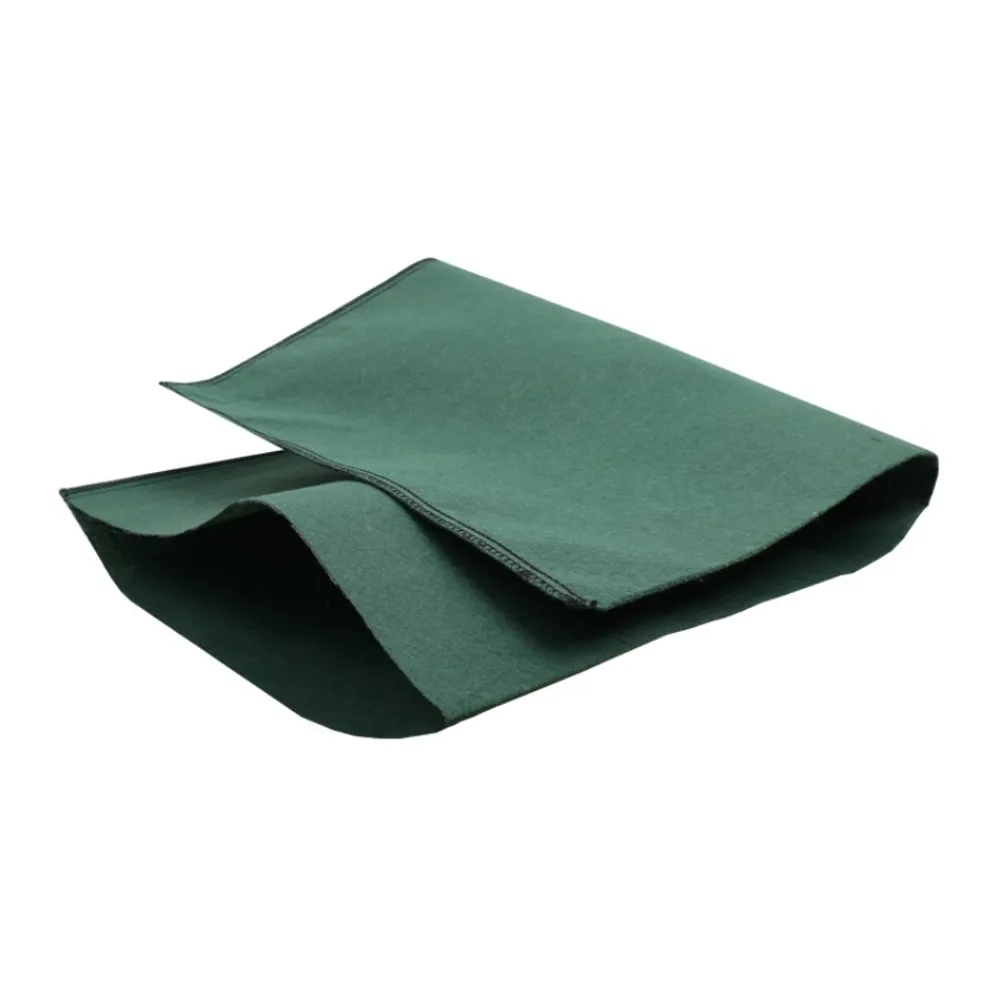
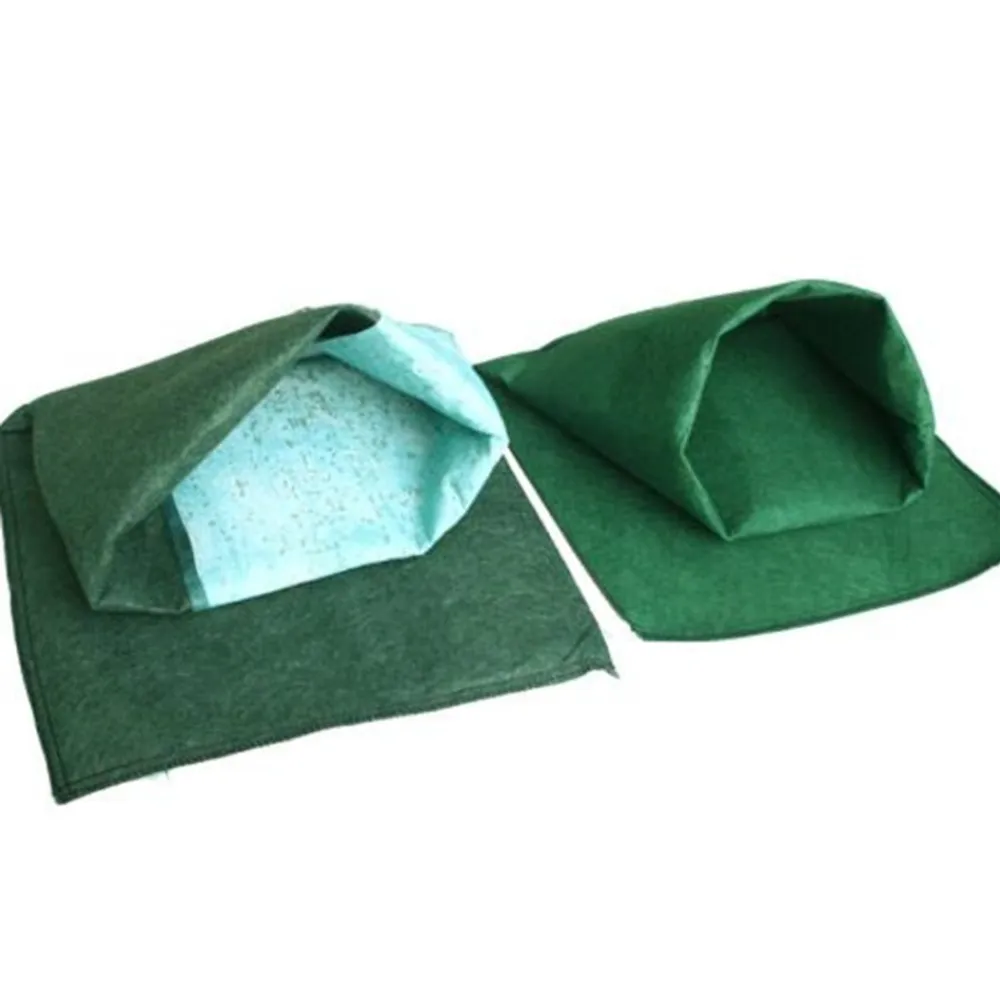
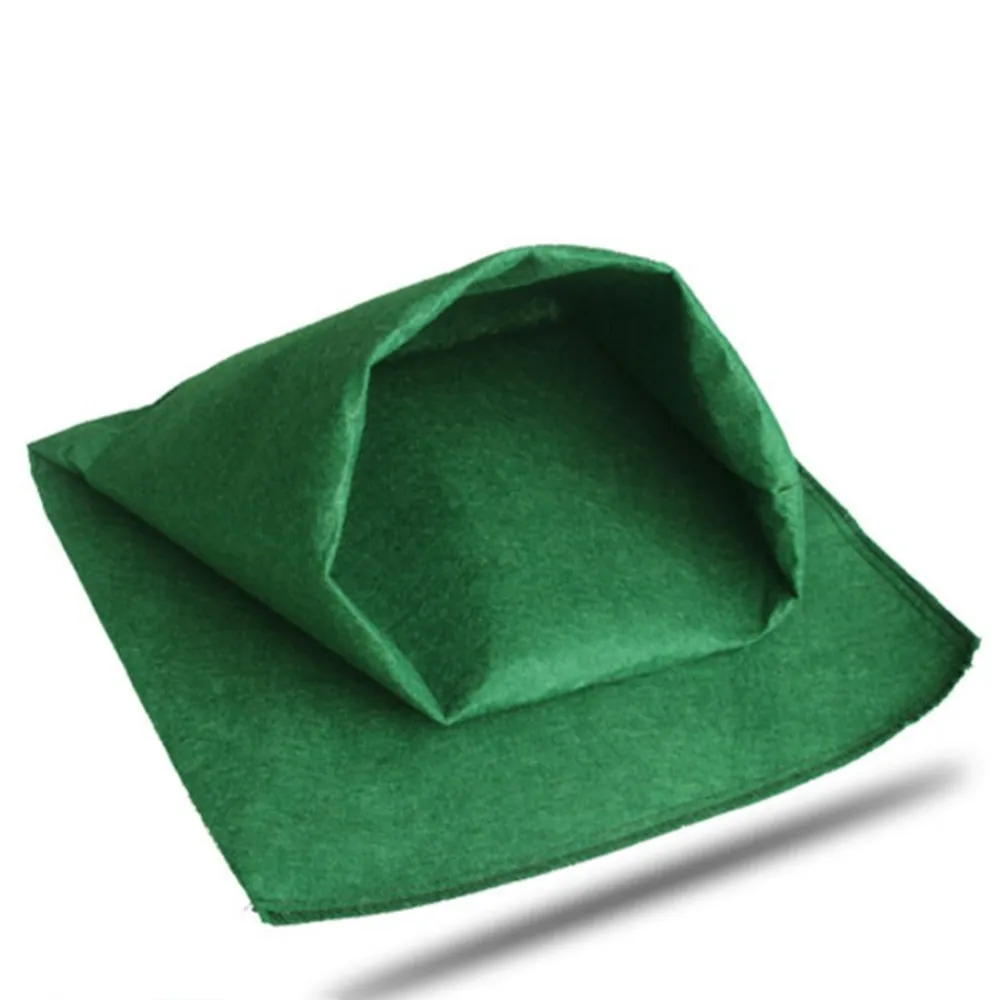
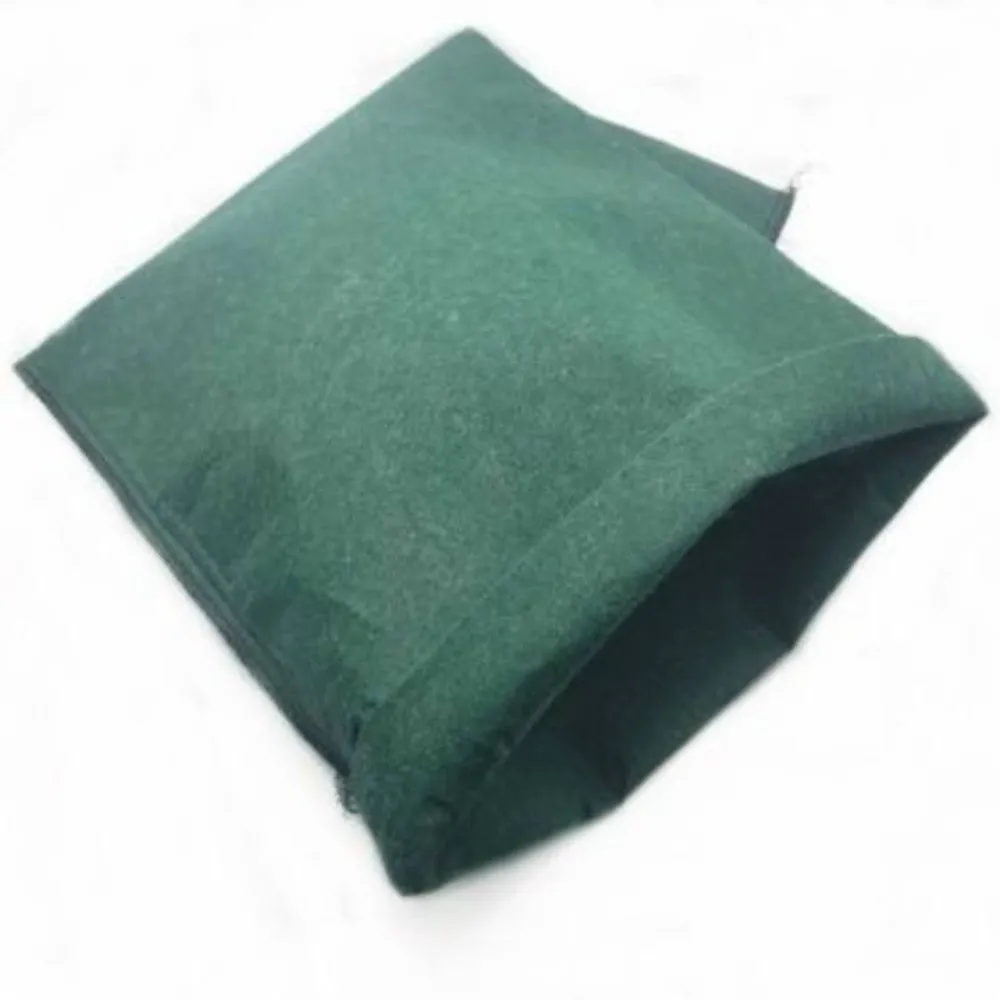
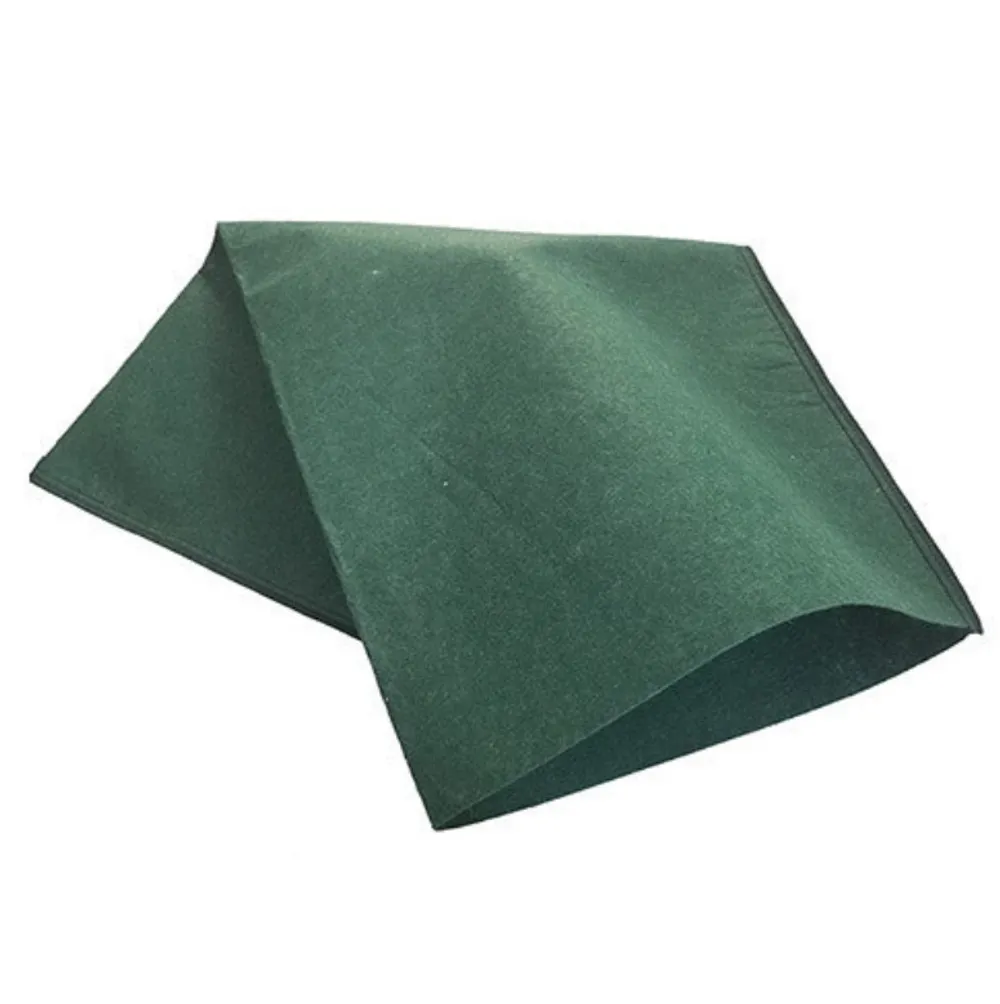
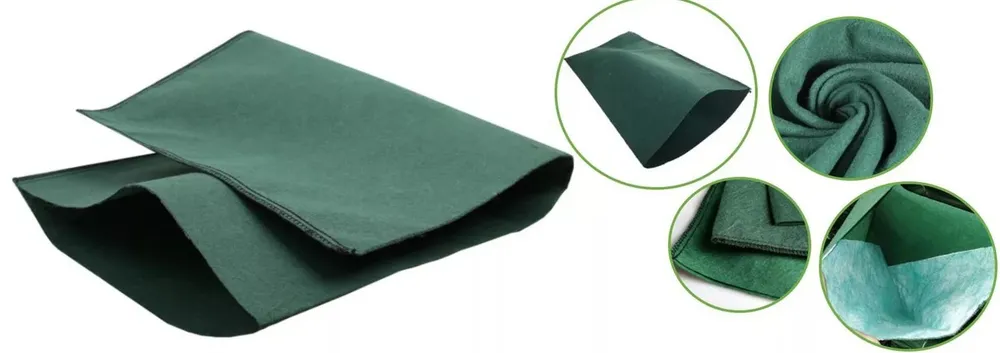
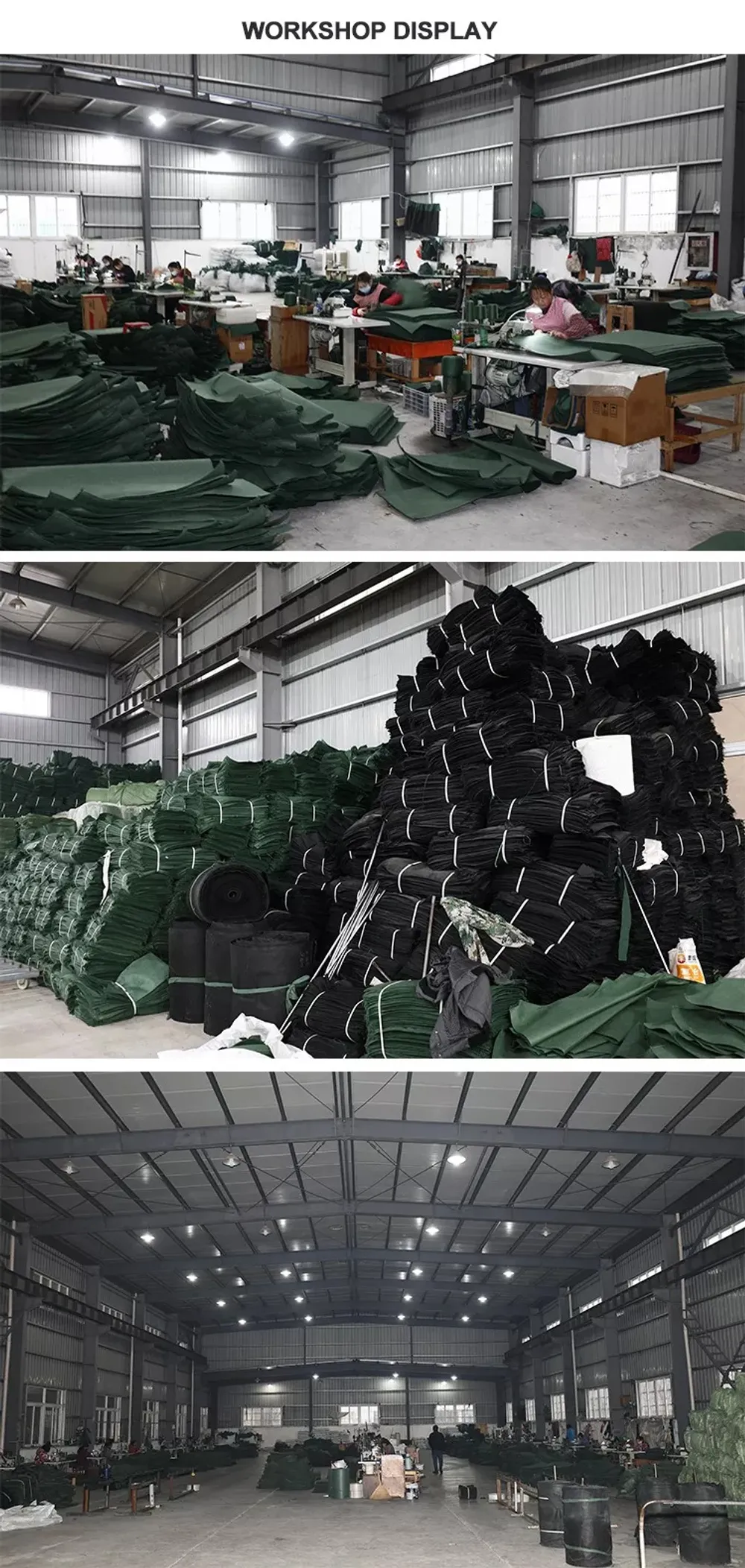
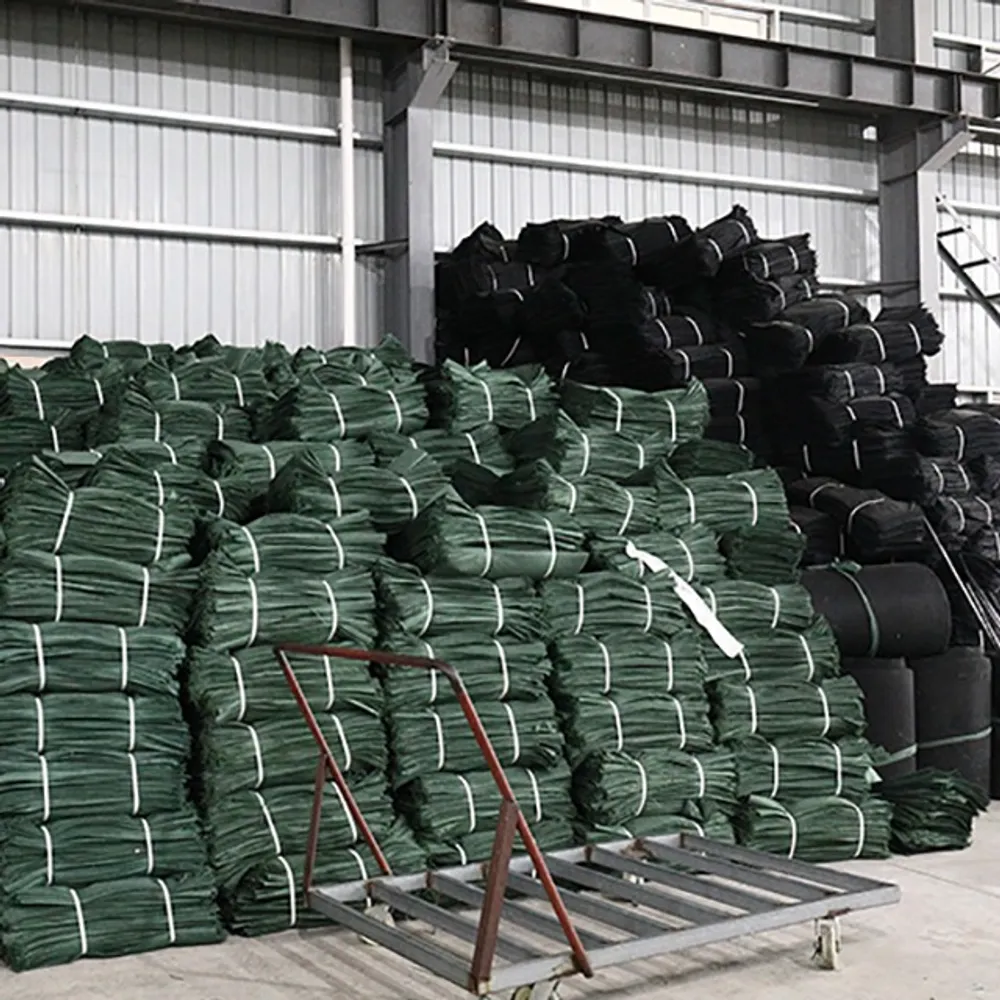
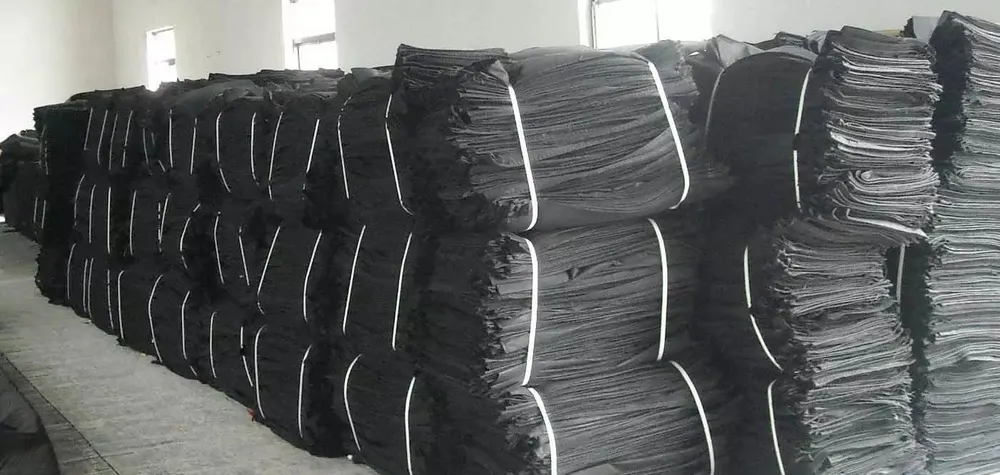
Geobag — woven geotextile fabric properties (MARV) follow ASTM methods, transcribed from the geotube woven-fabric table (same woven system). Finished bag size is custom and confirmed per order.
| Property | Test Method | Unit | Value (woven grade) |
|---|---|---|---|
| Wide-width tensile strength (MD / CD, ultimate) | ASTM D4595 | kN/m (lb/in) | 78.8 / 109.4 (450 / 625) |
| Wide-width tensile elongation (MD / CD) | ASTM D4595 | % | 20 (max.) |
| Factory seam strength | ASTM D4884 | kN/m (lb/in) | 70 (400) |
| CBR puncture strength | ASTM D6241 | N (lb) | 8,900 (2,000) |
| Apparent opening size (AOS) | ASTM D4751 | mm (US Sieve) | 0.43 (No. 40) |
| Water flow rate | ASTM D4491 | l/min/m² (gal/min/ft²) | 813 (20) |
| UV resistance (% retained, 500 hr) | ASTM D4355 | % | 80 |
| Mass per unit area (typical) | ASTM D5261 | g/m² (oz/yd²) | 585 (17.3) |
| Finished bag size (L × W / volume) | — | — | Made to order |
A geobag is a geotextile bag of woven or nonwoven polypropylene/polyester fabric, filled with sand or soil. It is used for shoreline, riverbank and slope protection against erosion, for dredge-material containment, and for sludge and slurry dewatering — the permeable fabric retains solids while water drains out.
A woven geobag uses a woven geotextile for high tensile strength and a controlled opening size, favoured for structural shoreline and containment work. A non woven geo bag uses a needle-punched nonwoven fabric, which offers good filtration and dewatering. We supply both; the choice depends on strength, filtration and dewatering needs.
Geotextile bags for dredging are filled with slurry or dredge material; the fine fabric retains the solids while filtered water drains through the bag walls. This dewaters the material and reduces its volume efficiently, with no special equipment required, making the geobag a cost-effective containment and dewatering unit.
Geobag size is custom to the project — bags are sewn to the dimensions and fill volume you need, so there is no single standard size. Geobag price tracks the fabric grade, bag size and quantity; send us the application, fill and dimensions and we will return a geo bags price.
They overlap. A small bag filled with sand for temporary protection is often called a geotextile sandbag; a geobag is the same idea scaled up, sewn from engineered woven or nonwoven geotextile to a specified size for shoreline protection, dredge containment or dewatering. SIGMA supplies both small sand geobags and large project bags.
The fabric is UV-resistant and resists the chemicals in soil, as well as acid, alkali, insects and mould, so it keeps its properties for the long term rather than breaking down quickly. For vegetated installations the plant roots grow through the bag and into the native soil, so the structure stays stable even as the fabric ages.
Yes. Filled with soil, native seed and plants, geo bags stack into a vegetated wall; within a few weeks the plants grow through the fabric and develop root systems that lock into the native soil, forming an ecological erosion-control system with permanent structural strength. This is a common use for green slope protection and shoreline stabilization.
For bank and slope work the bags are filled with local sand or soil by hand or small loader, then placed in staggered rows like blockwork so the joints do not line up. For dredging and dewatering duty, slurry is pumped straight into the geobag through its fill opening and the fabric drains the water off. Larger marine units are usually filled in position, since a full bag is too heavy to move.
Yes. Empty geobags fold flat and bale compactly, so even a large order loads efficiently into a container and we export worldwide. We quote ex-works by default and can arrange FOB or CIF to your port — send the bag size, fabric type, quantity and destination for sea-freight pricing.
Tell us quantity, destination port, and any questions — we reply within one business day.
Geobag / Geotube Geotube (geotextile tube) — a large prefabricated woven dewatering tube for sludge dewatering, dredge containment and shoreline structures.
 Geomembrane
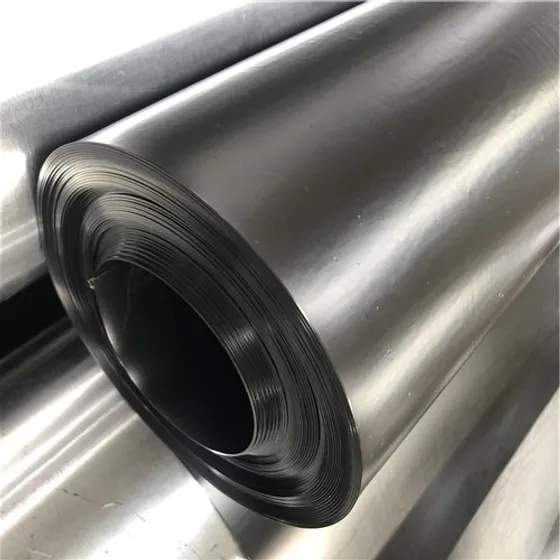
 Smooth HDPE geomembrane liner to GRI-GM13 — an impermeable high density polyethylene pond liner for landfill, water and containment, 0.75–3.0 mm.
 Geomembrane
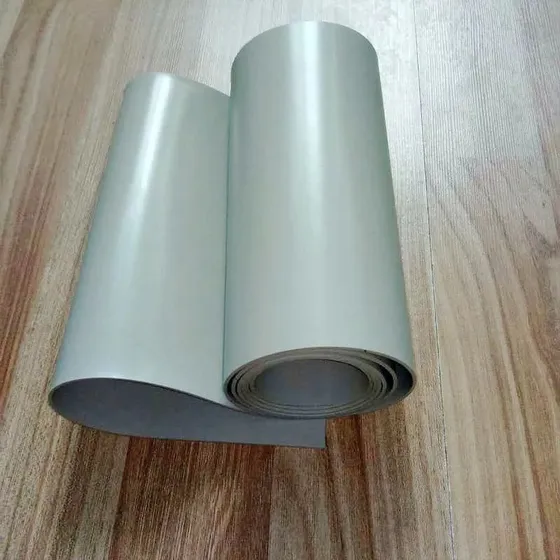
 Flexible PVC geomembrane and PVC pond liner to ASTM D7176 / PGI-1104 — a non-reinforced polyvinyl chloride liner, 10–60 mil, for ponds and containment.