
 Erosion Control
Concrete Blanket (GCCM)
Concrete blanket — GCCM (geosynthetic cementitious composite mat) to ASTM D8364 that hydrates into a durable concrete canal & slope lining layer.
- ASTM D8364
- 5 / 8 / 13 mm
- GCCM · PVC-backed
Specify a concrete blanket (GCCM) to ASTM D8364: compare 5, 8 and 13 mm grades, ditch lining lap joints, 1:2 hydration ratio and roll coverage.
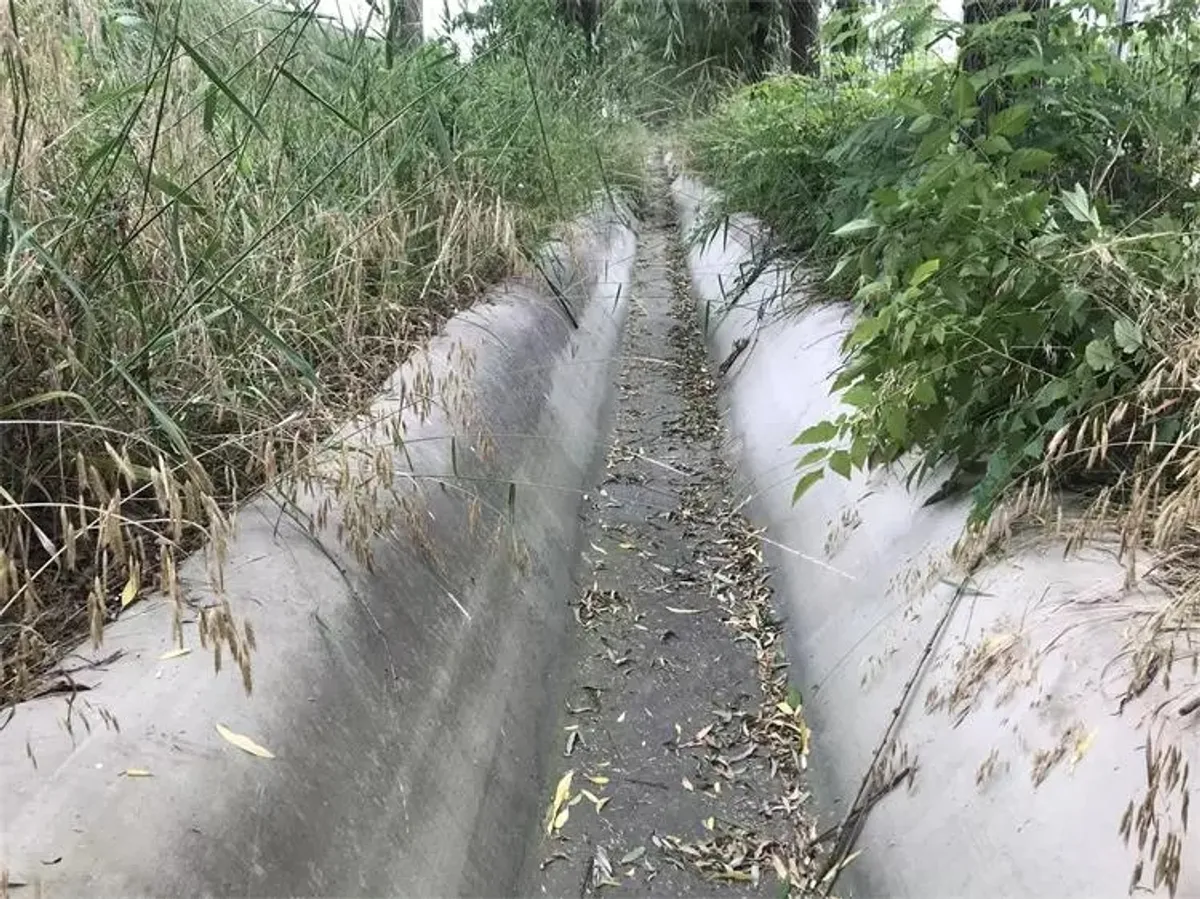
In civil and hydraulic work, a concrete blanket — classified under ASTM D8364 as a Geosynthetic Cementitious Composite Mat (GCCM) and widely ordered as a cement blanket — is roll-delivered dry concrete locked inside a three-dimensional fibre matrix and bonded to a waterproof PVC backing. (For North American buyers: this is a structural erosion-control liner that hardens permanently upon hydration, not an insulated foam tarp used for winter slab curing.) Traditional poured concrete ditches and slope aprons require transit mixers, timber formwork and multi-day crew staging, which quickly becomes impractical on steep embankments, remote mine haul roads or narrow highway medians. Because the dry cement powder stays trapped within the internal fibre weave until water is sprayed onto it, a GCCM concrete mat drapes directly over irregular subgrades, hangs vertically on cut faces and sets into a rigid, fibre-reinforced shell with low alkaline washout.
ASTM D8364 divides GCCM materials into Type I, Type II and Type III by mechanical and hydraulic duty, corresponding in our production range to 5 mm, 8 mm and 13 mm nominal thicknesses (tested to ASTM D5199) at 7, 12 and 19 kg/m² nominal mass per unit area (ASTM D5993). All three grades reach an initial flexural strength (IFS) of at least 3.5 MPa at 24 hours under ASTM D8058, while 24-hour flexural initial breaking load in the machine direction steps up sharply from 750 N/m on the 5 mm grade to 1,750 N/m on the 8 mm grade and 5,000 N/m on the 13 mm grade. At 28 days (ASTM D8329), the cementitious core reaches ≥ 40 MPa compressive strength in Type I (5 mm), ≥ 50 MPa in Type II (8 mm) and ≥ 60 MPa in Type III (13 mm). Match the grade to water velocity and puncture exposure: 5 mm suits light roadside drainage swales, bund weed suppression and secondary containment berms; 8 mm is the standard choice for canal lining, highway ditches and embankment slopes; 13 mm handles culvert outlets, drop structures and high-abrasion spillway channels where pyramid puncture resistance (≥ 3.5 kN on heavier grades to ASTM D5494) and wear depth (< 0.30 mm per 1,000 cycles to ASTM C1353) govern service life.
A cement blanket conforms to ground contours while flexible, which means any void left beneath the PVC backing before hydration becomes an unsupported span once the mat cures rigid. Strip vegetation, sharp cobbles and loose clods first, then grade the ditch invert and side slopes smooth so the underside makes continuous contact. Along the crest of both side slopes and at the upstream inlet, excavate a perimeter anchor trench so runoff cannot undercut the leading edge; fold the mat into the trench, stake or pin it down and backfill with compacted soil or stone. Lay adjacent strips shingle-style in the direction of flow — upstream sheet overlapping on top of the downstream sheet — and mechanically fasten or seal the lap joint so high-velocity flow cannot lift a seam. Because the dry cloth cuts cleanly with basic hand tools prior to wetting, pipe penetrations and mitred ditch bends can be trimmed directly in the trench without special saws.
Field failures on GCCM jobs rarely come from the factory mix; almost all trace back to under-hydration or disturbing the mat after initial set begins. Hydrate the installed mat thoroughly at roughly a 1:2 water-to-mat weight ratio until the top fabric darkens evenly and feels saturated under thumb pressure. Fresh water, seawater or non-potable site water can all be used — a major advantage on coastal revetments and remote mining camps without potable water trucks — provided you spray with a diffused nozzle rather than a high-pressure jet that could displace dry powder at cut edges. You CANNOT over-hydrate a GCCM during initial spraying, as excess water simply runs off once the fibre matrix reaches saturation, whereas dry pockets leave unhydrated soft spots. Once wetted, the mat remains workable for 1–2 hours to press cleanly into corners and grooves; keep foot traffic and equipment off the surface after that window closes so early crystal formation is not fractured.
Engineers specifying erosion control often weigh three distinct geosynthetic families that solve different hydraulic problems. A GCCM concrete blanket gives a thin (5, 8 or 13 mm), impermeable PVC-backed hard armour layer where zero batching plant access and rapid 1–2 hour set time matter most. When a river bank, marine breakwater or bridge pier faces heavy wave impact, ice scour or high uplift pressures requiring a thick, high-mass concrete slab poured underwater without dewatering, a pump-filled concrete revetment mattress (or articulated concrete mat system) provides the deadweight that a thin GCCM sheet is never meant to supply. Conversely, if the slope only carries intermittent rainfall runoff and project specs call for a vegetated green face rather than exposed grey cement, a 3D reinforced geomat holds topsoil and grass roots at a fraction of the material weight per square metre.
Ordering the right roll format avoids crane bottlenecks on narrow sites. Standard bulk rolls — designed for spreader-bar deployment from an excavator — measure 1.0 m wide with 200 m² per roll in the 5 mm grade (7 kg/m²), 1.1 m wide with 125 m² per roll in the 8 mm grade (12 kg/m²), and 1.1 m wide with 80 m² per roll in the 13 mm grade (19 kg/m²). Where crews must carry rolls by hand along steep railway cuttings or tight culvert headwalls, the 5 mm and 8 mm grades also ship in man-portable batch rolls of 10 m² and 5 m² respectively. When calculating bill-of-quantities area from plan drawings, measure the true sloped perimeter of the ditch cross-section plus both crest anchor trenches and lap allowances rather than flat horizontal projection, and keep rolls sealed in their factory moisture-barrier wrap until the hour they are unrolled. To check grade availability or container loading for your channel drawings, contact our engineering team with the cross-section dimensions, flow condition and destination port.
Free Geosynthetics Spec & Selection Guide
Material grades, thickness/GSM sizing and price ranges for your project — sent to your inbox.
Yes. Because a GCCM contains no steel rebar that would corrode from chlorides, fresh water, seawater or non-potable site water can all be used to hydrate the mat at roughly a 1:2 water ratio without harming the 24-hour initial flexural strength (≥ 3.5 MPa) or final set.
Use 5 mm (Type I, ≥ 40 MPa 28-day compressive strength) for light swales and weed control, 8 mm (Type II, ≥ 50 MPa) for standard roadside ditches, irrigation channels and slope linings, and 13 mm (Type III, ≥ 60 MPa) for high-velocity spillways, culvert outlets and heavy abrasion zones.
Tested to ASTM C1185, the fibre-reinforced cementitious matrix retains ≥ 80% of its initial flexural strength after 200 freeze-thaw cycles, while the bonded PVC backing blocks groundwater infiltration from beneath the slab.
Yes. Before hydration, the flexible mat can be hung vertically, tucked into anchor grooves or cut around culvert pipes, then fixed mechanically to degraded concrete or rock faces before spraying with water; it remains workable for 1–2 hours before hardening.
Erosion Control Concrete blanket — GCCM (geosynthetic cementitious composite mat) to ASTM D8364 that hydrates into a durable concrete canal & slope lining layer.
 Erosion Control
Concrete revetment mattress (articulated concrete mattress) — a woven geotextile form pumped full of concrete grout for a scour-resistant lining.
 Erosion Control
3D reinforced geomat — a 3D PP mesh matrix composited with galvanized steel wire mesh that anchors topsoil and grass on slopes for erosion control.
Tell us your application and quantity — our English-speaking team replies within one business day.