
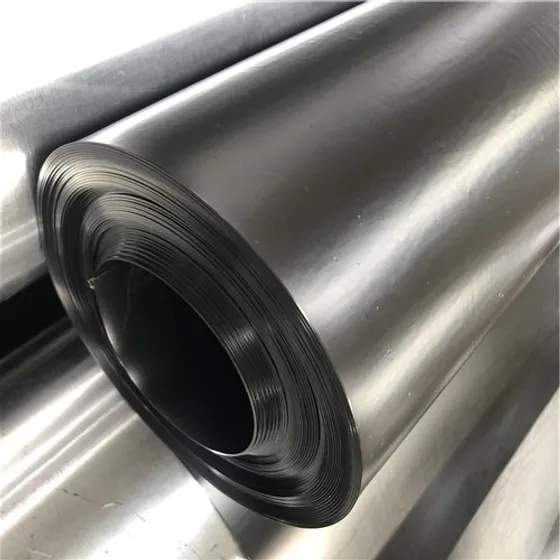
 Géomembranes
 Géomembrane PEHD
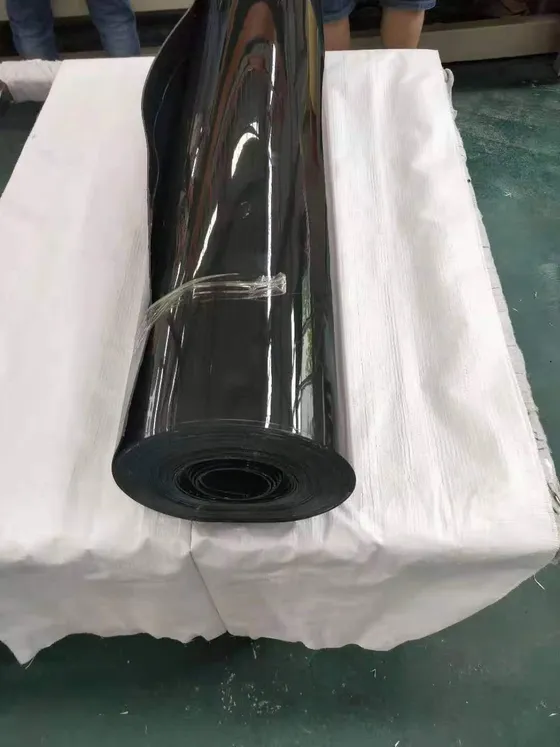
Géomembrane PEHD lisse selon GRI-GM13 — un revêtement étanche en polyéthylène haute densité pour bassin, décharge et confinement, de 0,75 à 3,0 mm (30–120 mil).
- GRI-GM13
- 0,75–3,0 mm (30–120 mil)
- Lisse · noire
Comment poser une bâche de bassin durable : préparez le fond, posez un géotextile, installez et soudez la bâche, puis ancrez et habillez le bord.
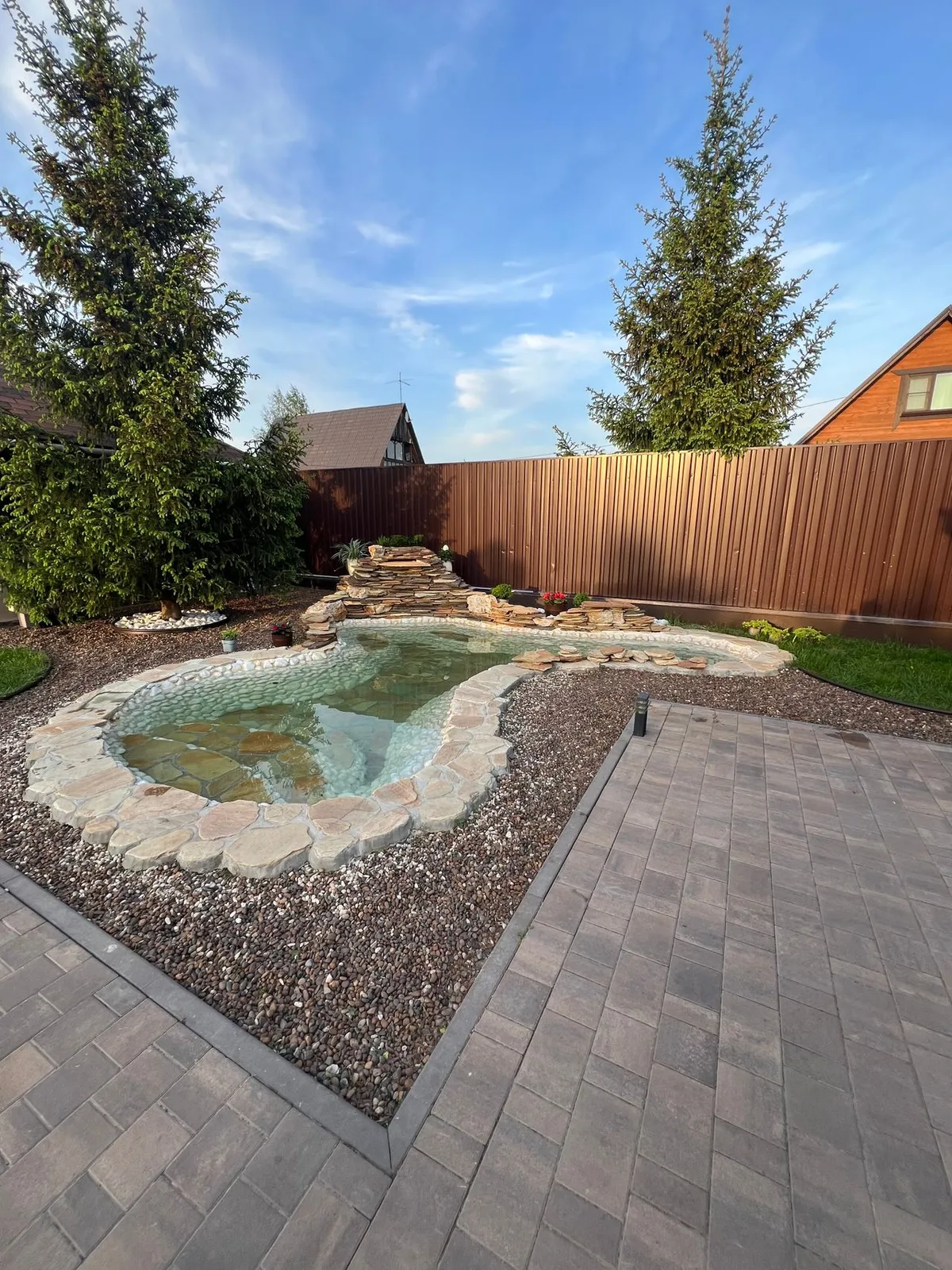
Creusez un trou dans la plupart des sols et il ne retiendra pas l'eau — elle s'évacue par le sable, le limon et les racines en quelques jours. Poser une bâche de bassin consiste simplement à mettre une barrière étanche continue entre l'eau et le sol, pour que le niveau atteint au remplissage reste le niveau conservé. Une bâche de bassin souple (une géomembrane HDPE, LLDPE ou PVC) assure cette étanchéité sur tout le fond et les berges en une seule couche imperméable. Le travail se résume à quatre étapes honnêtes — façonner le trou, le protéger d'un géotextile, poser et souder la bâche, puis ancrer et masquer le bord — et bien exécuter chacune d'elles, c'est ce qui distingue un bassin qui tient vingt ans d'un bassin qui suinte dès le premier été.
Avant de creuser, décidez de la bâche qu'il vous faut. Un petit bassin d'agrément ou un bassin à poissons avec bâche sur un fond propre et nivelé fonctionne très bien avec une géomembrane PEHD de 0,5–0,75 mm ; une réserve d'irrigation ou un bassin plus grand avec des berges passe à 1,0 mm ; tout ce qui reçoit des effluents ou repose sur un fond caillouteux et irrégulier demande 1,5 mm plus un géotextile de protection en dessous. Le PEHD est la référence — stable aux UV, chimiquement résistant, soudable en une seule nappe sans couture — tandis que la géomembrane PEBDL (LLDPE) sacrifie un peu de résistance pour gagner en souplesse sur des formes contournées et exiguës. Une bâche PVC pour bassin reste une option sur les petits volumes ornementaux. Dimensionnez la nappe à l'emprise du bassin plus deux fois la profondeur maximale de chaque côté, pour qu'elle atteigne le fond, remonte les berges et laisse encore un rabat généreux à enterrer dans la tranchée d'ancrage.
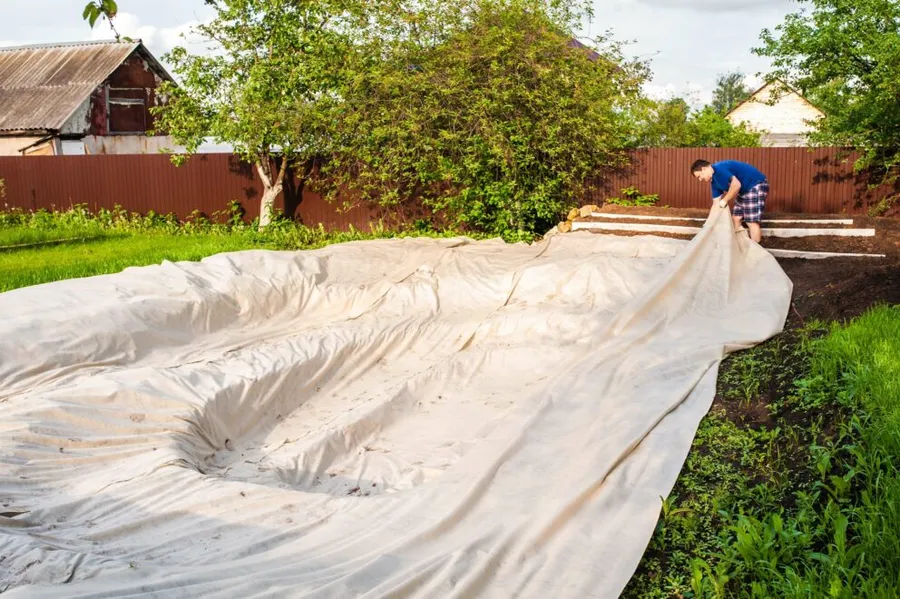
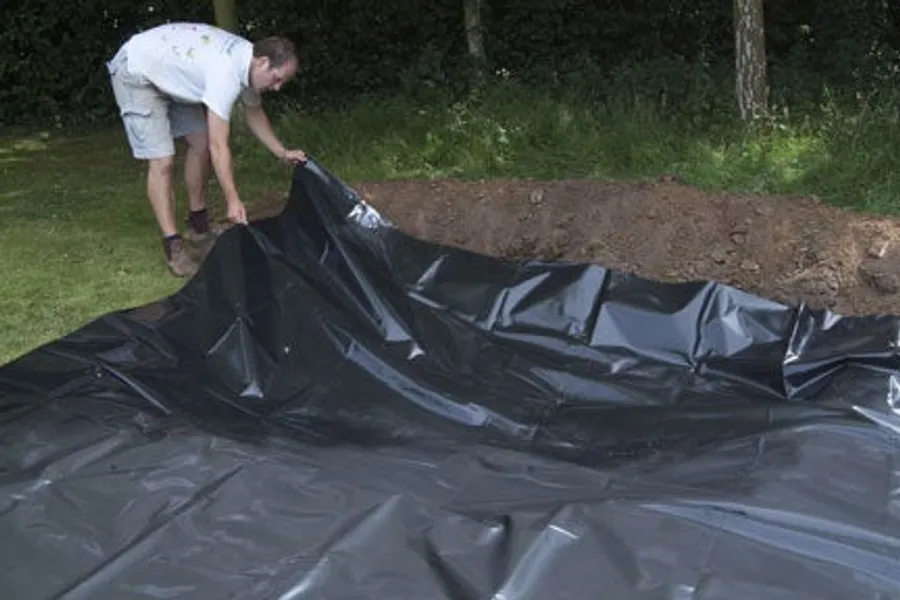
Poser la bâche d'un bassin commence par le trou, pas par la bâche. 1) Creuser et façonner : creusez selon votre profil avec des pentes de berge pas plus raides qu'environ 1:2, pour que la bâche reste en place et se marche facilement, et taillez une risberme si vous voulez des plantes de berge. 2) Nettoyer et régler le fond : retirez toute pierre, racine ou objet coupant, puis ratissez et compactez légèrement un lit bien lisse — la première cause de fuite est une charge ponctuelle qui perce la membrane par-dessous. 3) Poser un géotextile de protection : déroulez un géotextile non tissé sur tout le fond pour répartir les charges et empêcher les micro-perforations ; sur un sol caillouteux ou raciné, cette couche n'est pas optionnelle. 4) Positionner la bâche : déroulez la géomembrane dans le bassin par une journée douce, quand elle est souple, en travaillant du centre vers les bords et en ramenant les plis dans les angles en quelques plis nets plutôt qu'en forçant à plat. 5) Souder et étancher les joints : là où les lés se chevauchent, assemblez-les avec une soudeuse à coin chaud (ou soudure au solvant pour le PVC) et testez le joint — un bassin bâché n'est étanche qu'à hauteur de sa jonction la plus faible. 6) Ancrer le bord : faites remonter la bâche le long de la berge jusque dans une tranchée de 300 mm de profondeur tout autour, glissez-y le rabat et rebouchez ; cela bloque la nappe et cache le bord découpé. 7) Remplir lentement : laissez entrer l'eau progressivement pour que la bâche épouse le relief et que le poids la plaque avant de couper le surplus.
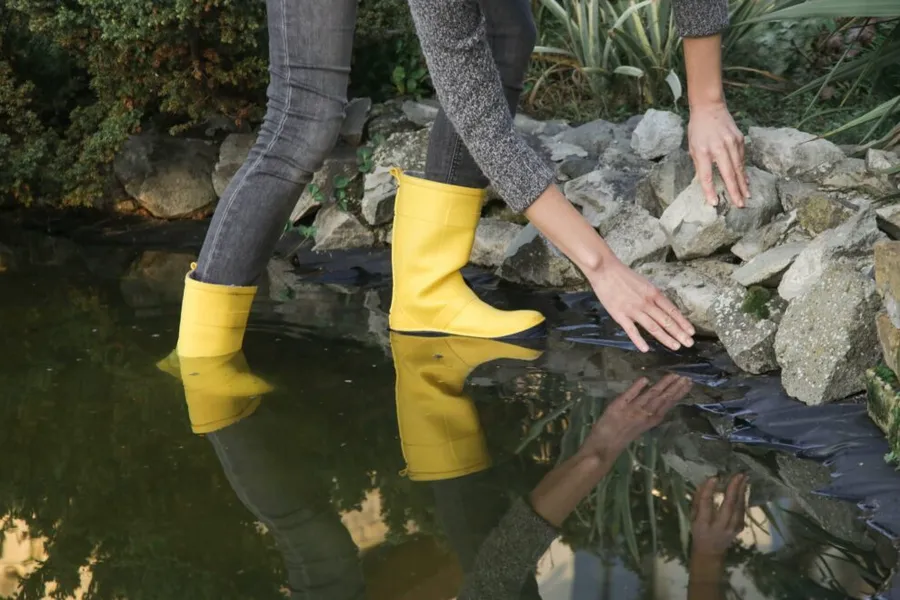
Même parfaitement soudée, une bâche garde un aspect plastique là où elle touche la berge, d'où cette dernière étape : l'habillage. La finition la plus nette combine deux éléments : une bande de pierres ou de galets posée sur une chute de géotextile de protection juste au-dessus de la ligne d'eau, et des plantes pour habiller le bord de la bâche. Les bonnes plantes pour masquer le bord d'une bâche de bassin sont les marginales et les rampantes qui aiment les sols humides — iris, populage, lysimaque rampante, laîches et graminées basses sur la risberme et la berge — leur feuillage retombant sur le bord de la tranchée pour qu'aucune bande noire ne dépasse au-dessus de l'eau. Tenez les espèces à racines envahissantes à l'écart de la membrane elle-même ; la tranchée d'ancrage et une barrière de géotextile empêchent les racines d'atteindre la bâche pendant que le feuillage se charge de la masquer. Bien fait, la bâche disparaît et le bassin donne l'impression que l'eau repose simplement dans le terrain.
Indiquez-nous la longueur, la largeur et la profondeur du bassin, la nature du fond et ce qu'il doit contenir, et nous déterminerons la qualité de bâche, découperons la nappe à la bonne taille et expédierons la géomembrane, le géotextile de protection, la baguette de soudure et les accessoires en un seul envoi. Demandez un devis de bâche de bassin avec vos dimensions et nous vous conseillerons honnêtement, sans vous vendre une épaisseur superflue.
Guide gratuit de sélection et spécifications géosynthétiques
Grades de matériau, dimensionnement épaisseur/grammage et fourchettes de prix pour votre projet — par e-mail.
Sur un lit de sable propre et sans pierres, une bâche plus épaisse peut parfois se poser seule ; mais sur un sol caillouteux, raciné ou irrégulier, un géotextile non tissé de protection (sous-couche de bassin) est ce qui empêche les charges ponctuelles de percer la membrane — une assurance peu coûteuse contre la cause la plus fréquente des fuites.
0,5–0,75 mm de PEHD pour les petits bassins d'agrément ou à poissons sur un fond préparé, 1,0 mm pour les réserves plus grandes, et 1,5 mm quand le fond est irrégulier ou que le bassin reçoit des effluents. Ajustez la qualité au fond et à la hauteur d'eau, pas à une règle unique.
Ancrez la bâche dans une tranchée tout autour, puis masquez la bande visible avec des pierres ou des galets sur une chute de géotextile, plus des plantes de berge — iris, laîches, lysimaque rampante — pour que le feuillage retombe sur le bord de la tranchée et qu'aucune bande ne dépasse au-dessus de l'eau.
Oui. Les lés PEHD et PEBDL sont soudés au coin chaud en une membrane continue unique et les joints sont testés sous pression, si bien qu'un grand bassin est aussi étanche qu'un petit. Le PVC, lui, se soude au solvant — une bâche PVC pour bassin reste ainsi tout aussi étanche.
Géomembranes Géomembrane PEHD lisse selon GRI-GM13 — un revêtement étanche en polyéthylène haute densité pour bassin, décharge et confinement, de 0,75 à 3,0 mm (30–120 mil).
 Géomembranes
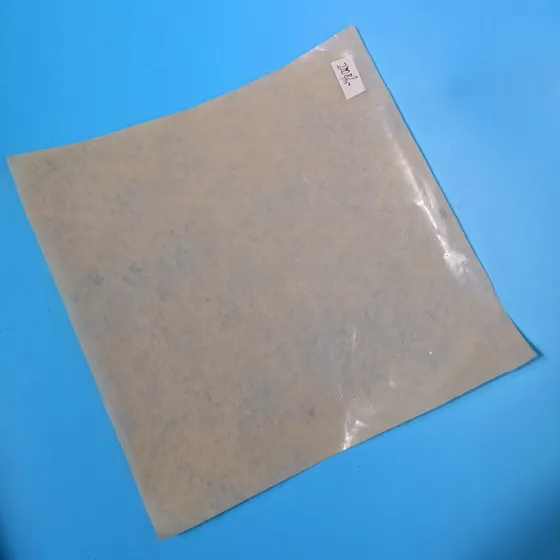
 Géomembrane PEBDL lisse et revêtement LLDPE souple selon GRI-GM17 — allongement élevé pour bassins, couvertures et sols sujets au tassement.
 Géomembranes
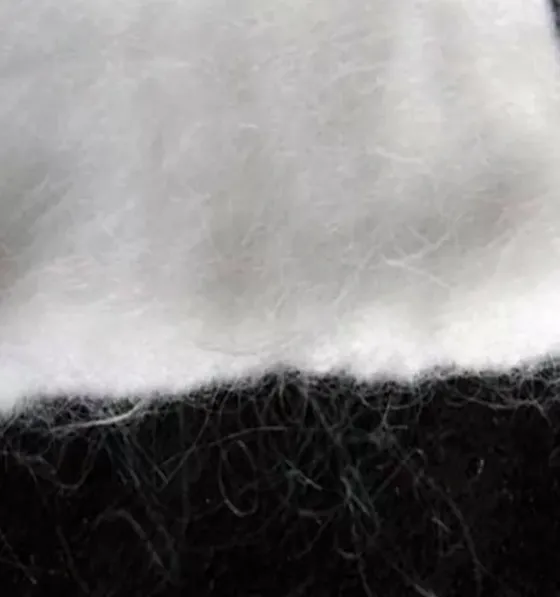
 Géomembrane composite — géomembrane PEHD/PE contrecollée à une ou deux couches de géotextile non tissé pour barrages et canaux.
 Géotextiles
 Géotextile non tissé aiguilleté (fibre courte PET / PP) selon AASHTO M288.
 Géotextiles
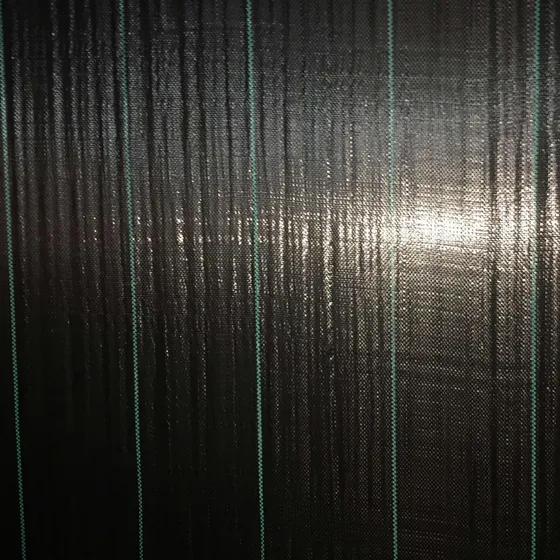
 Géotextile tissé haute résistance (fil PP / PET haute ténacité) selon AASHTO M288 — pour la séparation, la stabilisation et le renforcement sous chaussées.
 Géotextiles
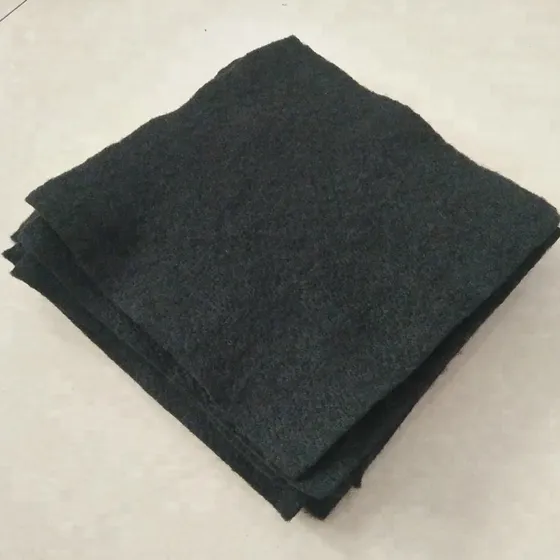
 Géotextile non tissé aiguilleté polyester (PET) selon AASHTO M288 — séparation, filtration, drainage et protection de géomembrane en génie civil.
Indiquez-nous votre application et votre quantité — notre équipe anglophone répond sous un jour ouvré.