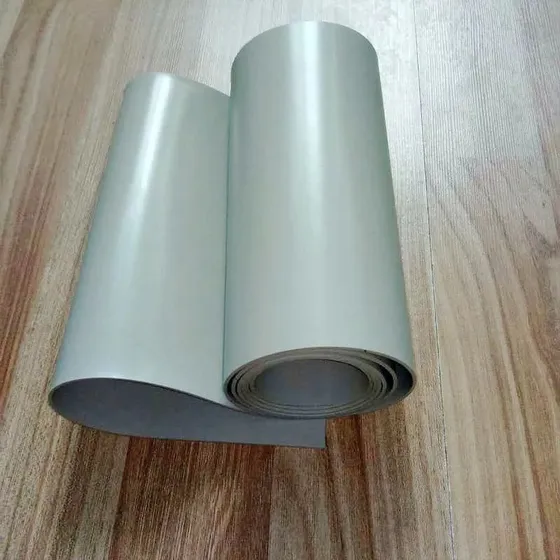
Root Barrier

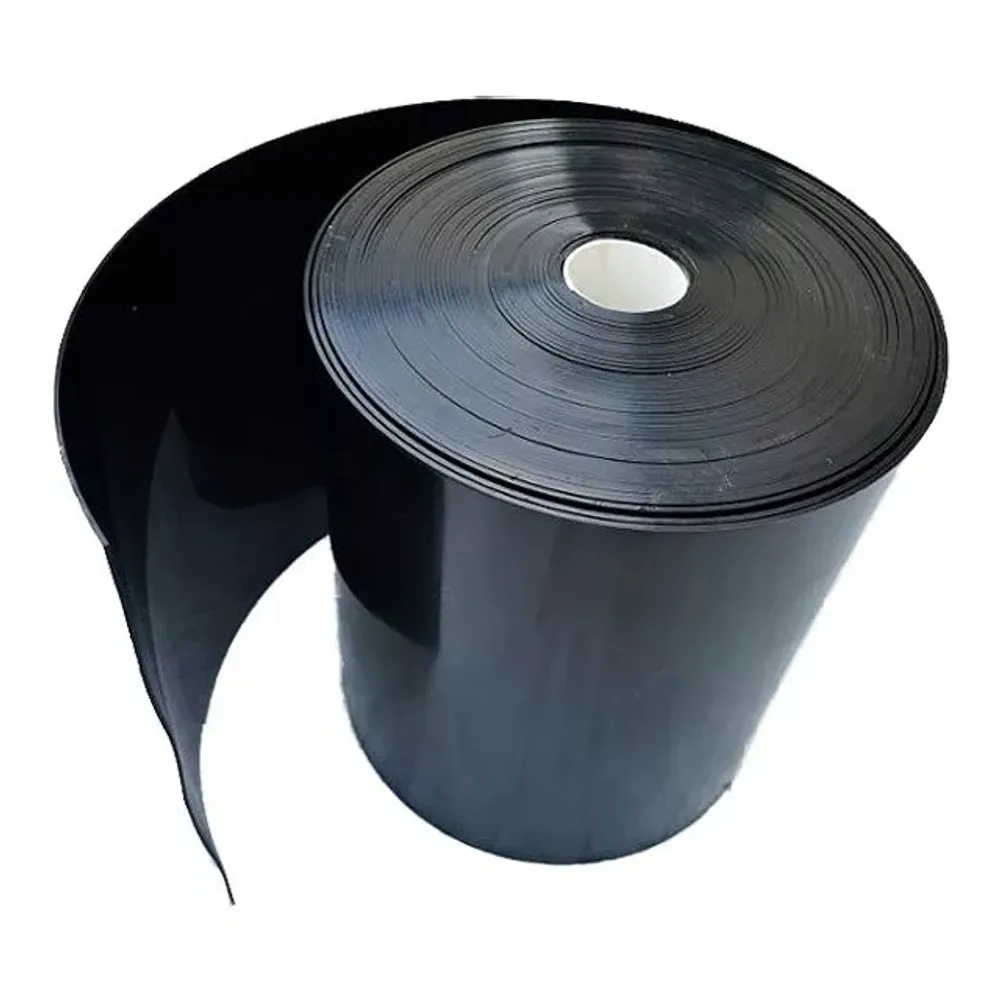
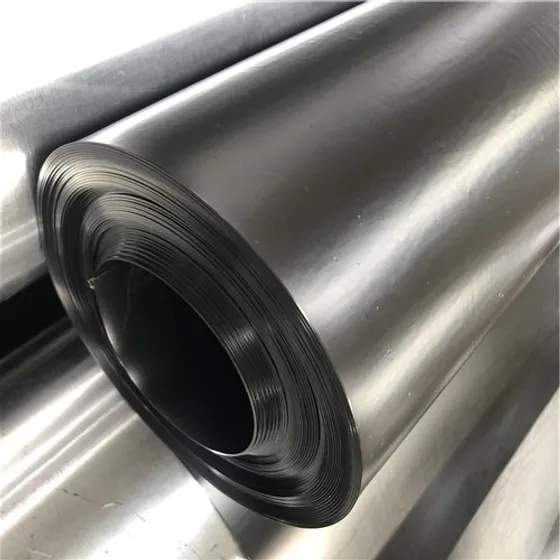
SIGMA root barrier is a rigid plastic sheet made from high-density polyethylene (HDPE), installed vertically into a trench beside building footings or under the tree drip line so roots cannot propagate and damage hardscapes such as concrete and paved pathways. This tree root barrier offers high tearing resistance, strong deformation adaptability, puncture, ageing, UV, oil, salt and corrosion resistance, plus good waterproof and anti-seepage performance and a long service life. Available in 40, 60, 80 and 100 mil thicknesses and 18 to 60 in heights, the HDPE root barrier is low cost and easy to install.

HDPE40 / 60 / 80 / 100 mil18–60 in · Black
Root Barrier

A rigid HDPE root barrier

SIGMA root barrier is a rigid plastic sheet made from high-density polyethylene (HDPE), placed vertically into a trench of varying depth to suit the product selected, providing a barrier that mitigates root penetration. It should be installed adjacent to building footings or directly under the drip line of the tree so roots cannot propagate and potentially damage hardscapes such as concrete and paved pathways. As an HDPE root barrier it pairs the toughness of a geomembrane with a rigid panel form suited to vertical trench installation — a true physical barrier rather than a chemical or fabric root barrier membrane.

Why HDPE for a tree root barrier

The material gives good physical and chemical properties: high tearing resistance, strong deformation adaptability, and resistance to puncture, ageing, ultraviolet radiation, oil, salt and corrosion. It adapts to high and low temperatures, is non-toxic and offers a long service life, with good waterproof, drainage, anti-seepage and damp-proof effects. A complete range of widths and thicknesses keeps this plastic root barrier low cost and easy to install. Unlike a metal root barrier it will not corrode in the soil, and unlike a fabric it cannot be penetrated by fine feeder roots.

How a deep root barrier works

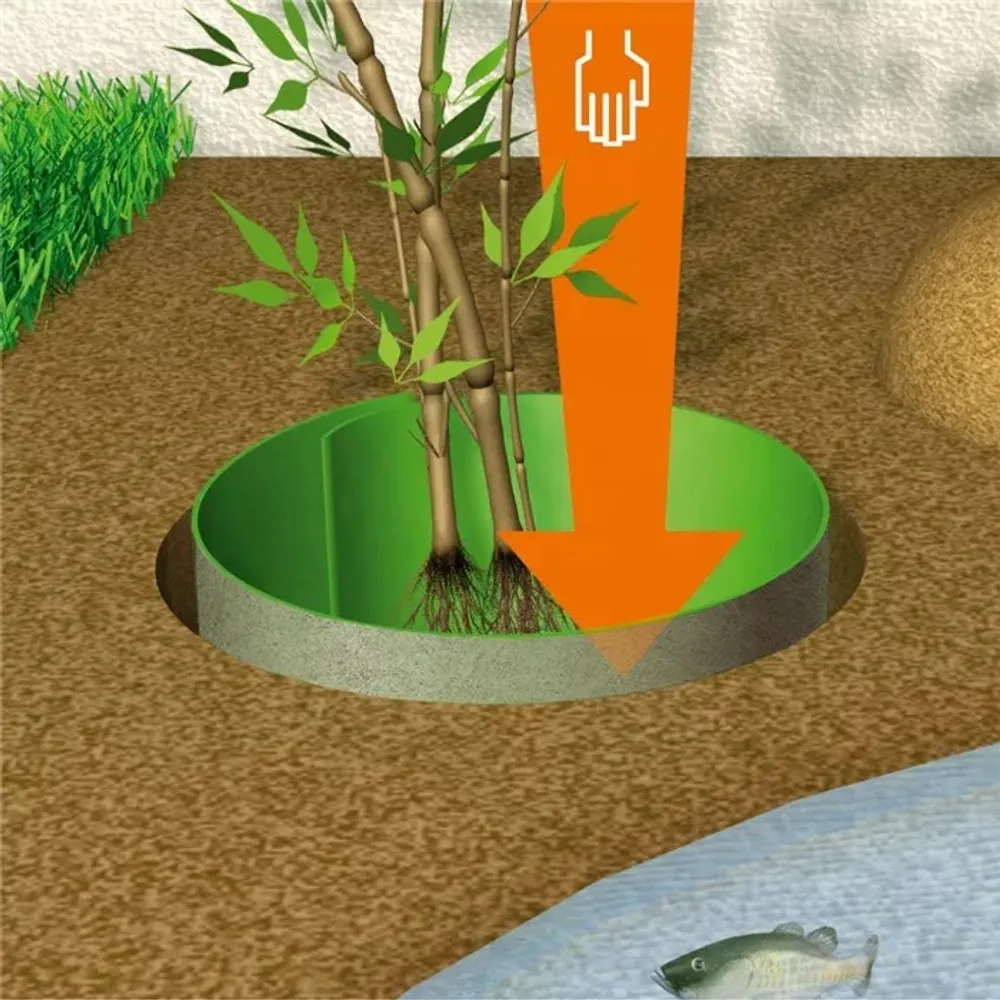
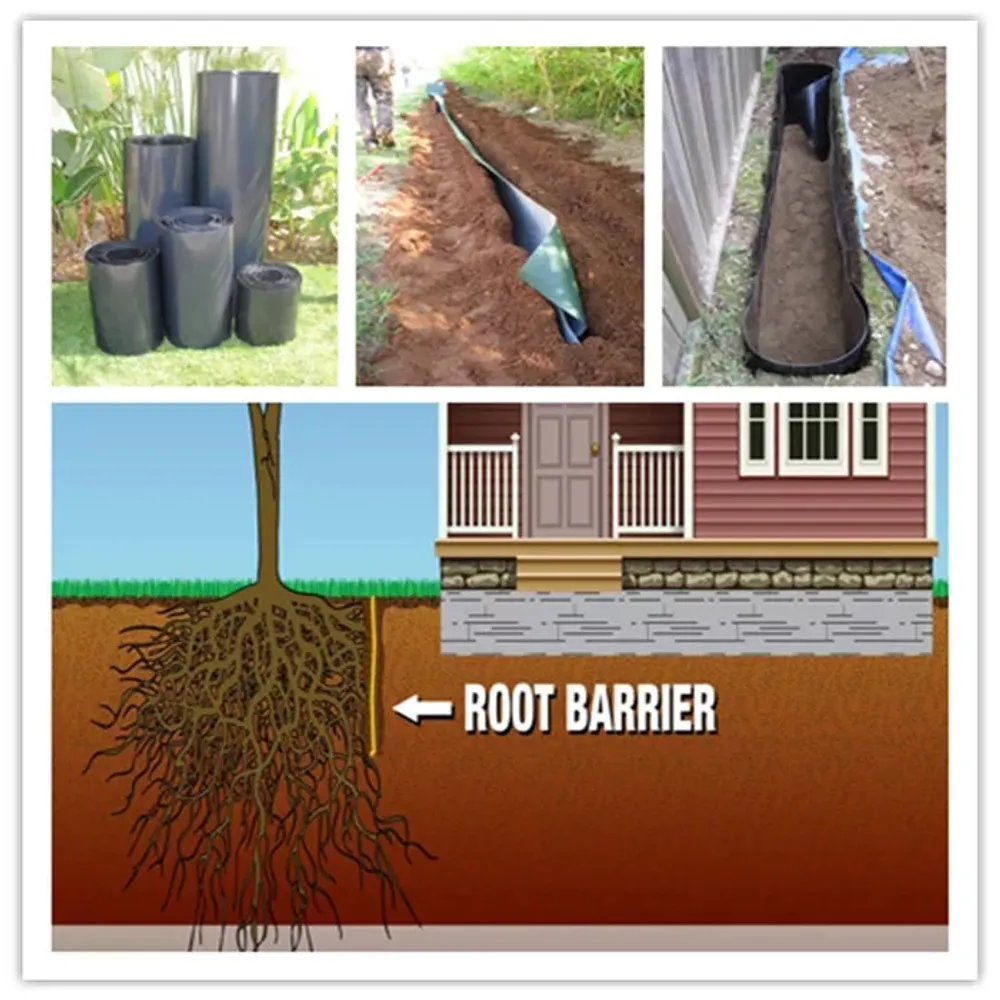
Set vertically in the soil, the root barrier deflects growing roots downward instead of letting them spread toward structures or paving — a vertical root barrier redirects rather than simply blocks. For a tree it is installed under the drip line; for foundations and driveways it is placed between the tree and the structure as a foundation root barrier. Because roots follow the path of least resistance, a deep root barrier guides them under the protected zone, where they no longer lift slabs, crack footings or buckle paths.

Bamboo and rhizome control

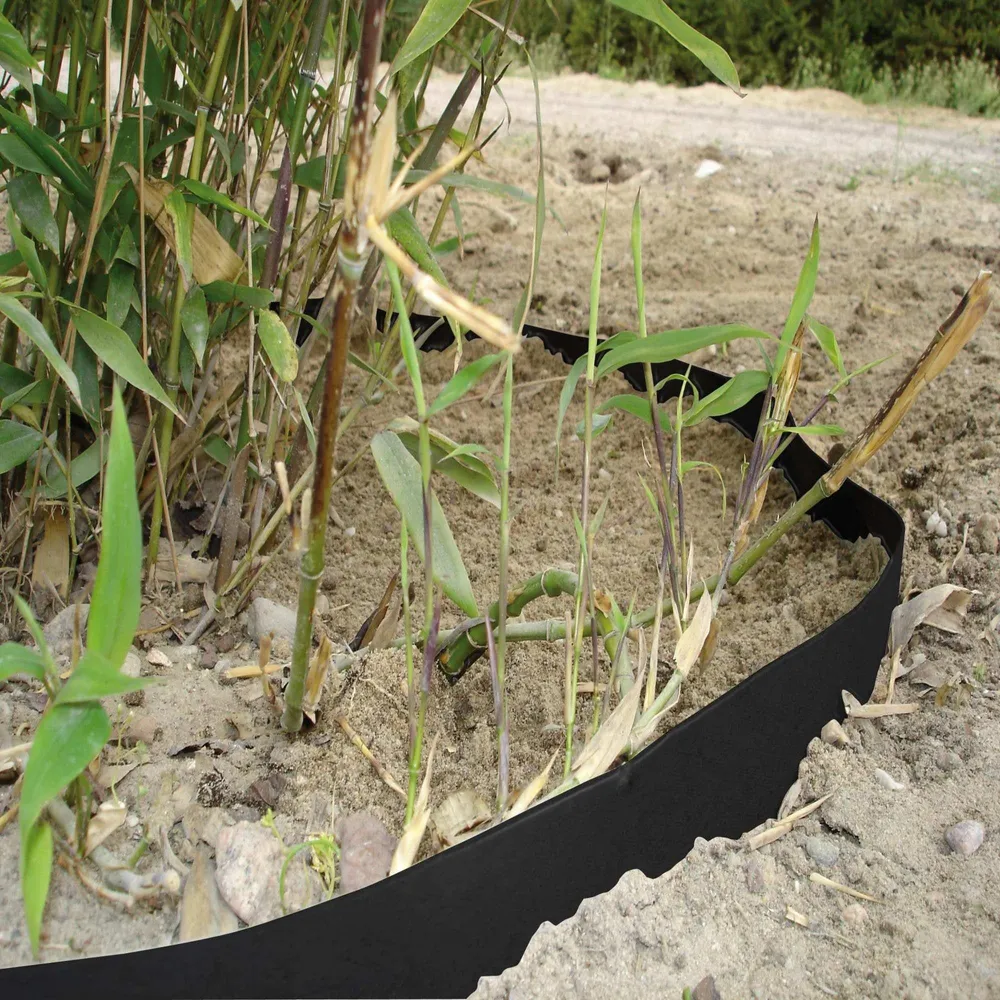
The same rigid HDPE makes an effective bamboo barrier: running bamboo spreads by underground rhizomes, and a vertical bamboo root barrier confines them to the planted area. Installed in a continuous trench with the top edge left slightly proud of grade so surfacing rhizomes are visible, this rhizome barrier stops bamboo, mint and other aggressive spreaders from invading lawns and neighbouring beds. Heavier 60–80 mil grades are usual for bamboo because the rhizomes push hard against the wall.

How it is installed

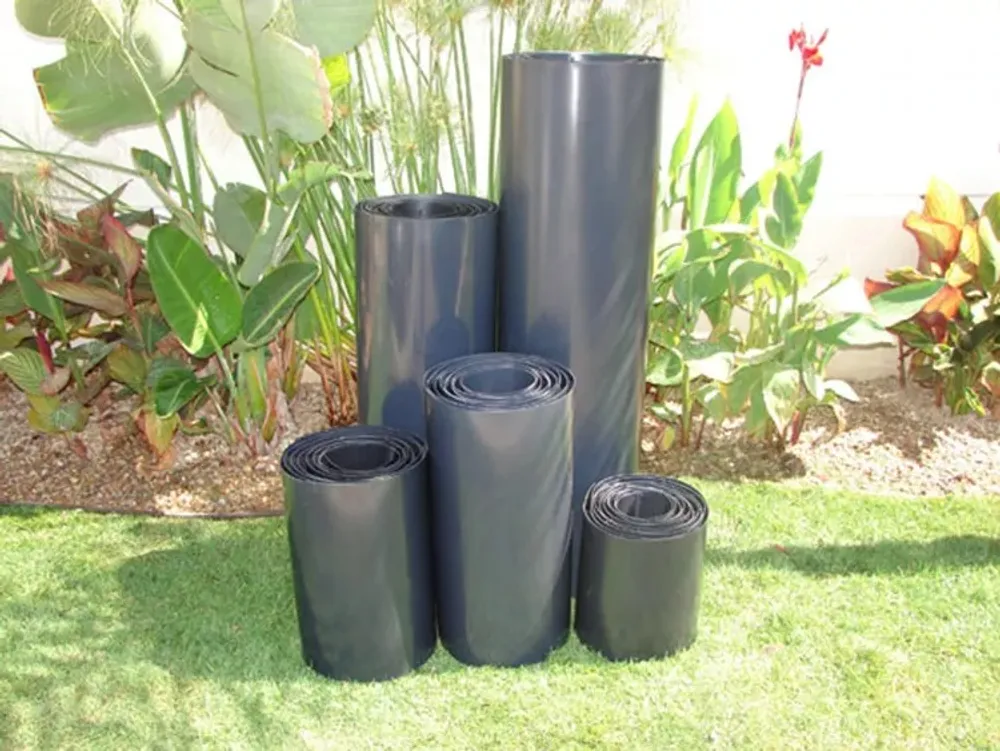
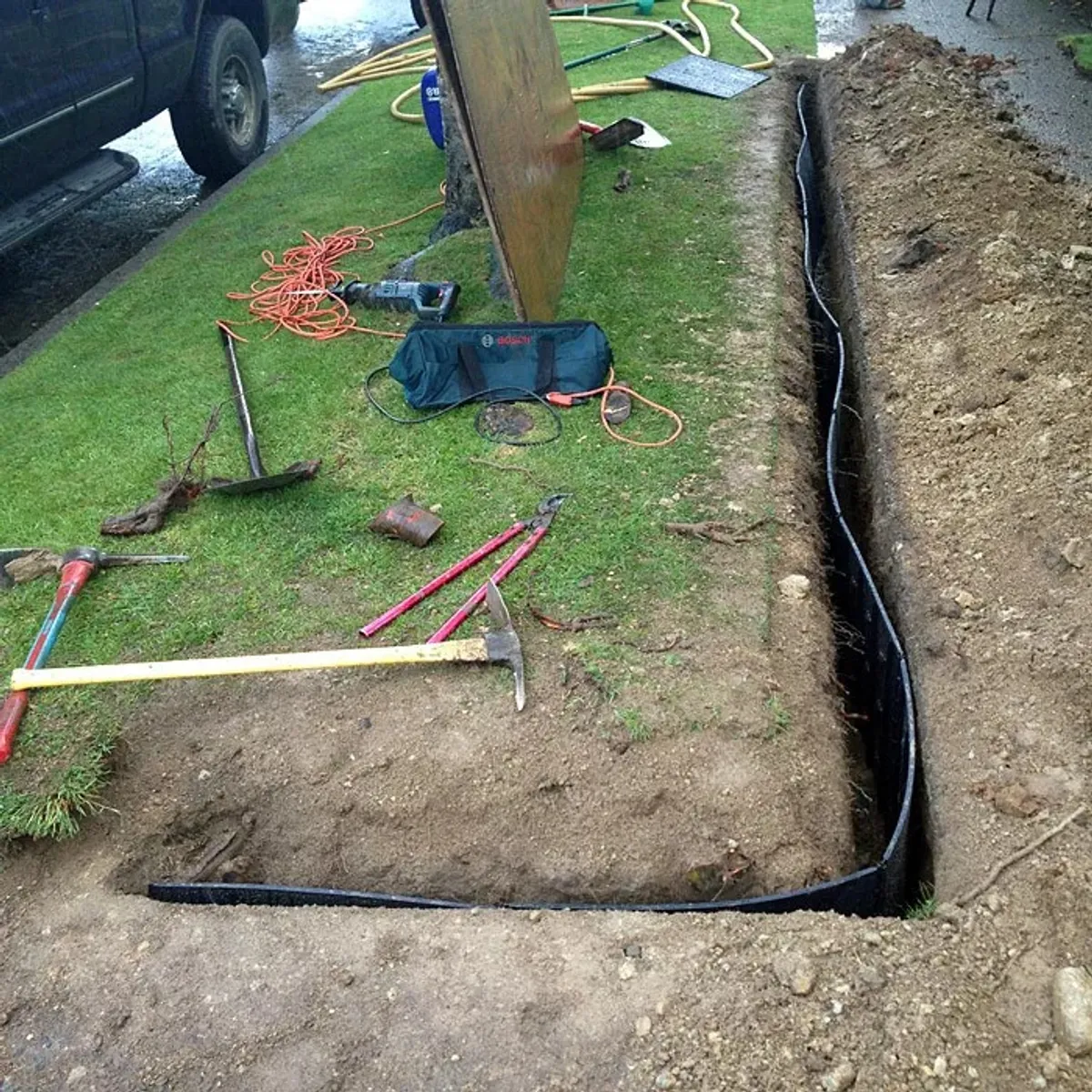
Dig a trench to the chosen panel height, stand the root barrier vertically against the face you want to protect, overlap and bond or batten the panel joints, and backfill — leaving a small lip above grade so deflected roots stay below the barrier. Because it ships in long rolls and panels, root barrier installation is quick with hand tools and needs no special equipment, which keeps the installed cost low. Heights and thicknesses are matched to the rooting depth and the force expected at the wall.

Sizes and where it is used

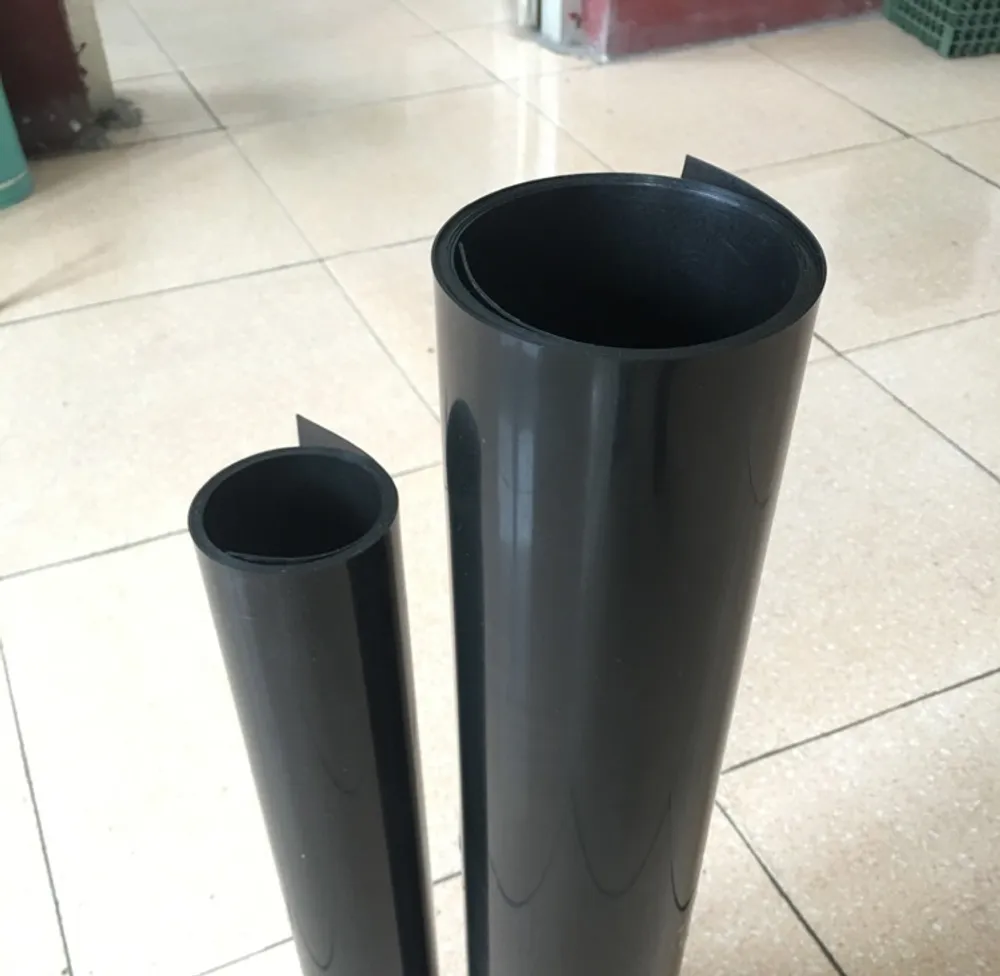
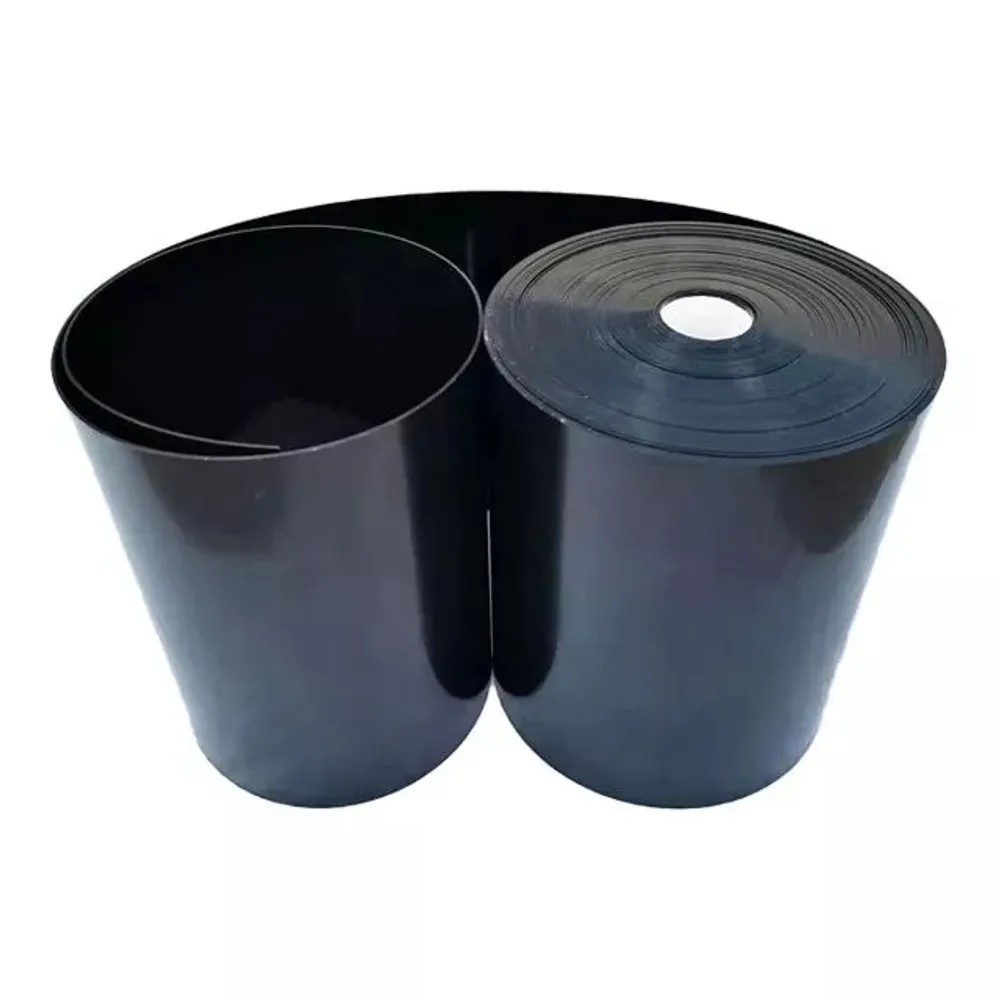
We supply the root barrier in 40, 60, 80 and 100 mil thicknesses and 18 to 60 in heights, on 100 ft rolls (thicker grades also 80 ft). It works as a root barrier for foundations and driveways, a tree root barrier for mature trees, a bamboo / rhizome barrier to contain running bamboo, and a root barrier for raised beds and landscaping. As a manufacturer we quote ex-works — send the height, thickness and length for pricing. The same HDPE polymer underlies our HDPE geomembrane liners.

More views

Root Barrier — More viewsRoot Barrier — More viewsRoot Barrier — More viewsRoot Barrier — More viewsRoot Barrier — More viewsRoot Barrier — More viewsRoot Barrier — More views

Manufacturing

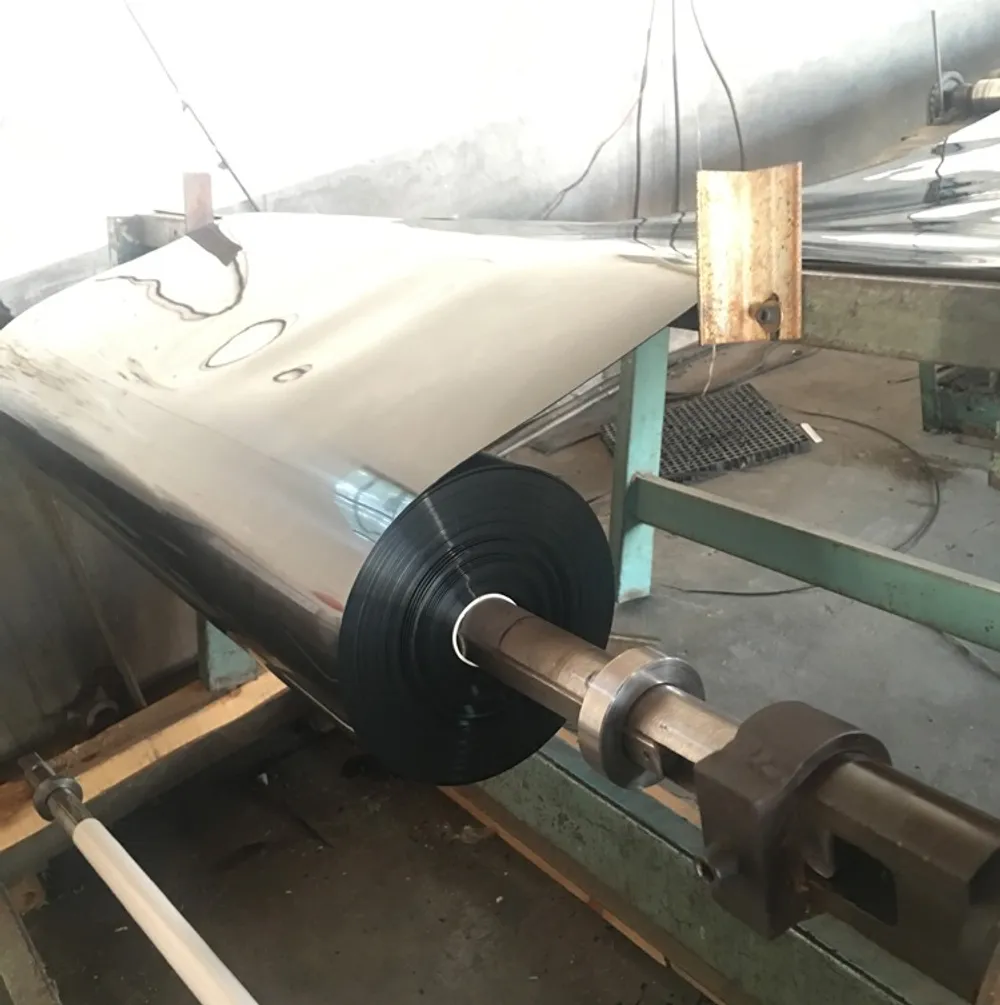
Root Barrier — ManufacturingRoot Barrier — Manufacturing

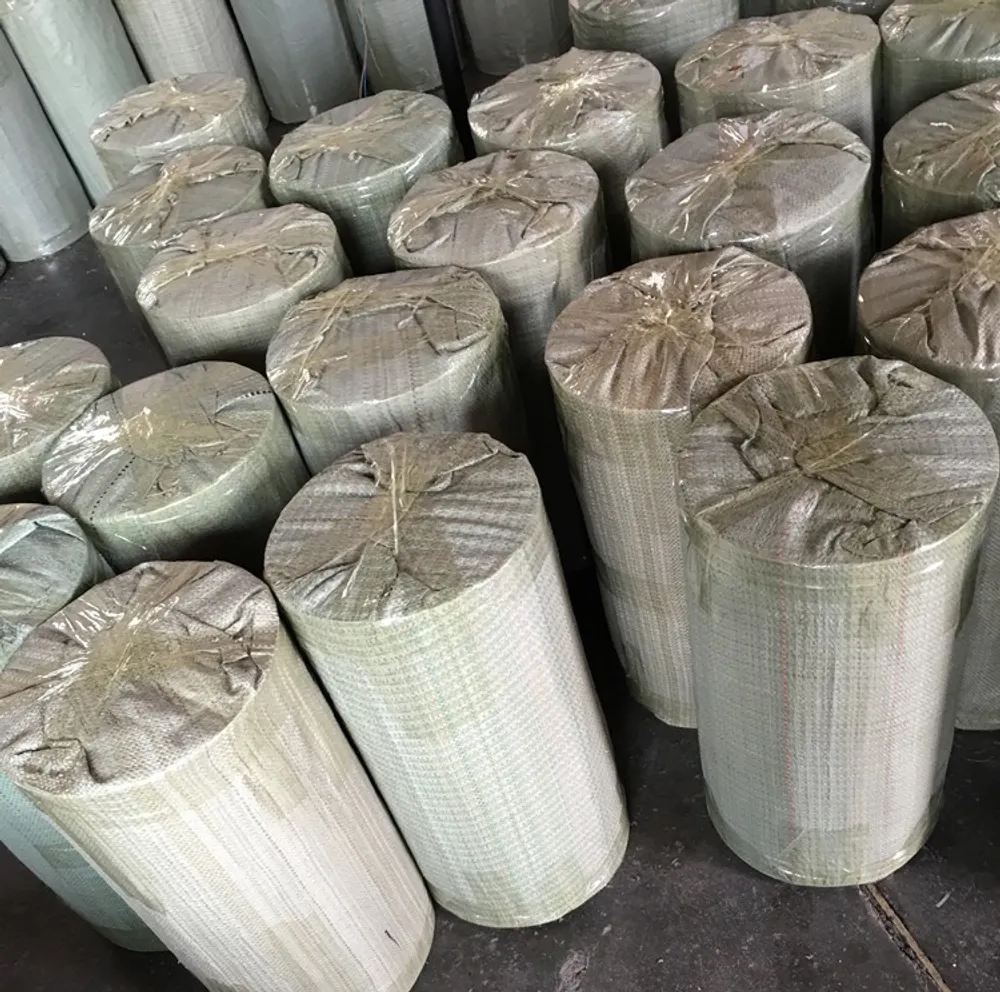
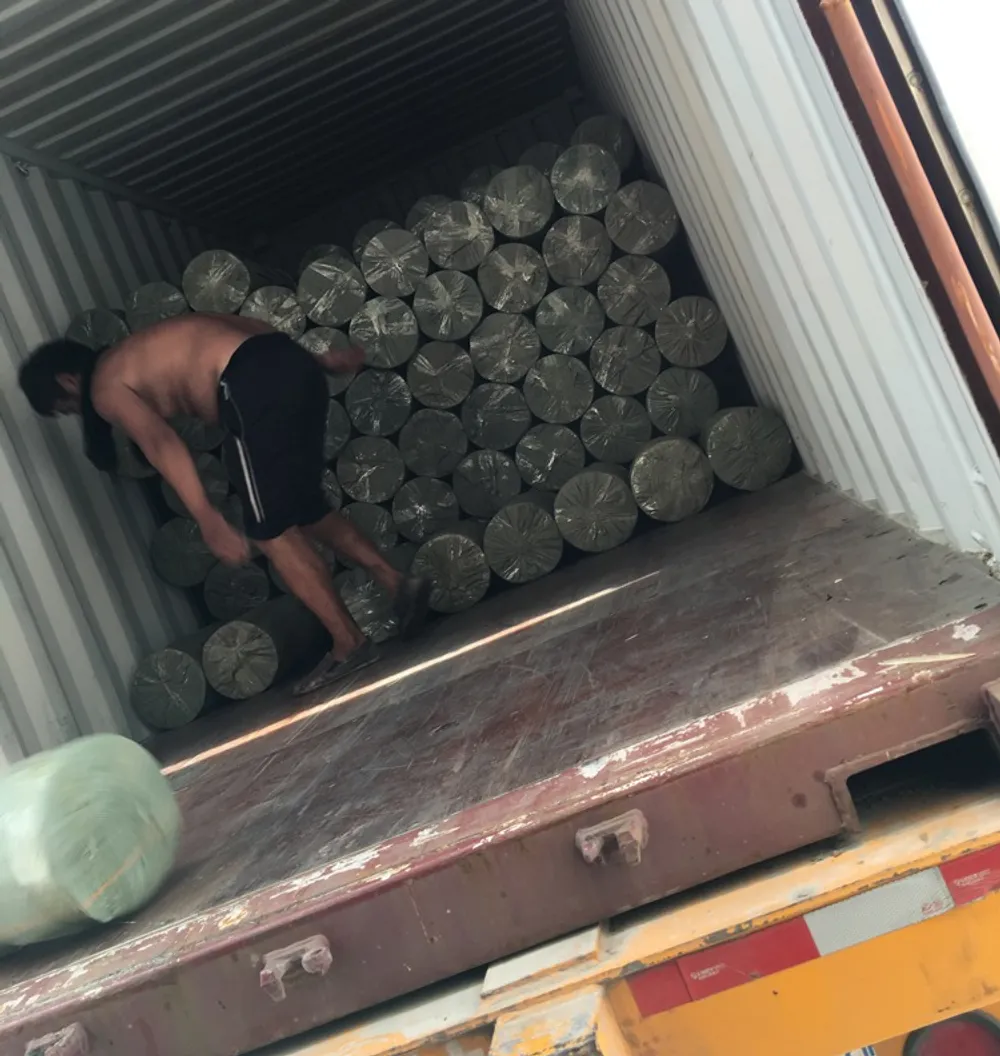
Shipping & packaging

Root Barrier — Shipping & packaging

Key features

  • Rigid HDPE root barrier — redirects roots downward, away from structures
  • High tearing resistance and strong deformation adaptability
  • Puncture, ageing, UV, oil, salt and corrosion resistant
  • Waterproof, anti-seepage and damp-proof; inert and non-biodegradable
  • Long service life buried out of direct sunlight
  • Complete range of thicknesses and heights, low cost and easy to install

Ideal for

  • Tree root barrier under the drip line of mature trees
  • Root barrier for foundations, footings and driveways
  • Protecting sidewalks, paving and hardscape from root damage
  • Bamboo / rhizome barrier to contain running bamboo
  • Root barrier for raised beds, garden beds and landscaping
  • Vertical root barrier between trees and underground utilities

Specifications

Root Barrier (HDPE) — dimensional ranges and typical HDPE material properties. Values verbatim from the source datasheet (mechanical values are vendor-stated typical HDPE figures, confirm against production datasheet).

PropertyTest MethodUnitValue
Thicknessmil (mm)40 (1.0) · 60 (1.5) · 80 (2.0) · 100 (2.5)
Panel / roll heightin (cm)18 · 24 · 30 · 36 · 48 · 60 (45 / 60 / 75 / 90 / 120 / 150)
Standard roll lengthft (m)100 (30); thicker grades also 80 (24)
ColorBlack
OrientationInstalled vertically (or horizontally) in trench
DensityASTM D1505g/cm³0.940 – 0.965
Carbon black contentASTM D4218%2.0 – 3.0
Tensile strengthASTM D6693MPa15 – 20
Puncture resistanceASTM D4833N≥ 500 (varies strongly with thickness)
UV / weathering resistanceCarbon-black + UV-inhibitor stabilized
Service life (buried, not in direct sunlight)yearsup to ~100 (vendor claim)
Chemical / rot / corrosion resistanceInert; non-biodegradable
  • There is no single public statutory standard governing root barriers as a finished product; the dimensional ranges are well established across manufacturers, and the material/mechanical values are typical HDPE-geomembrane properties (vendor-stated, to the noted ASTM methods).
  • The mechanical values above are typical HDPE geomembrane figures published by root-barrier vendors; exact tested values vary by thickness and supplier and should be confirmed against SIGMA's own production datasheet before publishing.

Frequently asked questions

How deep should a root barrier be installed?

The root barrier is set vertically in a trench, with the panel height chosen to match the rooting depth you need to control — common heights run from 18 in up to 60 in (45–150 cm). It is placed beside footings or under the tree drip line so roots are redirected downward rather than toward structures.

What thickness of root barrier do I need?

Thicknesses run 40, 60, 80 and 100 mil (1.0–2.5 mm). Lighter 40–60 mil suits garden beds and bamboo / rhizome control; heavier 80–100 mil suits root barrier for foundations, driveways and mature trees where puncture resistance and longevity matter most.

Will an HDPE root barrier stop tree roots and bamboo?

Yes. The rigid HDPE sheet is impenetrable to roots and rhizomes, so it works as both a tree root barrier and a bamboo / rhizome barrier, redirecting growth downward and protecting hardscape, paving and foundations.

How long does the root barrier last underground?

HDPE is inert, non-biodegradable and resistant to rot, chemicals and corrosion. Buried out of direct sunlight it has a very long service life (vendors cite up to roughly 100 years); the carbon-black and UV stabilizers also protect any exposed top edge.

How is a root barrier installed?

Dig a trench to the chosen panel height, stand the barrier vertically against the face you want to protect, overlap or batten the joints and backfill — leaving a small lip above grade so deflected roots stay below it. It needs only hand tools and no special equipment, which keeps root barrier installation cost low compared with rebuilding cracked hardscape later.

Is HDPE root barrier better than a fabric or chemical barrier?

For a physical deflection barrier, yes. A rigid HDPE sheet is impenetrable to roots and rhizomes, so it gives a permanent vertical root barrier, whereas a fabric root barrier membrane can be breached by fine feeder roots and a chemical barrier relies on a treated zone that depletes over time. HDPE is also inert and will not corrode like a metal root barrier.

Can you ship root barrier by sea for export?

Yes. Root barrier ships in compact rolls and palletized panels that load efficiently into containers, so we export worldwide. We quote ex-works by default and can arrange FOB or CIF to your port — send the height, thickness, length and destination for sea-freight pricing.

Request a quote for the Root Barrier

Tell us quantity, destination port, and any questions — we reply within one business day.

Related products

Floating Cover Protective

Floating Cover

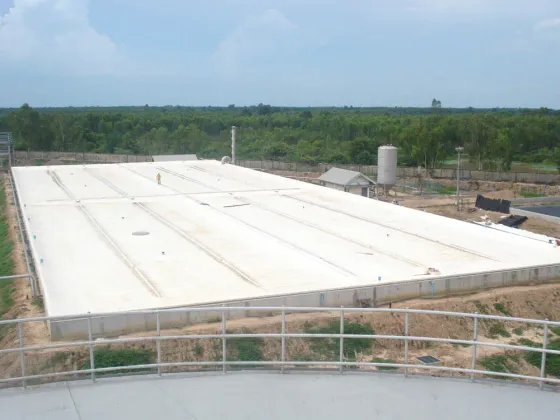
Geomembrane floating cover for reservoirs, lagoons and digesters — a custom-fabricated HDPE / RPE floating cover for odor containment and biogas capture.

  • HDPE / RPE membrane
  • Custom-fabricated to basin
  • Odor & evaporation control
Get a quote →
HDPE Geomembrane Geomembrane

HDPE Geomembrane

Smooth HDPE geomembrane liner to GRI-GM13 — an impermeable high density polyethylene pond liner for landfill, water and containment, 0.75–3.0 mm.

  • GRI-GM13
  • 0.75–3.0 mm (30–120 mil)
  • Smooth · Black
Get a quote →
PVC Geomembrane Geomembrane

PVC Geomembrane

Flexible PVC geomembrane and PVC pond liner to ASTM D7176 / PGI-1104 — a non-reinforced polyvinyl chloride liner, 10–60 mil, for ponds and containment.

  • ASTM D7176 / PGI-1104
  • 10–60 mil (0.25–1.52 mm)
  • Gray or black · Smooth/embossed
Get a quote →