
 Защитные материалы
 Барьер от корней (HDPE)
Барьер от корней деревьев из HDPE — жёсткий полиэтиленовый лист, устанавливаемый вертикально в траншею для отвода корней и защиты фундаментов и покрытий.
- HDPE
- 40 / 60 / 80 / 100 mil
- 18–60 in · чёрный
Как установить корневой барьер, который реально останавливает корни: глубина траншеи, толщина HDPE-панели, стыковка без щелей и обратная засыпка.
Корни не пробивают барьер напролом — они находят щель внизу, шов, который забыли перехлестнуть, или угол, засыпанный с оставшимся в грунте камнем. В этом вся суть правильной установки корневого барьера: дело не столько в самом полотне, сколько в том, чтобы заглублённая линия оставалась непрерывной, достаточно глубокой и без самодеятельных сокращений. Корневой барьер — это вертикальная HDPE-панель, установленная в траншее между источником корней и тем, что он угрожает повредить, — фундаментом, плитой подъездной дорожки, дренажной линией или соседней грядкой. Выдержите глубину траншеи, стыки панелей и обратную засыпку правильно — и барьер тихо работает десятилетиями; пропустите хоть один из трёх пунктов, и корни рано или поздно найдут обход.
Корневой барьер для деревьев и барьеры под фундаментом обычно заглубляют на 600–750 мм (24–30 дюймов), потому что основная масса структурных корней дерева идёт в верхних 300–600 мм грунта, и барьер такой глубины перехватывает почти все из них, отклоняя остальные вниз мимо нижней кромки панели. Корневой барьер для бамбука требует того же диапазона глубины, но нулевой терпимости к щелям, потому что бамбуковые корневища идут в стороны на довольно стабильной неглубокой отметке и проскользнут в любую низкую точку линии траншеи, а не нырнут под неё, как иногда делает стержневой корень. На объекте, защищающем фундамент виллы, ведите траншею на всю длину стены, обращённой к дереву или бамбуковым зарослям, а не только на коротком участке, — корни обходят края барьера так же охотно, как проходят под мелким. Там, где барьер пересекает дорожку или подъезд, панель всё равно должна доходить до полной глубины траншеи; не укорачивайте её только потому, что сверху плита.
Пластиковый корневой барьер для деревьев или панель для сдерживания бамбука делают из первичного HDPE толщиной обычно 40–100 мил (1,0–2,5 мм), причём более толстый конец диапазона оставляют для агрессивных видов бамбука и взрослых деревьев с реальной силой корневого давления. Более тонкие панели 40–60 мил работают как барьер общего назначения для декоративных деревьев и лёгкого озеленения, но для установки на большую глубину рядом с фундаментами или инженерными сетями берите 80–100 мил — дополнительная толщина держит и давление корней, и риск разрыва при уплотнении обратной засыпки. Большинство панелей ребристые с одной стороны; эта ребристость — отражатель корней, а не декор, и она должна смотреть на корни, чтобы направлять рост вниз, а не давать корням идти вбок вдоль гладкой стенки. HDPE выбирают вместо бетона или металлической окантовки, потому что он гнётся вместе с движением грунта, не гниёт и не корродирует и не трескается так, как жёсткий барьер под давлением корней, — а треснувший барьер хуже отсутствия барьера, потому что корни используют трещину как проход.
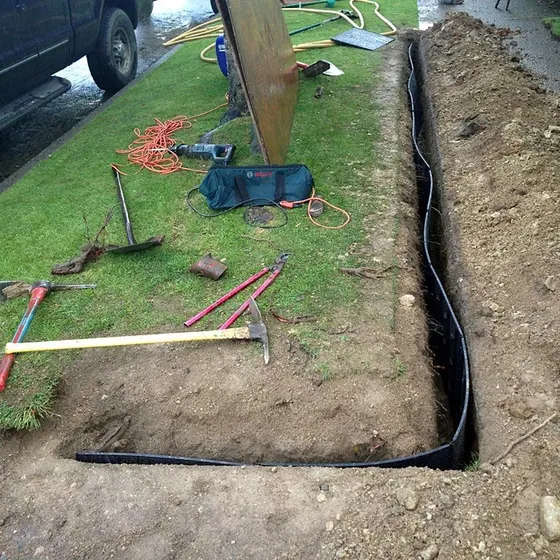
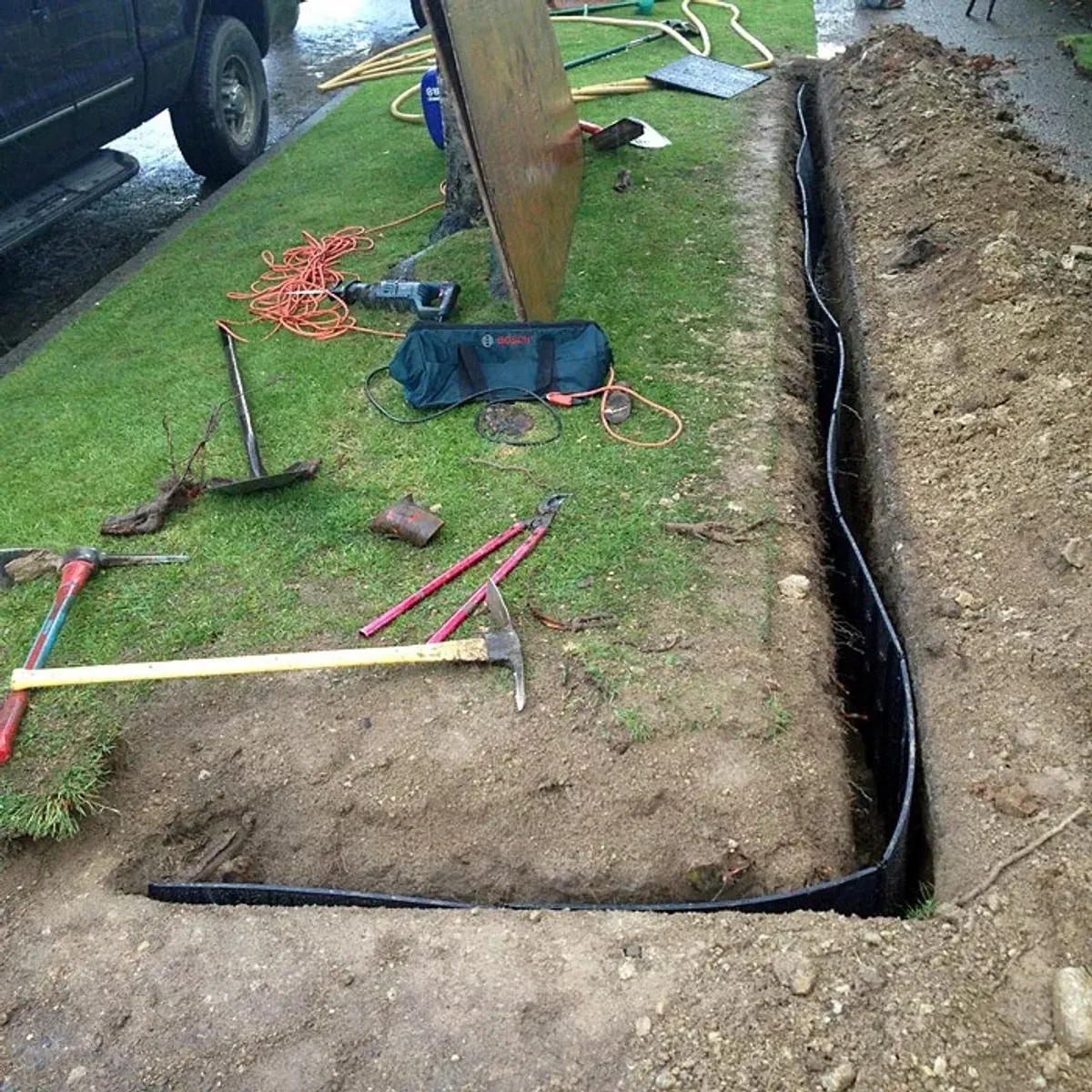
Выкопайте траншею на полную глубину по намеченной линии, оставляя стенку, ближайшую к источнику корней, максимально вертикальной и чистой, чтобы панель прилегала к ней вплотную. Поставьте HDPE-панель в траншее так, чтобы верхняя кромка была на 25–50 мм выше отметки готового грунта — барьер вровень с грунтом или ниже позволяет корням просто перерасти сверху. Там, где панели встречаются, перехлёстывайте их минимум на 150 мм и фиксируйте стык замковым или скользящим профилем производителя; стыкованный встык без фиксации — самая частая точка отказа при установке корневого барьера, потому что давление грунта и рост корней за сезон-два раздвигают несоединённые кромки. На углах панель режьте и загибайте, а не пытайтесь стыковать под углом, и продолжайте деталь «перехлёст плюс фиксация» по всему повороту. Для грядки с ежевикой или другого применения по контуру грядки, где барьер образует замкнутый контур, закрывайте последний стык той же фиксирующей деталью, что и везде, — замкнутый контур с одним слабым швом всё равно выпускает корневища.
Засыпайте выкопанным грунтом, предварительно просеянным от крупных камней и корней, уплотняя тонкими слоями с обеих сторон панели, чтобы она оставалась вертикальной и не выгибалась при последующем уплотнении. Не засыпайте рыхлым гравием или крупным заполнителем прямо к барьеру — пустоты дают корням путь вдоль поверхности панели вместо того, чтобы отклоняться от неё. Закройте траншею, оставив 25–50 мм панели над отметкой грунта, либо подрежьте вровень с полосой газонокосилки или окантовкой, если барьер идёт по краю газона; в любом случае держите эту видимую полосу заметной, чтобы будущая перекопка или посадка не перерезала линию незаметно для кого-либо. При установке на существующее дерево ожидайте, что придётся подрезать часть уже растущих корней у стенки траншеи, — чистый срез острым лезвием или пилой заживает лучше, чем разрыв, и не снижает работоспособность барьера.
Пришлите нам вид растения (дерево или бамбук), расстояние от ствола или края корневища до того, что вы защищаете, и тип грунта, и мы подберём толщину HDPE, высоту панели и профиль замка, а не заставим вас гадать по общей марке. Запросите расчёт корневого барьера, и мы подберём конфигурацию для деревьев, бамбука и глубокой защиты корней под глубину и длину, которые реально нужны вашему объекту.
Бесплатный гид по выбору геосинтетики и спецификациям
Марки материала, подбор толщины/плотности и диапазоны цен для вашего проекта — на вашу почту.
600–750 мм (24–30 дюймов) хватает для большинства установок под деревья и бамбук, поскольку и структурные корни, и бамбуковые корневища идут в основном в верхних 300–600 мм грунта. На участках с агрессивными видами или неглубокой скалой может понадобиться индивидуальная глубина, но меньше 600 мм — риск того, что корни просто прорастут под панелью.
40–60 мил подходят для декоративных деревьев и лёгкого озеленения, а 80–100 мил — правильный выбор для агрессивного бамбука, взрослых деревьев и любой установки, защищающей фундамент или инженерную сеть. Подбирайте толщину под силу корневого давления, а не по самому дешёвому рулону на складе.
Да, если траншея непрерывна, на полную глубину, а каждый стык панелей перехлёстнут и зафиксирован, — бамбуковые корневища используют щели и незафиксированные швы раньше, чем попробуют прорасти под барьером. Замкнутый контур вокруг посадки без слабых стыков — вот что реально сдерживает бамбук.
Ведите барьер максимально близко к стороне дерева или бамбука от защищаемой зоны, насколько позволяет раскопка, по всей длине стены фундамента, обращённой к источнику корней, — короткий участок только перенаправит корни в обход его краёв, а не остановит их.
Защитные материалы Барьер от корней деревьев из HDPE — жёсткий полиэтиленовый лист, устанавливаемый вертикально в траншею для отвода корней и защиты фундаментов и покрытий.
Сообщите ваше применение и количество — наша команда отвечает в течение одного рабочего дня.